



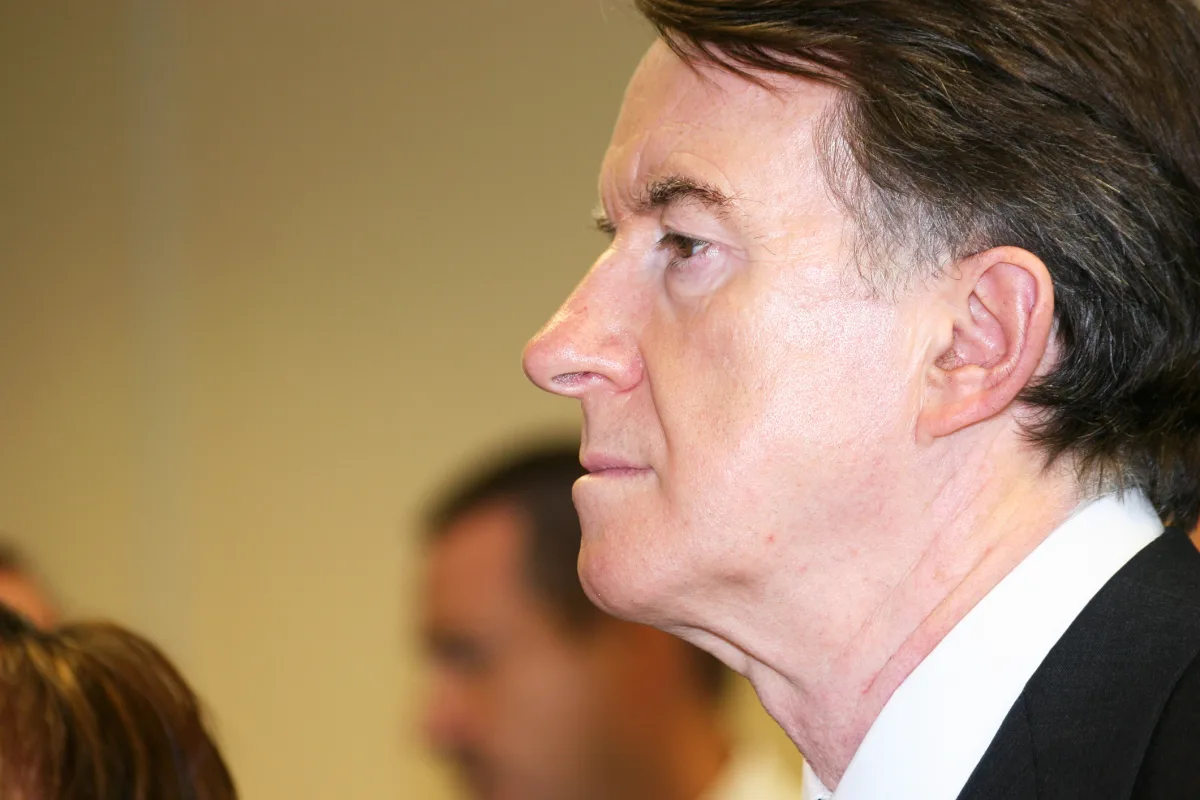
Outed as a thorough wrong’un who might well face police action over accusations he passed market-sensitive UK government policy to the paedophile Jeffrey Epstein, Peter Mandelson was clearly not cut out to be the UK’s ambassador to the United States. His tenure was thankfully brief, although his appointment spells trouble for UK PM Sir Keir Starmer, now facing accusations of an intolerable lack of judgement, at best.
The scandal raises an obvious question: What sort of person does make a good ambassador? The short answer, as Benjamin Franklin demonstrated in 18th century Paris, is someone who can charm a nation whilst serving his own. Franklin, dispatched to secure French support for America’s revolution, succeeded spectacularly. Not through diplomatic protocol but by playing to French sensibilities. He wore a fur cap to court, cultivated salonnières, and presented himself as the rustic New World philosopher the French imagined Americans to be. France bankrolled the revolution. Franklin got what he wanted.
The longer answer involves a peculiar mix of qualities that don’t naturally go together. Lord Gore-Booth, who ran Britain’s diplomatic service in the 1970s, reckoned the ideal ambassador “must be able to contrive anything, eat or drink anything and appear to like it, and to be surprised by nothing”. Ernest Satow’s diplomatic textbook, still in use, lists “an open and serious spirit, low ego and equal humour”. Christopher Meyer, Britain’s man in Washington under Tony Blair, adds “a quick mind, a hard head, a strong stomach, a warm smile and a cold eye”. Machiavelli, advising a young Florentine envoy in 1522, insisted on appearing “liberal and honest, not stingy and two-faced”. Rather a lot to ask.
A safe pair of hands
Some of these qualities matter more in certain posts than others. An ambassador to a friendly power can get away with being pleasant and unfussy, as the relationship will chug along regardless. Karen Pierce, Mandelson’s predecessor in Washington, was exactly this sort of safe pair of hands, a career diplomat who kept Anglo-American relations on an even keel without dramatics. An ambassador to a hostile or strategically crucial country needs sharper elbows. George Kennan, America’s ambassador to the Soviet Union in the 1950s, understood Moscow’s thinking well enough to architect containment policy. His ‘Long Telegram’ shaped Western strategy for four decades.
The bilateral relationship itself dictates much. Small countries tend to appoint smooth operators who won’t cause offence. Great powers, by contrast, sometimes treat smaller posts as dumping grounds. America has a particularly dreadful recent track record here. Cynthia Stroum, a venture capitalist, bagged herself the ambassadorship to Luxembourg after raising campaign cash for Barack Obama. She went through several deputy chiefs of mission in less than two years. Staff reportedly volunteered for transfers to Afghanistan and Iraq (active war zones) to escape her. Douglas Kmiec, Obama’s pick for Malta, reportedly spent too much time writing and speaking about his Catholic faith. Both Stroum and Kmiec resigned before their terms were up.
Britain’s disasters have been colourful in different ways. Jon Benjamin, Britain’s then ambassador to Chile, tweeted a reference to an anti-Argentine football chant (one that questions Argentina’s courage and manhood) ahead of a Chile-Argentina match in 2012. The tweet was meant privately for a friend. It went to thousands of followers instead. Argentine newspapers splashed it across their front pages.
Indeed, the modern ambassador faces challenges unknown to his predecessors. Social media means gaffes travel instantly. Benjamin Franklin could spend weeks composing the perfect letter; today’s envoy must respond to crises in real time on X whilst avoiding the career-ending typo. The 24-hour news cycle amplifies every misstep. Zoom calls, as South Sudan’s deputy ambassador to America once discovered, can go spectacularly wrong when one forgets to mute whilst visiting the bathroom.
More seriously, ambassadors must now manage sprawling embassies that function as coordination hubs for multiple agencies. America’s missions can involve representatives from 27 different federal bodies. Getting the CIA, FBI, Pentagon, Commerce Department, and State Department to work together requires managerial skills few diplomats possess. The job increasingly resembles running a medium-sized corporation, except the shareholders include Congress, the White House, and whatever government back home happens to be in power this week.
Low egos
What separates the great from the merely adequate? Listening helps. Cameron Hume, who represented America in Algeria, South Africa, and Indonesia, puts it simply: “Let them reveal themselves. Have a genuine interest in what someone says, and usually they will open up.” Cultural fluency matters too, though this goes beyond learning the language. The best ambassadors grasp what their hosts value. Britain’s current High Commissioner to Mauritius, Paul Brummell, wrote excellent, thorough travel guides to three of the countries in which served as ambassador (Turkmenistan, Romania, Latvia).
Above all, the best ambassadors possess what Satow called “a low ego”. The job, however, often attracts precisely the wrong type, vain people who enjoy being called ‘Your Excellency’ and riding in cars with flags. The ones who succeed treat the pomp as theatre necessary to the role rather than the role itself. They report bad news to capitals that don’t want to hear it. They defend policies they privately question. They smile through interminable dinners.
Peter Mandelson lacked the single quality no ambassador can do without, trustworthiness. Diplomacy depends on governments believing their representatives won’t leak market-sensitive information to convicted sex offenders for unclear reasons. Starmer gambled that Mandelson’s political skills would outweigh the scandal-prone baggage. He lost that bet rather spectacularly. The vetting process, such as it was, failed to flag someone who appeared in Epstein’s birthday book describing the paedophile as “my best pal”.
There’s a lesson here about the danger of treating ambassadorships as political rather than professional appointments. Career diplomats may lack star power, but they rarely end up photographed in their underwear in documents released by the US Department of Justice. That’s rather an important qualification for representing one’s country abroad.
Photo: Dreamstime.