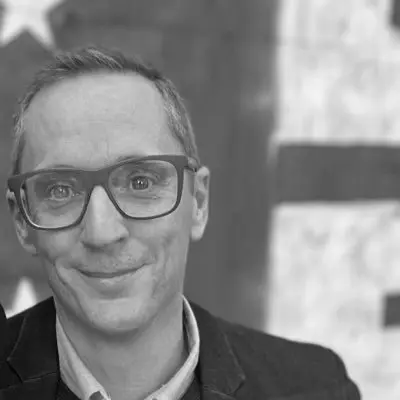

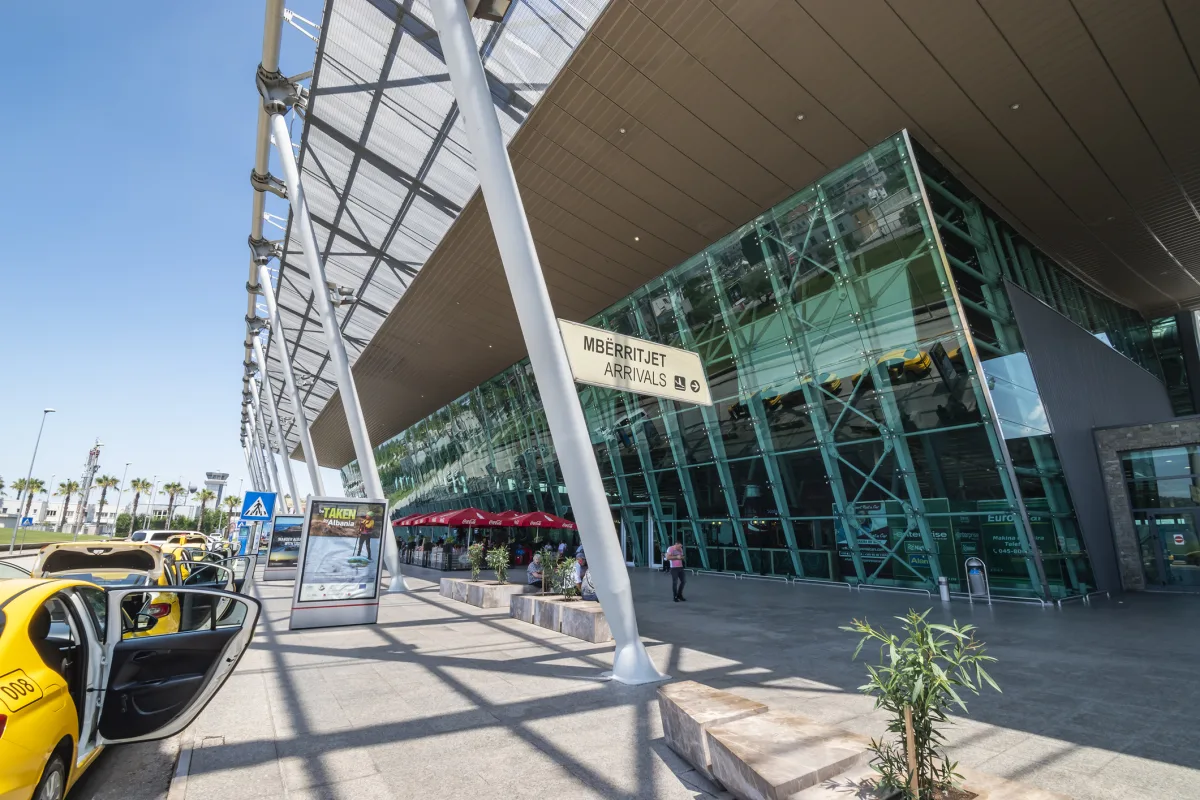
Five years ago, Christian Dölker needed to explain where Albania was. “I had to say it’s north of Greece and on the right side of Italy,” he recalls. “They’d go: ‘How? There’s Croatia.’ And I’d say, ‘You go a little bit further south.’” These days the German entrepreneur, who runs Hyretech, an IT nearshoring company based in Tirana, rarely bothers with the geography lesson. Albania’s tourism boom has done the work for him. Most of his German business contacts have either visited the country or know somebody who has. “It’s known as the new secret tip,” he says. “Often compared to Croatia 15 years ago.”
Getting Germans to holiday in Albania is one thing. Persuading them to hire the country’s developers is quite another. But that is precisely what Dölker has been doing since founding Hyretech in 2022, and his client list suggests the pitch is working. Euronics, the electronics retailer, was among the first. A few weeks ago he signed Deutsche Telekom. Acceleron, a Swiss turbocharger manufacturer spun out of ABB, is on the books too.
The underlying logic is straightforward. Germany is short of IT specialists, according to Bitkom, the country’s digital-industry association. The average vacancy takes months to fill. Albania, meanwhile, has a young, educated workforce hungry for the kind of career prospects that a sluggish domestic economy struggles to provide. The country counts over 4,000 active ICT employers and nearly 23,000 professionals in its tech sector, according to a study commissioned by the Albanian-American Development Foundation (AADF). More than half of those firms already export their services.
A robust talent pipeline
Dölker stumbled into the Albanian IT market almost by accident. He worked for the Goethe-Zentrum and the German embassy in Tirana, kept contacts after returning home, and ended up hiring Albanian developers for a friend’s agency. By 2022, the demand from other German companies warranted a standalone operation. Today Hyretech works exclusively with in Germany and Switzerland, placing teams of Albanian developers on everything from e-commerce platforms to enterprise middleware.
The selling points for German small and mid-sized businesses are several, and some are refreshingly counter-intuitive. Albania’s small IT sector, which might look like a weakness, is in Dölker’s telling actually a strength. “If you’re in India or Bangladesh, you might get a cheaper price,” he says. “But when Microsoft opens a big centre next to you, Monday morning you’ll find your facility very empty. We don’t have that in Albania at all.” The country’s largest IT operations run to hundreds of people, not thousands, a scale that keeps staff loyal and poaching rare.
Beyond Borders™
Geography helps too. Dölker can reach Hyretech’s Tirana office from Stuttgart in six hours door to door. Budget airlines fly direct for, as he puts it, “a few bucks”. Time-zone alignment (something India cannot offer) means teams work the same hours. And because Albania is not yet in the EU, salaries remain below those in Bulgaria or Hungary, where IT pay is rapidly converging with Western European levels.
That EU outsider status cuts both ways. Albanian passport-holders cannot simply move to Berlin on a whim, which keeps staff turnover low. Dölker estimates losing perhaps two out of ten employees over two years, most of them to rival Albanian firms rather than emigration. The talent pipeline, meanwhile, is robust: 11 universities in Tirana alone push out around 2,500 IT graduates each year, and Dölker says he can pull 95 applications within six hours of posting a vacancy. “I need to stop it in six hours,” he says, with obvious satisfaction.
Brand power
All this does not mean Albania’s tech sector has no problems. Ask German clients about working with developers outside the EU and the first question, Dölker concedes, is always about data protection. Albania’s regulatory framework is catching up, but slowly. “We need to prepare everything from the German side,” he says. “There’s no standard we can use from the Albanian side.” Nor is the country’s reputation quite where it needs to be. German firms remain, as Dölker puts it with characteristic diplomacy, insufficiently aware of Albania as a tech destination. “The reputation could be improved,” he says.
His answer to the perception problem is brand power. Lufthansa Industry Solutions already employs staff at its Tirana office; Deloitte has a presence too. Dölker reckons landing Deutsche Telekom will carry its own gravitational pull. His wish list runs further: Bosch, Siemens, and the automotive sector, because “what they do is cool” and Germany’s carmakers still command attention even as they face existential crises.
International donors have spotted the opportunity. With funding from the German Ministry for Economic Cooperation and Development (BMZ), the Agency for Business and Economic Development (AWE), through partners such as GIZ (the German federal enterprise for international cooperation), organises training programmes that firms like Hyretech use to upskill recruits.
The deeper question is whether Albania can keep its cost advantage long enough to build a self-sustaining tech sector. Salaries are climbing, and EU accession (still years away but edging closer) will likely trigger a jump. Dölker gives it five years before the maths start to shift. But by then, he argues, the quality of the workforce and the density of international brands should speak for themselves. The country’s median age is among the lowest in Europe; 69 per cent of ICT employees are between 25 and 29. “The young guys drive this country,” he says. “They want to change, they want to move forward. You can feel that.”
He draws a pointed comparison with his home country. German school-leavers, he says, walk into their first interview asking about company cars, four-day weeks and mobile phone contracts. In Tirana, young developers ask how quickly they can learn and how far they can go. For a German firm struggling to fill a Java developer post after seven months of searching, that kind of hunger may matter more than any cost spreadsheet.
Photo: Dreamstime.