



Future tense
parallax background

Mission crept

Reinvention changes what a business is. Scope creep just adds to it

April 22, 2026

7 min read

April 22, 2026

7 min read

Photo: Dreamstime.

On April 2, 2024, at a ceremony outside the New York Stock Exchange, General Electric stopped existing. In its place stood three companies: GE Aerospace (market capitalisation roughly 154 billion US dollars on the day), GE Vernova (35 billion US dollars, energy), and GE HealthCare, already spun off the previous year and worth around 40 billion US dollars. The parts trade today for more, in combination, than the whole ever did. A business worth close to 600 billion US dollars at its conglomerate peak in 2000, with Jack Welch still running it, had been judged by investors to be more valuable in pieces than when kept together.

The explanation bankers offer is the conglomerate discount. A study of 6,000 German firm-years between 2000 and 2019 puts the number at between 7.9 and 11.5 per cent. Globally, close to half of diversified firms trade at a discount to the sum of their parts; roughly a third have done so persistently for five years or more. Break-ups tend to produce share price outperformance in both the short and long run. The market, in short, has views on whether sprawling is a good idea, and those views are uncharitable.

Emerging Europe, our partner platform, recently argued that Italian espresso bars, Ryanair and Aldi offer a lesson in doing one thing very well. They do. The more interesting argument lies a step beyond that, because most company bosses already believe in focus, in the abstract, and abandon it in practice under cover of a word they find irresistible. That word is reinvention.

Scope creep is not reinvention

Reinvention and scope creep look similar from outside, but they behave differently. A firm that reinvents itself changes what it is. A firm that scope creeps adds to what it is. The first requires subtraction and the courage to say no. The second requires only the willingness to say yes, repeatedly, to things adjacent enough to sound strategic.

Novo Nordisk is currently showing what the harder discipline looks like in a large European business. The Danish drugmaker has spent a century working on diabetes.

Semaglutide, sold at one dose as Ozempic (for diabetes) and at a higher dose as Wegovy (for obesity), made up about 70 per cent of Novo’s 2024 sales of 290 billion Danish kroner (39 billion euros). Mike Doustdar, the new chief executive, spent his first months in office last year cutting 9,000 jobs and closing research programmes that had nothing to do with diabetes or obesity. Other projects were ‘deprioritised’. This is not a company casting around for something else to do.

Hermès is the same argument in more expensive packaging. In April 2025 the Paris leather-goods house briefly overtook LVMH in market value ( 243.65 billion euros against 243.44 billion euros), despite producing roughly a seventh of its rival’s revenue. The Hermès family owns 67 per cent of the shares. It runs one brand, slowly, with craftsmen who take 20 hours or so over a Kelly bag. Operating margins sit at 42-44 per cent, about double LVMH’s. Between 2010 and 2014 Bernard Arnault tried to take Hermès by stealth, and was eventually obliged to sell. Anyone who bought the stock when he first surfaced as a shareholder is up roughly tenfold. Arnault’s own shareholders are up six times. Doing fewer things, very deliberately, seems to be rather profitable.

CD Projekt, the Polish studio behind The Witcher and Cyberpunk 2077, sold its online storefront GOG last December for 90.7 million złoty (21.2 million euros). GOG had been part of the business since 2008 and was both profitable and well-regarded by gamers. The studio decided it was getting in the way of making games. The 851 developers who remain work almost entirely on two existing franchises and one new title. A firm choosing, on purpose, to be smaller.

The adding habit

Growth is the usual culprit. Shareholders insist on more of it. Core markets rarely supply enough. Acquisitions are the quickest way to get a fresh line on an investor-day slide, and the easiest way for a chief executive to look decisive at a board meeting. After growth come the incentives. A deal earns the chief executive a bonus, while advising on the deal earns the bankers a fee. The board gets a strategic review to fill its retreat. No one on an earnings call has yet announced ‘this quarter we added a business we’re not good at’.

Vocabulary handles the rest. New divisions arrive wrapped in transformation, innovation, digital, AI or (irresistibly) reinvention. A firm that has overpaid for a rival is not overpaying. It is making a bold bet on convergence. A bolt-on that the operating team fought against is not scope creep. It is adjacency. Shelved products become pilots. Closed offices become rationalisations. The rhetoric does the heavy lifting while the substance drifts.
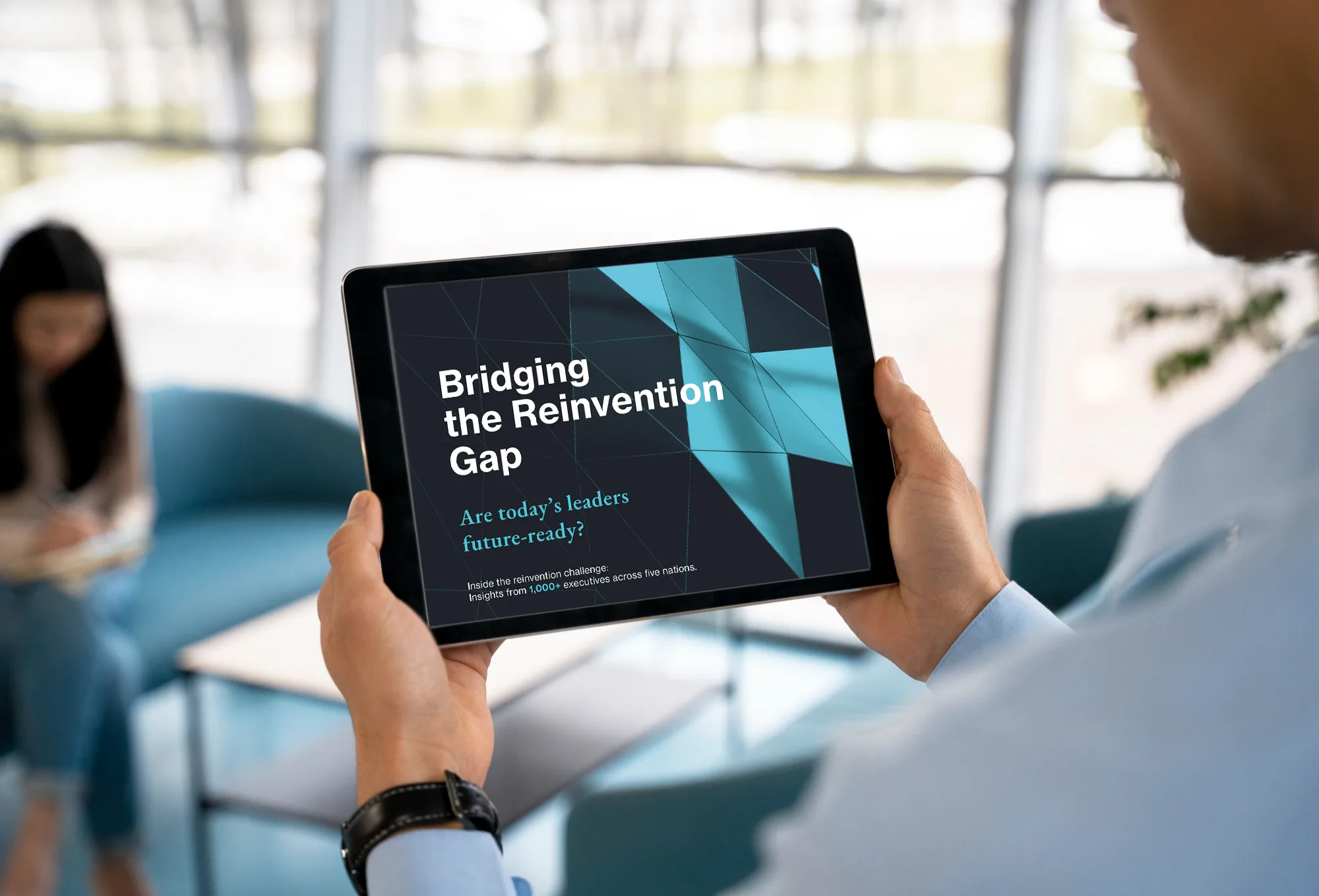
reinvention-rediness-report-Reinvention-gap-mockup-1

Bridging the Reinvention Gap

60-70% of change initiatives fail. You can avoid the same fate with one read. Download our data-driven roadmap for leaders who want to stop firefighting and start leading reinvention

The structural problem is the one nobody inside the firm wants to acknowledge. Innovation labs add things. Transformation offices add things. Chief reinvention officers, when firms have them, also add things. AI strategy teams, ditto. None of this apparatus was designed to close anything down. Subtraction means killing a product somebody champions, often a colleague. It is emotionally expensive, legally fiddly, and professionally unrewarded. When subtraction eventually arrives, it is usually imposed from outside by people nobody invited.

Honeywell is the textbook example. After a year-long portfolio review, and after Elliott Management disclosed a five billion US dollars stake in late 2024 and sent the board a pointed letter, the American industrial conglomerate said in February it would split into three. Its advanced-materials arm, renamed Solstice, began trading on its own in October. Aerospace and automation will separate in the second half of this year. Two or three years of corporate undoing, to undo several decades of corporate doing.

Less is dearer

Activist funds have spotted the asymmetry. Elliott, Starboard, Trian and ValueAct make a very good living telling conglomerates to break themselves up. The trade is reliable because the market rewards focus and punishes sprawl. Specialists change hands at premiums. Europe’s real winners of the past decade are all, in essence, one thing: ASML makes lithography machines, Ferrari makes supercars, Hermès makes leather goods, Inditex makes clothes, Novo Nordisk treats metabolic disease.

Governance does most of the heavy lifting here. Family firms, dominant founders, pension funds with 40-year liabilities, concentrated owners of any kind: all tend to resist sprawl better than diffuse institutional shareholders do. A shareholder who cannot sell their stock without asking their cousins’ permission thinks differently from a shareholder who can sell immediately. The Hermès cousins, above all, wanted to still be making bags in thirty years. Arnault was running a different calculation.

Proper reinvention is what serious companies do all the time. Netflix went from posting DVDs in paper envelopes, to streaming, to making its own films; it is still, recognisably, in the business of getting stories to sofas. Nvidia moved its chips from teenagers’ bedrooms to every data centre on the planet, without adding cars, phones or its own cloud. Each of those transitions required giving something up. None involved bolting on.

Most of what calls itself reinvention today is the opposite. The average corporate deck in 2026 turns an acquisition into a pivot, a new division into reinvention, a bolt-on into the future. Michael O’Leary, Ryanair’s boss, has spent nearly twenty years giving interviewers the same answer whenever they ask why his airline has no business class, no long-haul, no loyalty scheme: the day Ryanair stops knowing what it is, is the day it stops making money. The Italian barista pulling her next espresso would probably nod.

Photo: Dreamstime.

Craig Turp-Balazs

Craig Turp-Balazs

Craig Turp-Balazs is head of insight and analysis at Reinvantage.

Share

Case study: Global technology company

1. The Client

A global technology company operating across EMEA, with a regional HQ in Istanbul. The company manages 20+ markets, handling everything from brand campaigns to strategic partnerships.

Role we worked with: The EMEA Head of Marketing (supported by two regional managers).

2. The Challenge

Despite strong products and a respected global brand, the regional team was struggling with:

  • Misaligned strategy across markets → campaigns executed with inconsistent narratives.
  • Slowed growth → lead generation plateaued despite increasing spend.
  • Internal friction → marketing, sales, and product teams disagreed on KPIs and priorities.

Traditional fixes (more meetings, more reporting) only created more noise.

3. The Sprint

We ran a 10-day Remote Reinvention Sprint with the regional HQ team.

  • Day 1–3: Intake → Reviewed decks, campaign data, and plans.
  • Day 4: Sprint Session (90 mins) → Breakthroughs:
    • Sales and marketing had different definitions of “qualified lead.”
    • 40% of spend was going into low-potential markets.
    • The team assumed the problem was lack of budget, but it was actually lack of alignment.
  • Day 5–10: Synthesis → Insights distilled into a Clarity Brief + Insight Canvas.
4. The Breakthrough

The Sprint uncovered that the issue wasn’t budget, but fragmentation.
Three sharp insights unlocked a way forward:

  1. Unified KPIs bridging marketing + sales.
  2. Market prioritisation → shifting budget to 5 high-potential markets.
  3. Simplified narrative → one EMEA core story, locally adaptable.
By just realigning resources and focus, the client could unlock an estimated £250,000 in efficiency gains within the next 12 months — far exceeding the Sprint’s value guarantee. The path to higher returns was already inside the business, hidden by misalignment.
5. From Sprint to Action (4 Pillars Applied)

With clarity secured, Reinvantage didn’t suggest “more projects.”

Instead, we used the Sprint findings to create laser-focused next steps — drawing only from the areas that would deliver the most impact:

  • Readiness → Alignment workshops for sales + marketing teams. New playbooks clarified “qualified lead” definitions and reduced internal disputes.
  • Foresight → A market-opportunity scan identified which 5 countries would deliver the highest ROI, removing the guesswork from allocation.
  • Growth → Guided the reallocation of €2M budget and designed a phased rollout strategy that protected risk while maximising return.
  • Positioning → Built a messaging framework balancing global consistency with local nuance, ensuring campaigns spoke with one clear voice.

Because the Sprint had stripped away noise, these actions weren’t generic consulting ideas — they were directly tied to the breakthroughs.

6. The Results
  • +28% increase in qualified leads across the region.
  • 30% faster campaign rollout due to streamlined approvals.
  • Budget efficiency gains → €2M redirected from low-return to high-potential markets.
  • Internal cohesion → marketing + sales now use a single shared dashboard.
The client came in believing they needed more budget.
The Sprint revealed that what they really needed was clarity and alignment.

With that clarity, the four pillars became not theory, but practical tools to deliver measurable impact.

The Sprint guaranteed at least £20,000 in value — but in this case, it helped unlock more than 10x that within six months.

Case study: Regional VC fund & accelerator

1. The Client

A regional venture capital fund and accelerator focused on early-stage tech start-ups in the Baltics and Central Europe.

The fund had raised a new round and was under pressure to deliver stronger returns while also building its reputation as the go-to platform for founders.

Role we worked with: Managing Partner, supported by the Head of Portfolio Development.

2. The Challenge

Despite a promising portfolio, results were uneven.

Key issues:

  • Scattered portfolio support → no consistent playbook for start-ups, every partner did things differently.
  • Weak differentiation → founders and co-investors saw the fund as “one of many” in the region.
  • Stretched team → too many small bets, not enough clarity on which companies to double down on.

The leadership team knew something was off, but disagreed on whether the issue was pipeline quality, market conditions, or internal capacity.

3. The Sprint

We ran a 10-day Remote Reinvention Sprint with the partners and portfolio team.

  • Day 1–3: Intake → Reviewed pitch decks, pipeline funnel data, and start-up performance reports.
  • Day 4: Sprint Session (90 mins) → Breakthroughs:
    • No shared definition of a “high-potential founder.”
    • Support resources were spread too thin across the portfolio.
    • The fund’s positioning was more reactive than proactive — it didn’t own a distinctive narrative in the market.
  • Day 5–10: Synthesis → Insights consolidated into a Clarity Brief + Insight Canvas.
4. The Breakthrough

The Sprint revealed that the challenge wasn’t pipeline quality — it was lack of focus and positioning.

Three core insights provided the turning point:

  1. Portfolio Prioritisation Framework → defined clear criteria for where to double down.
  2. Founder Success Playbook → standardised support model for portfolio companies.
  3. Differentiated Narrative → repositioned the fund as “the accelerator of reinvention-ready founders.”
These shifts alone gave the fund a path to add an estimated £2M+ in portfolio value over the following 18 months, by concentrating capital and resources where they could move the needle most.
5. From Sprint to Action (4 Pillars Applied)

With clarity from the Sprint, Reinvantage created a tailored support plan:

  • Readiness → Coached partners on using the new prioritisation framework and trained the team on deploying the Founder Success Playbook.
  • Foresight → Ran scenario analysis on regional tech trends, helping the fund anticipate where capital would flow next.
  • Growth → Guided resource reallocation across the portfolio and supported new co-investor pitches for top-performing start-ups.
  • Positioning → Crafted a sharper brand story for the fund, positioning it as the reinvention partner for globally minded founders.
6. The Results
  • 10 portfolio companies onboarded to the new Playbook → greater consistency of support.
  • Raised follow-on capital for 3 top start-ups with the new prioritisation framework.
  • +26% increase in inbound deal flow from founders citing the fund’s new positioning.
  • Stronger internal cohesion → partners aligned on where to focus resources.
The client thought the problem was pipeline quality.
The Sprint showed it was actually lack of clarity and focus inside the firm.

By applying the four pillars, Reinvantage helped turn scattered effort into concentrated value creation.

The Sprint guaranteed at least £20,000 in value; here it set the stage for multi-million-pound upside in portfolio growth.

Case study: International impact Organisation

1. The Client

A large international impact organisation focused on entrepreneurship and economic empowerment.
The organisation runs multi-country programmes across Eastern Europe and Central Asia, often in partnership with global donors and corporate sponsors.

Role we worked with: Senior Programme Director, responsible for regional coordination.

2. The Challenge

The organisation had launched a flagship regional initiative supporting women entrepreneurs, but the programme was underperforming.

Key issues:

  • Fragmented delivery → each country office interpreted the programme differently.
  • Donor frustration → reporting lacked consistency and clear impact metrics.
  • Lost momentum → staff energy was spent on administration rather than scaling success stories.

Traditional programme reviews had produced long reports, but no real alignment or action.

3. The Sprint

We ran a 10-day Remote Reinvention Sprint with the regional leadership team and representatives from two country offices.

  • Day 1–3: Intake → Reviewed donor reports, programme KPIs, and field feedback.
  • Day 4: Sprint Session (90 mins) → Breakthroughs:
    • Donors cared about quantifiable outcomes, but reporting focused on stories.
    • Staff were duplicating efforts across countries, wasting time and resources.
    • The initiative lacked a clear theory of change — everyone described its purpose differently.
  • Day 5–10: Synthesis → Insights distilled into a Clarity Brief + Insight Canvas.
4. The Breakthrough

The Sprint revealed that the issue wasn’t donor pressure or programme design — it was a lack of shared framework and alignment.

Three critical insights reshaped the path forward:

  1. One Unified Theory of Change → agreed narrative for why the programme exists.
  2. Core Impact Metrics → clear, comparable KPIs across all countries.
  3. Smart Resource Sharing → digital hub to stop duplication and accelerate knowledge flow.
By eliminating duplicated reporting and clarifying what success looks like, the client saw they could save the equivalent of £100,000 in staff time annually — while also unlocking stronger donor confidence and follow-on funding opportunities.
5. From Sprint to Action (4 Pillars Applied)

Armed with Sprint clarity, Reinvantage proposed a laser-focused support plan:

  • Readiness → Trained programme leads on using the new metrics and integrated them into existing workflows.
  • Foresight → Analysed donor trends and expectations, aligning the initiative with the next funding cycle.
  • Growth → Developed a funding case based on the new unified theory of change, securing higher renewal chances.
  • Positioning → Crafted a regional success narrative and storytelling toolkit, helping them showcase results consistently across markets.
6. The Results
  • 30% less time spent on reporting → freed capacity for programme delivery.
  • Donor satisfaction improved → positive feedback on the clarity of impact evidence.
  • Secured new funding commitment → one major donor increased their contribution by 20%.
  • Stronger internal morale → staff felt they were working with clarity, not chaos.
The client thought it needed better donor management.
The Sprint revealed it needed a shared foundation across its teams.

By anchoring on the four pillars, Reinvantage turned alignment into efficiency gains and fresh funding opportunities.

The Sprint guaranteed at least £20,000 in value; here it unlocked both six-figure savings and future-proofed funding.

Case study: National digital development agency

1. The Client

A national digital development agency tasked with driving the government’s digital transformation agenda, including e-services, citizen portals, and smart city pilots.

Role we worked with: Director of Digital Transformation, supported by IT and service delivery leads from three ministries.

2. The Challenge

The agency had strong political backing but faced hurdles in implementation.

Key issues:

  • Siloed projects → each ministry developed digital tools independently, leading to duplication.
  • Citizen frustration → services were digital in name, but still required multiple logins and offline steps.
  • Funding pressure → international partners demanded clearer impact in the short term.

The agency wanted to accelerate momentum but struggled to get alignment across ministries.

3. The Sprint

We ran a 14-day Immersive Reinvention Sprint with the agency’s leadership and digital focal points from three ministries.

  • Day 1–3: Intake → Reviewed strategy docs, donor reports, and citizen feedback data.
  • Day 4: Immersive Sprint Session (half-day) → Breakthroughs:
    • Each ministry had different definitions of “digital service.”
    • 20% of budget was going into overlapping pilot projects.
    • Citizens’ top frustrations were known — but not prioritised.
  • Day 5–14: Synthesis → Insights consolidated into a Clarity Brief + Insight Canvas.
4. The Breakthrough

The Sprint revealed that the biggest blocker wasn’t lack of funding, but lack of shared priorities.

Three practical insights stood out:

  1. One Definition of Digital Service → agreed across ministries.
  2. Quick-Win Prioritisation → focus on top 3 citizen pain points (ID renewal, business registration, healthcare booking).
  3. Shared Resource Map → pool budgets to eliminate duplication.
These changes alone allowed the agency to unlock £75,000 in immediate savings and deliver 2–3 visible improvements in the next quarter — meeting donor expectations and building citizen trust.
5. From Sprint to Action (4 Pillars Applied)

Based on the Sprint clarity, Reinvantage proposed a modest, targeted package of support:

  • Readiness → Facilitated inter-ministerial workshops to embed the “one digital service” definition.
  • Foresight → Analysed citizen feedback trends to shape the quick-win roadmap.
  • Growth → Supported the reallocation of funds to joint projects, reducing overlap.
  • Positioning → Crafted a communication plan highlighting early digital wins to donors and citizens.
6. The Results
  • 2 pilot services integrated into the central portal (ID renewal + healthcare booking).
  • Budget savings of £75,000 from eliminating overlapping projects.
  • Citizen satisfaction up modestly → call centre complaints on digital services dropped by 12%.
  • Donor confidence improved → short-term impact report received positive feedback.
The client thought it needed more funding and bigger projects.
The Sprint revealed it first needed clarity and alignment.

By applying the four pillars to a targeted scope, Reinvantage helped deliver visible results within a single quarter — proving progress to citizens and donors and laying the groundwork for deeper transformation.

You must be logged in to view this page. Login here.

Bridging the Reinvention Gap: Fill this form and get your preview copy immediately.

Future of IT: Fill this form and get your preview copy immediately.

War for Talent: Fill this form and get your copy immediately.

The Voice of Ukrainian Start-ups: Fill this form and get your copy immediately.

The uncounted engine: Ukraine’s start-up rise. Fill this form and get your copy immediately.

The Investment Promotion Playbook 2025: Fill this form and get your preview copy immediately.

The Reinvention Masterclass for Start-up Founders: Join the private cohort

Beyond Borders: Join the private edition