



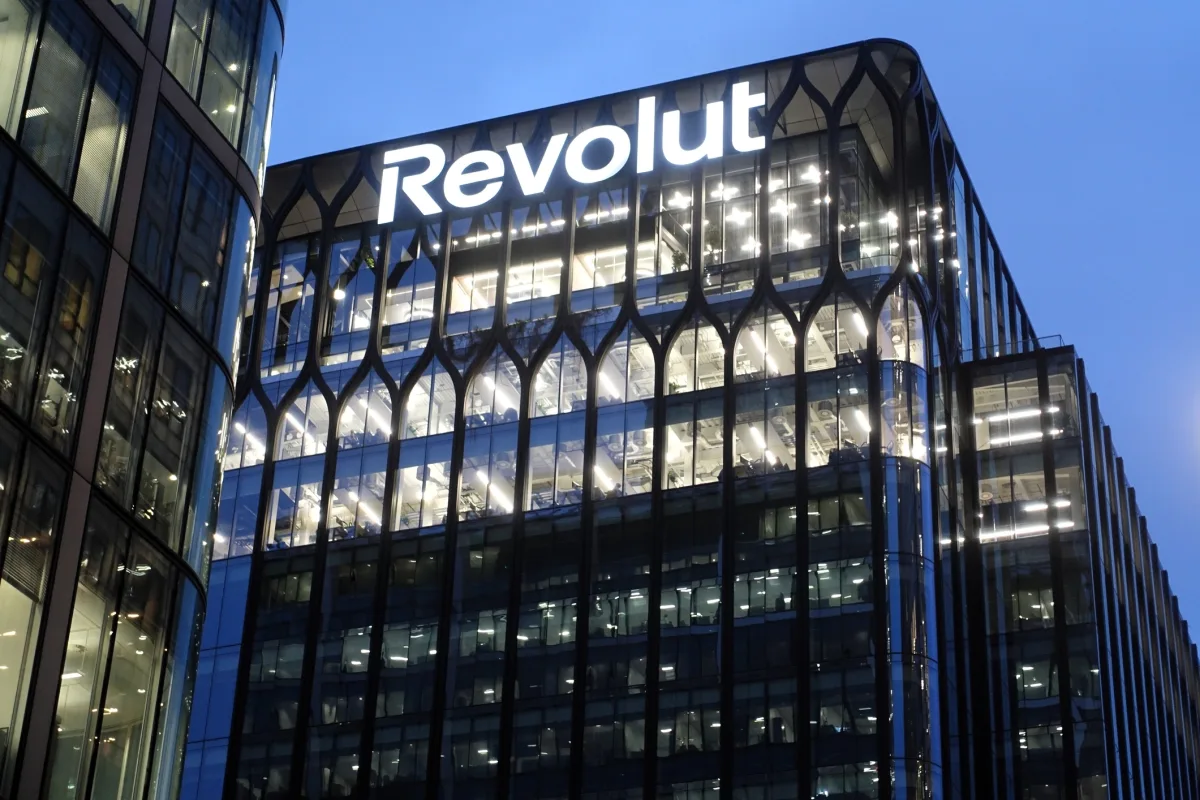
On March 11 Nik Storonsky got his UK banking licence. The Prudential Regulation Authority (PRA) had held Revolut, the payment firm he co-founded in 2015, in its ‘mobilisation’ stage since July 2024, capping deposits while the firm finished building its controls. Storonsky had filed the original application back in January 2021. With the license in place, Francesca Carlesi, who runs the British arm of Revolut, started moving customers across to the new bank the following week. Eligible deposits now sat under the Financial Services Compensation Scheme, the same safety net that covers a Lloyds, HSBC, Barclays or NatWest saver.
Storonsky and Vlad Yatsenko had started Revolut around a prepaid card that bought foreign currency at interbank rates, undercutting the three per cent the high-street banks took on a holiday spend. Anne Boden had got there first, launching Starling in 2014 with no branches and an account run entirely from a phone. Tom Blomfield, who had left Starling that same year after falling out with Boden, shipped Monzo’s coral-pink card in November 2015.
Net interest
Andrew Bailey’s Bank of England lifted its base rate from 0.1 per cent in December 2021 to over five per cent by August 2023, and the neobanks, holding billions in deposits that paid customers little, earned far more on the gap. Boden’s Starling had posted its first annual profit in 2022, built on that net interest income. Anil’s Monzo turned its first full-year profit in 2024.
Boden’s Starling had bought Fleet Mortgages in July 2021 and begun lending against property. TS Anil, then running Monzo, agreed in December 2025 to buy Habito, a digital mortgage broker, after years of leaving home loans to others. Storonsky’s loan book grew 120 per cent over 2025, to 2.2 billion UK pounds, and Revolut lined up a business-lending product for 2026.
Diana Layfield took over Monzo in February 2026 and, in the results to March, reported four income lines each above 300 million UK pounds: current-account balances, borrowing, payments and wealth. Deposits had climbed 55 per cent, to 25.7 billion UK pounds, and the bank had booked its third straight annual profit. Raman Bhatia, who had crossed from OVO Energy to run Starling in 2024, was by then taking more revenue from net interest than from any other source.
Storonsky’s Revolut, born as a payment card, had since added share dealing, savings, insurance and, in 2024, a crypto exchange called Revolut X, most of it sold through paid subscription tiers. Layfield’s Monzo had moved into business accounts, banking one in seven British small firms, and into wealth. Bhatia spent 2024 and 2025 selling Starling’s own banking software to rival lenders through its Engine arm.
The Financial Conduct Authority fined Starling 29 million UK pounds in October 2024 for weak anti-money-laundering and sanctions screening, which Bhatia’s bank accepted and apologised for. The Bank of Lithuania, which licenses Revolut’s EU arm, fined it 3.5 million euros in April 2025 over the same sort of failing, faulting the way it monitored customer relationships. Storonsky’s staff had spent much of 2025 satisfying the PRA on capital and IT controls before the London licence cleared.
Sanoke Viswanathan had launched Chase UK for JPMorgan in September 2021 as a branchless, app-only bank, and Daniel Pinto told investors in 2023 it would break even within 18 months. By June 2025, when Mark O’Donovan took over JPMorgan’s international consumer arm, Chase UK held some 2.5 million British customers and was adding credit cards. HSBC, NatWest and Santander had rebuilt their own apps in the meantime.
By early 2026 Storonsky’s Revolut counted more than 70 million customers across 100 countries, and Layfield’s Monzo banked close to one in five British adults. Tom Blomfield, by then a partner at the startup investor Y Combinator, had built Monzo for people who found the high-street banks a chore. Tens of millions who had sat at the edge of the banking system, or outside it, now ran their money from a handset.
Storonsky’s Revolut took FSCS-insured deposits and answered to the PRA by early 2026, the same regulator that supervises every UK bank. Layfield’s Monzo made most of its profit on the margin between what it paid savers and what it charged borrowers, the oldest mechanism in banking. Bhatia’s Starling had run that way since it won its licence in 2016. Underneath the shiny neobank apps sit the same business of taking deposits and lending them on, under the same rules.
Photo: Dreamstime.