



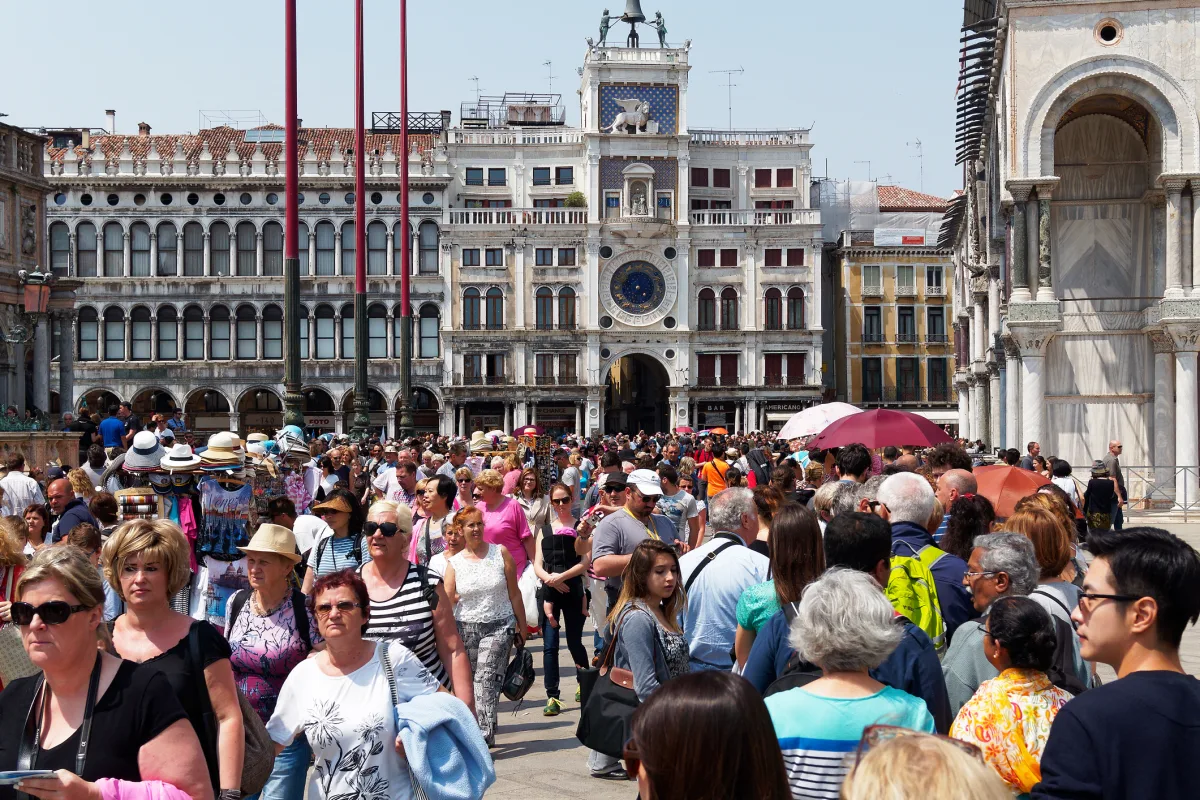
On December 15 Pablo Bustinduy, Spain’s consumer rights minister, ordered Airbnb to strip 65,122 listings from its Spanish site and fined the company 65 million euros, six times the profit regulators reckoned it had made from them. “Thousands of families are living on the edge,” he said, laying the blame on rental platforms that push residents out of their own neighbourhoods. Airbnb says it will challenge the ruling in court. Booking.com had already been told last June to remove 4,000 illegal listings of its own.
Barcelona is arguably where the fight against overtourism is most visible. The city will not renew any of its roughly 10,000 short-term rental licences when they expire in 2028. Catalonia’s parliament went further on March 6, passing a law that raised Barcelona’s lodging tax from April 1, with a quarter of the new revenue earmarked for social housing. Spain’s Constitutional Court has upheld the phase-out. None of it, however, has cooled the market much, and property prices in the city have kept climbing regardless.
The economics which expose the problem behind the crackdown have now been expertly documented in a report by Alex Chapman and Paula Castro Rodriguez of the New Economics Foundation. Modelling the effect of air tourism on house prices across twelve European economies, they project real annual rents in some of the largest tourism markets rising by more than 150 euros by 2031, concentrated in hotspots and falling hardest on lower earners. Landlords gain while renters, mostly, do not. In Spain, Portugal, and Italy, the same distortion is forecast to shave 0.4 to 0.5 percentage points off business investment, as capital chases property and its rent-seeking returns in place of anything more productive.
The same research also found that while hospitality jobs have grown quickly across the bloc’s biggest tourism destinations, real wages have mostly stagnated where arrivals are highest. Italy, France, and Spain came out worst, even as each country’s overall economic output kept rising. Large hospitality groups captured a growing share of the gains: their proportion of accommodation revenue rose sharply in Greece, Spain, and France between 2013 and 2023, with no matching improvement in productivity or pay. Poland and Portugal, where large operators lost ground over the same period, saw both measures improve.
Symptoms, not disease
On March 18 the European Parliament’s transport and tourism committee approved, by 33 votes to four, a resolution calling for tourists to be redistributed towards quieter regions rather than simply taxed out of busy ones. Its rapporteur, Daniel Attard, presented figures showing that 80 per cent of European travellers visit just a tenth of the continent’s destinations, even as tourism supports 12.3 million jobs. The vote was non-binding.
In July 2024 the influencer Molly Thompson charged sixteen followers 1,410 UK pounds each for a week in Bali, a destination already straining under both domestic and foreign arrivals. A budget carrier can still put a passenger between London and most of Europe for less than the price of a decent restaurant meal, and a following on social media supplies demand to match that supply. Skyscanner’s 2026 survey of over 22,000 travellers found that a third had experienced overtourism firsthand, and a similar share were now actively avoiding crowded destinations on their own initiative, without waiting for a tax to steer them there.
Randy Durband, chief executive of the Global Sustainable Tourism Council, puts the shortfall down to timing rather than intent. Public authorities, he told EU Reports in May, “traditionally promoted but did not manage tourism,” and mechanisms for the latter job simply never existed at the scale now required. So far, most of the catching-up has taken the form of fees rather than outright limits on visitor numbers. Activist groups in the Balearic Islands, including Menys Turisme, Mes Vida, have warned British visitors to expect a “hostile atmosphere” this summer regardless of how much any of them paid in tax.
Dubrovnik has tried limits instead. Its port authority now caps cruise-ship arrivals and staggers docking schedules to prevent the old town’s medieval streets from taking several thousand passengers at once. Amsterdam has halved the number of nights a short-term rental may legally operate. Ticket and flight prices into both cities remain untouched by either rule.
Venice’s Contributo di Accesso, a day-tripper charge levied on selected peak dates, collected 5.42 million euros from more than 720,000 payers in its first year. Visitor numbers on chargeable days were barely different from those on free ones.
Time for intervention
What then, is to be done? When an addict reaches their lowest point, concerned friends and family will often stage what have become known as ‘interventions’ to save them from themselves. The travel sector is rapidly reaching the point where such an intervention is desperately needed.
Reinvention efforts in the sector have until now focused mainly on promoting ‘experiential tourism’, a largely meaningless term that creates its own problems (not the least of which is too many people chasing the same experience; often, again, led by influencers). More drastic action is clearly needed. Ending the generous tax breaks airlines enjoy would be a good start, as would introducing minimum pricing of flights. The French government has aggressively advocated for an EU-wide minimum ticket price on flights but has found few supporters.
Fear of the powerful airline lobby is real. But until now, that same lobby has been powerless to persuade the EU to roll back its disastrous Entry/Exit System (EES). Perhaps the lobby’s power has been overstated. It’s time to test it, else Fodor’s ‘No List’, whose purpose is to highlight destinations where tourism is placing unsustainable pressures on the land and local communities, will grow ever longer.
Photo: Dreamstime.