

On a somewhat chilly, less than summer-like July evening last year in the Czech city of Ostrava, Iggy Pop stripped off his shirt, as he is wont to do, before performing a strong set as if at the age of 77 he still had something to prove.
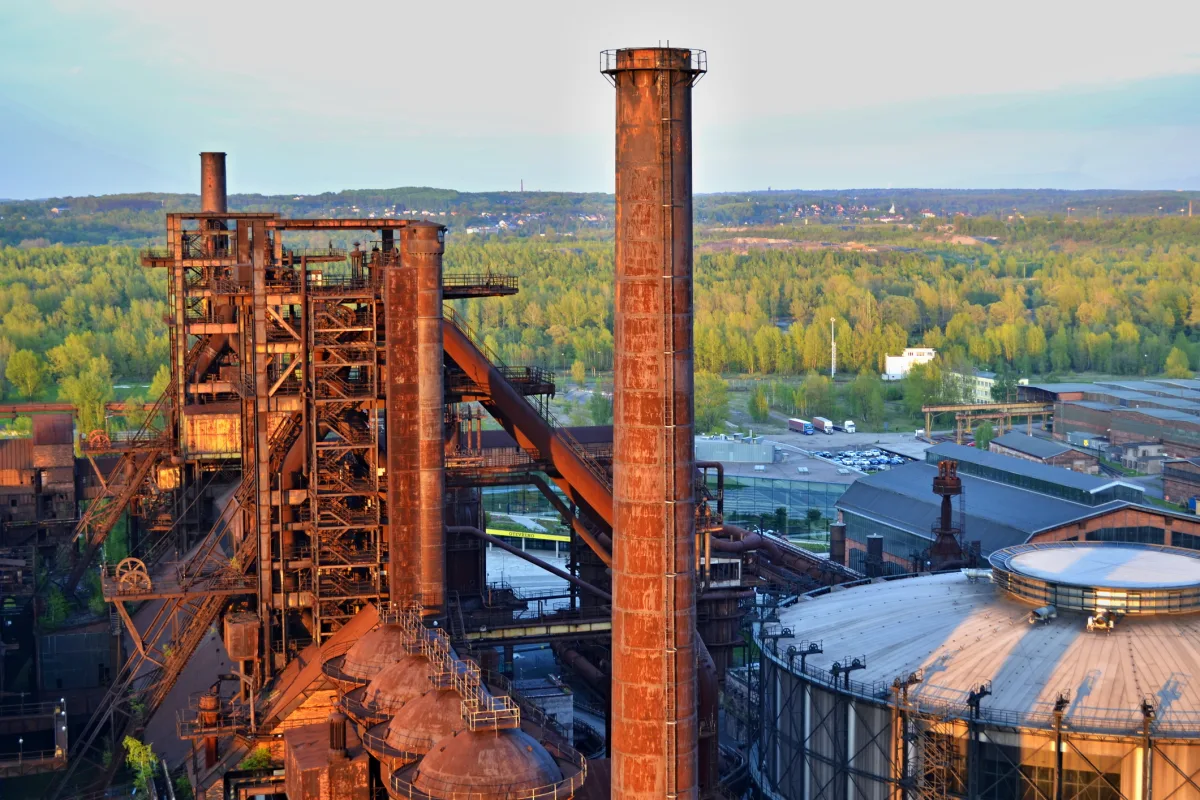
All around Pop and the crowd that had gathered to watch him were blast furnaces the height of apartment blocks, rusted pipelines, and a gasometer repurposed into a concert hall. Dolní Vítkovice (pictured above), the ironworks that produced 90 million tonnes of pig iron over 170 years before its final tapping in 1998, now hosts Colours of Ostrava, one of Central Europe’s largest music festivals, drawing 40,000 people each summer. Coal seams made Ostrava. A music festival is keeping it relevant. Performers this year will include Twenty-One Pilots, Lorde, and Moby.
Music festivals are not Dolní Vítkovice’s only attraction. Walkways have been bolted on to its towers, science and technology centres teach visitors about the city’s rich industrial heritage; bars, cafes, and restaurants serve them refreshments.
A second act
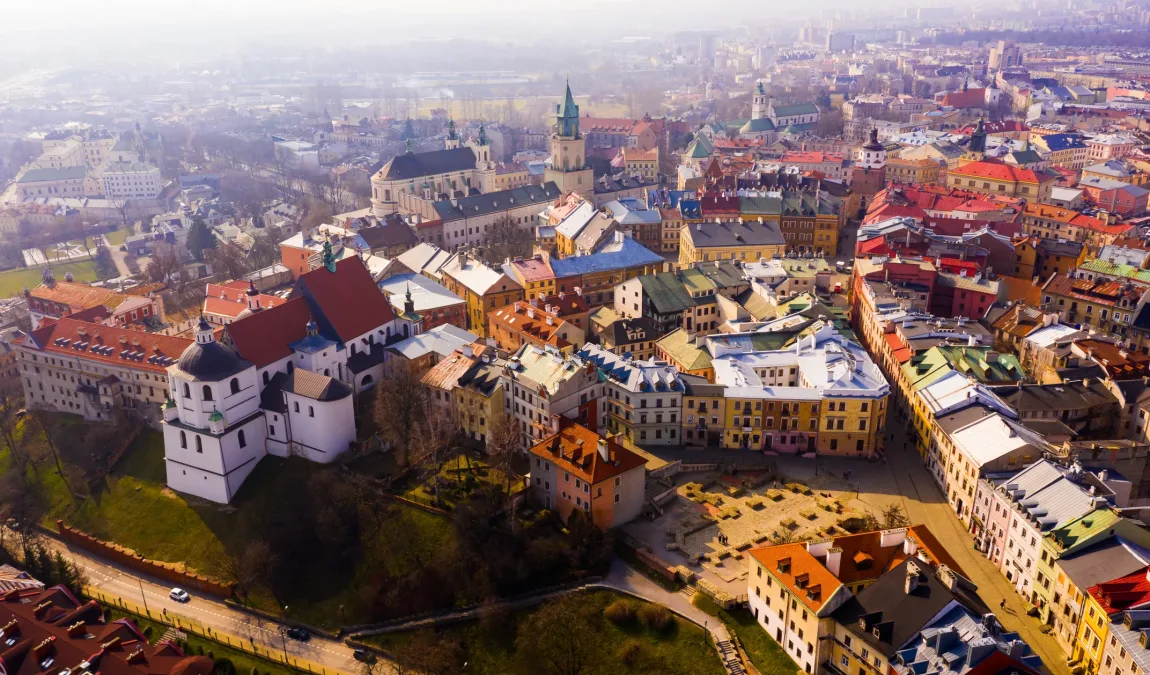
Ostrava is not alone in making the most of its industrial past. Across Central and Eastern Europe, post-industrial communities are discovering that the infrastructure of extraction, such as mine shafts, cooling towers, even workers’ settlements can have an unlikely second act as a tourist attraction. The Wieliczka Salt Mine near Kraków, in Poland, which produced table salt for 700 years before closing in 1996, drew a record 1.91 million visitors in 2025, up 10 per cent on the previous year and with more than 70 per cent coming from abroad.
Also in Poland, Katowice’s former coal mine is now the Silesian Museum, a striking architectural intervention that has become the centrepiece of the city’s reinvention as a European City of Music and a serious conference destination. In Łódź, the 19th-century textile factory complex Manufaktura, once the engine of an entire industrial city, now houses cinemas, restaurants, and a branch of a major hotel chain, the original brick walls pristine around them. There’s brass in what was once grime.
Constructed for specific purposes and designed to withstand blasts and accidents on, forgive the pun, an industrial scale, industrial buildings often cost a fortune to demolish but are likewise expensive to safely maintain if left unused. Tourism offers an alternative. Post-pandemic travellers are demonstrably drawn to what tourism academics call ‘dark heritage’ sites freighted with labour, struggle, and memory. The communities that built these places are ageing, which means the stories are still within living reach. And the physical scale of industrial infrastructure is simply spectacular in a way that no glass-and-steel convention centre can match.
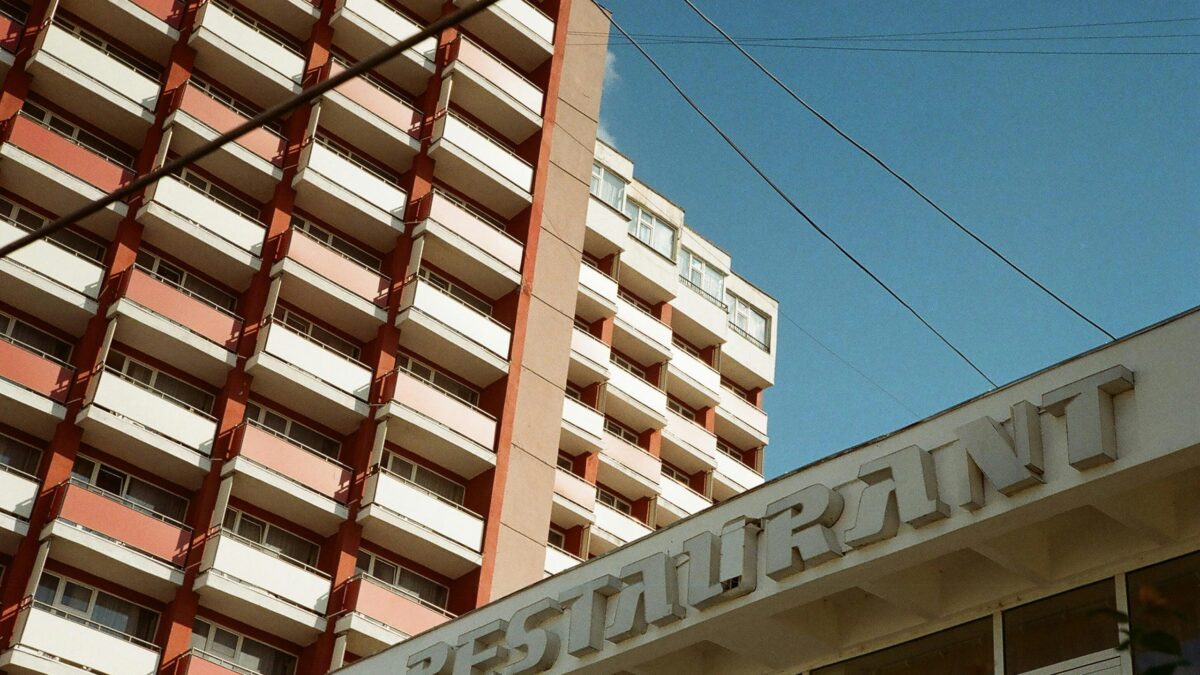
The limitations, though, are just as real. The central one is rarely stated in the tourism brochures. In Romania’s Jiu Valley, the coal towns of Petroșani, Lupeni, and Vulcan have been shedding mining jobs for three decades. The Petroșani Mining Museum exists; it is modest, locally significant, and not particularly well-funded. The valley has tourism potential (mountains as well as industrial heritage) but almost no infrastructure to capture visitor spending. Grants are arriving slowly. Young people are leaving quickly. The gap between what Ostrava achieved and what Petroșani can realistically aspire to is not one of vision but of capital, and of the political economy of EU structural funds.
Even in the success stories, the jobs created by tourism are often a poor substitute for the ones lost. A shift supervisor at a Silesian steelwork in 1980 earned a decent wage with a pension, worked a predictable rota, and sent children to university on a single salary. The hospitality sector that fills the vacancy is overwhelmingly low-wage, predominantly seasonal, and across the region disproportionately employing women and young workers who are statistically more likely to lose income in a downturn. A bartender in Ostrava’s Dolní Vítkovice during Colours of Ostrava earns in four days what the ironworks’ payroll sustained for a year. Not every former miner can own a hotel.
Don’t mention the lung disease
There is also, as researchers studying the Ruhr’s similar transformation have noted, a subtle alienation at work when working-class heritage is curated for middle-class visitors. The narratives selected for tourists (heroic labour, architectural grandeur, the romance of the industrial age) tend to airbrush out the lung disease, the strikes, and the communities hollowed out by closures. Industrial tourism celebrates the machinery but keeps quiet about what happened to the people who operated it.
None of this is an argument against the model. Wieliczka, at 1.91 million visitors a year, is an unambiguous economic success; Dolní Vítkovice is transformative for Ostrava in ways that are hard to dispute standing in front of a blast furnace with a beer or cocktail in hand watching Iggy Pop. These places would otherwise be rubble or, worse, simply decaying. Tourism has done what structural funds, retraining programmes, and regional policy often could not: given former industrial cities a reason for outsiders to show up.
The honest version of the story, though, is that industrial tourism works best as one plank in a broader platform and not as a standalone strategy for regions where the platform hasn’t been built yet. Ostrava’s trick was to pair industrial heritage with a real tech and business services sector, a functioning university ecosystem, and consistent investment in cultural infrastructure over twenty years. The ironworks alone didn’t save the city. The ironworks gave the city something to talk about while the harder work was done elsewhere.
Photo: Dreamstime.