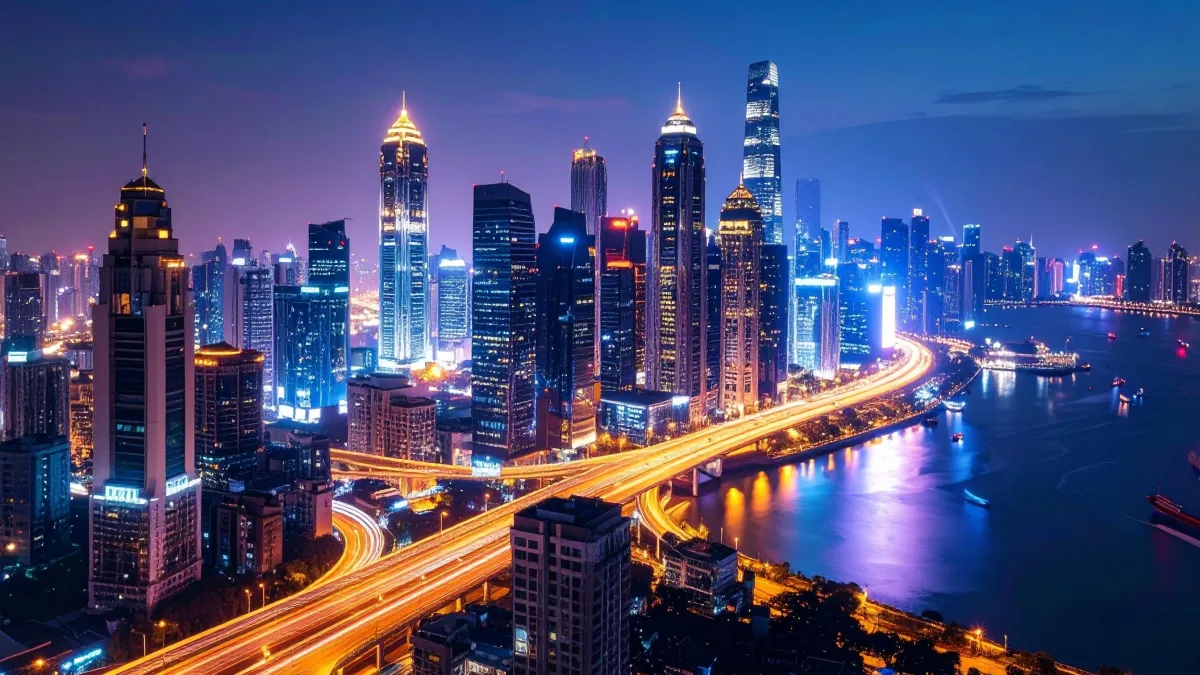


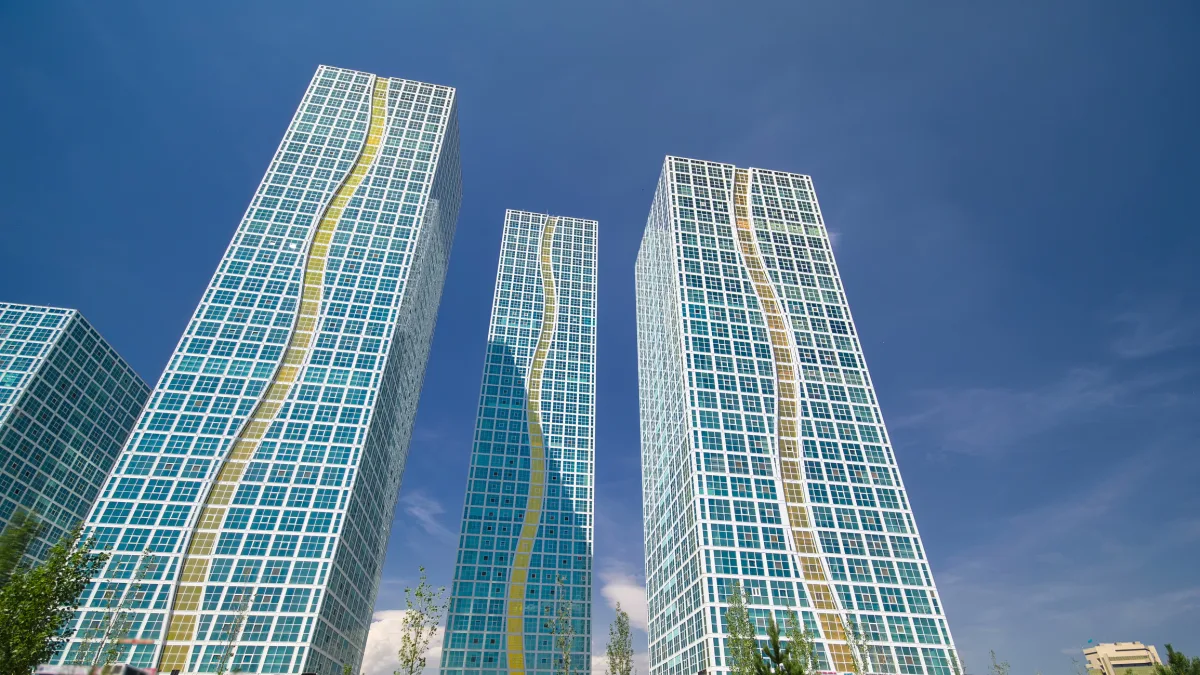
Soaring glass towers, verdant parks, a lakeside marina that could pass for Dubai. Indeed, the artist’s impressions look a bit like a video game. On March 20, Kazakhstan’s deputy prime minister told a joint session of parliament that air taxis ferrying passengers to Alatau, a planned city 50 kilometres north of Almaty, could be running within three years. Alatau itself will take rather longer. Sprawling across 88,000 hectares (larger than Singapore), it could house two million people by 2050. The bill is roughly 21 billion US dollars.
Kazakhstan has been here before. Thirty years ago the country’s then president, Nursultan Nazarbayev moved the capital from Almaty to a windswept steppe town then called Akmola. Astana, as it was renamed (before being renamed again, as Nur-Sultan, then again renamed as Astana), is now a functioning city of over a million and half.
Across Central Asia, the Middle East and South-East Asia, governments are racing to build entire cities from scratch, almost always, almost obligatorily, branded ‘smart’. Turkmenistan unveiled Arkadag in June 2023: a 3.3 billion US dollars collection of white marble buildings (many are seven storeys high, a lucky number) where residents are forbidden from driving their own cars and a robot vacuum cleaner was demonstrated to the president during the opening ceremony. The city is named after former president Gurbanguly Berdimuhamedov, whose unofficial title, Arkadag, means ‘protector’. So secretive is Turkmenistan that few outsiders know if anyone actually lives there.
Indonesia meanwhile is building Nusantara, a new capital on Borneo meant to relieve the pressure on sinking, gridlocked Jakarta. The project was the pet scheme of former president Joko Widodo; his successor, Prabowo Subianto, has downgraded it from ‘national’ capital to mere ‘political’ capital and has slashed funding from two billion US dollars in 2024 to 300 million for 2026. Egypt has been plugging away at a still-unnamed New Administrative Capital east of Cairo, designed for 6.5 million residents, where 14 ministries have relocated.
And then there is Neom. Saudi Arabia’s 500 billion US dollars megacity, with its centrepiece ‘Line’ of 170-kilometre mirror-walled skyscrapers housing nine million people, was supposed to prove that petrostates could build the future. The Public Investment Fund suspended construction in September 2025 with just 2.4 kilometres of foundations laid. Projected costs had ballooned to a reportedly astronomical 4.5 trillion US dollars.
Smart planning?
Planned capitals are nothing new. Brasilia was carved from the Brazilian cerrado in the late 1950s; Canberra was designed as a compromise between Sydney and Melbourne; New Delhi was built by the British to replace Calcutta. All three function as capitals today, if not always as the thriving cities their planners imagined. Brasilia triggered budget deficits and rampant inflation. Canberra spent decades being derided as “several suburbs in search of a city”.
What distinguishes the current crop is the word ‘smart’. Every one of these projects promises 5G, AI-driven traffic management, and carbon neutrality. The track record of such promises is poor. Songdo in South Korea, built on reclaimed land with every piece of urban technology known to man, has struggled to fill its buildings and is widely described as cold and dully predictable. Masdar City near Abu Dhabi shelved its masterplan after costs spiralled. Ordos in Inner Mongolia, designed for a million residents, earned the title of “ghost city”.
The pattern suggests a structural flaw rather than bad luck. Cities are messy, organic things, shaped by the accumulated decisions of millions of people over generations, such as where to open a shop, which street to walk down, where to gather on a Friday evening. Jane Jacobs understood in the 1960s that urban vitality comes from apparent disorder. Top-down planning can lay fibre-optic cable and install smart traffic lights. It cannot manufacture the human connections that makes a place feel alive.
The vanity of rulers
The more relevant question is one of cost. Kazakhstan’s 21 billion US dollars could transform Almaty, a city already grappling with chronic congestion and poor air quality, into one of Central Asia’s most liveable. Turkmenistan’s billions might have improved conditions in the rest of the country. Indonesia’s money, directed at Jakarta’s flood defences and public transport, might have addressed the very problems Nusantara was supposed to escape. But then building a gleaming new city is politically glamorous, fixing the plumbing in an old one is not.
That, perhaps, is the point. New cities serve the vanity of rulers as much as the needs of citizens. Arkadag is named after a most authoritarian leader. Egypt’s capital conveniently moves the government away from the sometimes restive crowds of central Cairo. Neom was Mohammed bin Salman’s personal vision. Even Alatau, the most defensible of the lot given Almaty’s genuine growing pains, carries a more than a whiff of prestige project. Air taxis are not a solution to traffic. They are a solution to the problem of how to make a press conference more exciting.
None of which means planned cities can never work. Astana most certainly did. But it succeeded because it had a genuine economic engine (oil revenues, government relocation) driving population growth, not just architectural visions. The bulk of the world’s urban population will go on living in existing cities, messy and imperfect as they are. Making those cities work better (cleaner air, functioning sewers, reliable buses) lacks the glamour of iconic towers and air taxis. But it would help a great deal more people.
Photo: Dreamstime.