



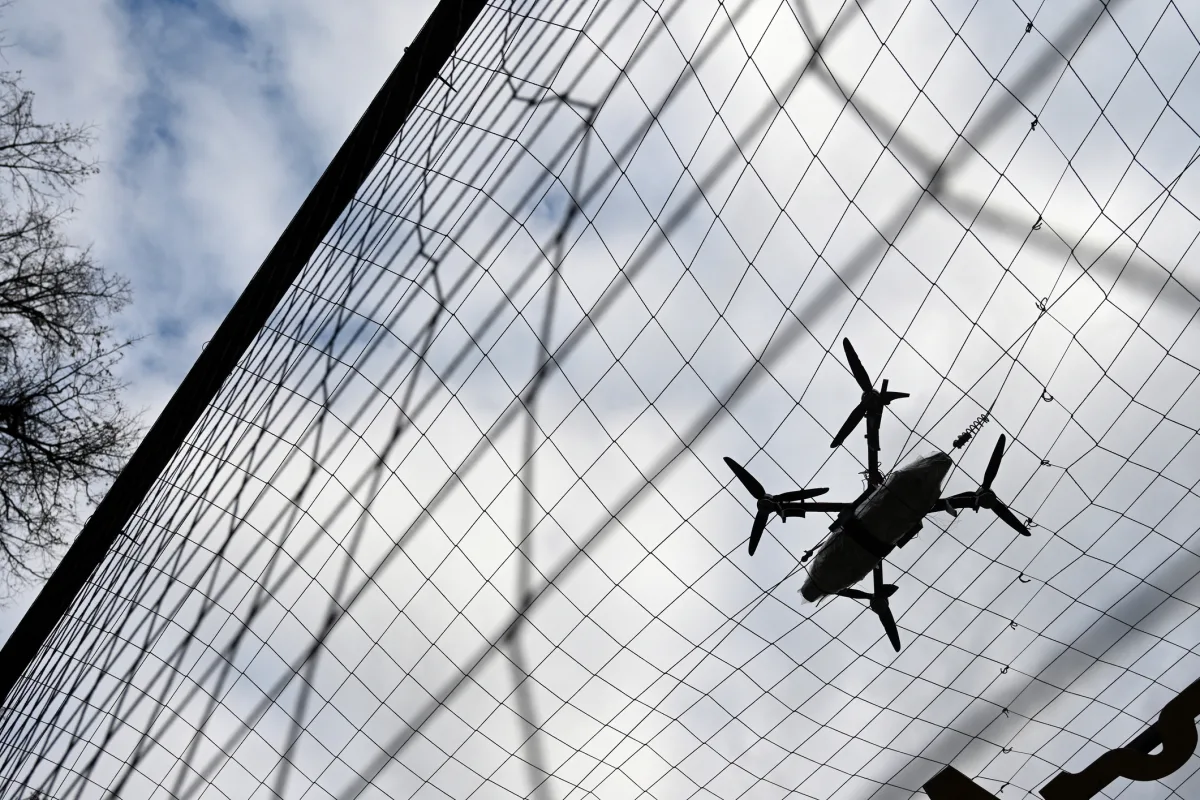
The convergence of artificial intelligence and unmanned aerial systems has moved well past the novelty stage. What was, more than a decade ago, a hobbyist curiosity has matured into a pillar of both global industry and national security strategy. The most consequential shift is not the drone itself but what increasingly operates inside it: edge intelligence, the capacity of a machine to perceive, reason, and act without a continuous human link.
This transformation has not unfolded primarily in corporate R&D laboratories. It has been driven, with uncomfortable speed, by the pressures of active conflict. The wars in Ukraine and the Middle East have served as unintended proving grounds, compressing what might have been decades of incremental development and cautious procurement into a few years of battlefield-enforced iteration. The lessons emerging from those theatres are reshaping not only defence procurement but the commercial drone market and, by extension, the broader regulatory and competitive environment in ways that few industry forecasts anticipated.
The geopolitical laboratory
Ukraine has demonstrated that electronic warfare makes traditional GPS- and radio-controlled drones exceedingly vulnerable in high-intensity conflict. Russian jamming capabilities have been extensive and sophisticated enough to render much of Ukraine’s early drone fleet ineffective in its terminal phases. The response has been instructive. Ukrainian engineers, working under conditions of genuine urgency, pivoted toward AI-driven computer vision that allows drones to navigate and identify targets using visual odometry when all external signals are suppressed. The Ukrainian military and its affiliated technical networks are now training AI models on millions of frames of real combat footage, building automated terminal guidance systems with the kind of empirical data that no peacetime program can generate. This breakneck development has also rendered largely moot the international debate over keeping humans in the loop for lethal targeting decisions. That discussion continues in diplomatic forums, but on the battlefield it has already been overtaken by events.
Equally significant is the manner in which this innovation is organised. The prevailing model for frontier military technology assumes large institutional contractors, formal procurement hierarchies, and multi-year development timelines. Ukraine has upended each of those assumptions. Analysts at the Modern War Institute have characterised the country’s approach as an anarchic culture of grassroots innovation, and the description is apt. Makeshift workshops occupy repurposed Soviet-era buildings, vacant schools, and shuttered hotels. Young engineers work at improvised benches amid 3D printers and disassembled components, iterating on hardware at a pace that bears no resemblance to any Western acquisition process. A 500 US dollars prototype can move from concept to combat test and back to the workbench within days, a timeline that a Western defence contractor’s procurement office would not register as meaningful.
The geographic dispersal of these facilities is not incidental but deliberate. Concentrating research and production in large, identifiable installations would present Russia with targetable nodes. Spreading it across scores of nondescript civilian sites denies that option entirely. No single strike can meaningfully degrade a supply chain that has no centre of gravity. The informal nature of the network extends to its logistics: a frontline unit relaying, through personal rather than institutional channels, that it requires a modification to a munition’s fin assembly will typically receive a field-tested solution within hours. Captured enemy ordnance is stripped and repurposed. Loitering munitions take shape from salvaged components and printed casings. The cumulative effect is a production and innovation ecosystem that is simultaneously harder to destroy and faster to adapt than anything a conventional defence-industrial structure can replicate.
The contrast with Western procurement practice is instructive, if uncomfortable. A platform like the F-35 represents decades of institutional effort and expenditure measured in the hundreds of billions. Its capabilities are undeniable. But the timescales involved, and the degree to which the program has been shaped by industrial and political considerations alongside military ones, represent a structural liability in any environment where the technology cycle moves faster than the budget cycle. Ukrainian engineers producing workable AI targeting software in weeks, using open-source tools and commercial communications platforms, are not competing in the same universe. Defence analysts have grown increasingly direct in acknowledging that the capacity to iterate quickly and absorb the cost of failure cheaply can outperform raw financial scale. The previous decades’ focus on an ever-shrinking number of highly sophisticated and expensive weapons that were too costly to use in quantity is now being challenged, though not yet supplanted, by a renewed emphasis on mass, scale, and numbers. Technological primacy, on this reading, is earned through process rather than inherited through resources.
The second major conflict-driven insight has come from Iran’s deployment of the Shahed-series loitering munitions. These are inexpensive, mass-produced systems, with unit costs measured in the low tens of thousands of dollars, capable of saturating and, in sufficient numbers, bypassing multi-billion dollar air defence architectures. The economic asymmetry is stark: a 20,000 US dollars drone depleting a two million US dollars interceptor missile is not a sustainable exchange ratio for the defender. Ukraine has faced precisely this arithmetic, expending Patriot and IRIS-T interceptors against targets costing a fraction of the price. This logic has shifted serious strategic attention away from exquisite, low-volume platforms and toward expendable swarms, a concept with significant implications for both defence planning and commercial drone design philosophy.
The technology stack
The industry is reorganising itself around what practitioners describe as a software-defined hardware model. The airframe, once the central object of competitive differentiation, is increasingly treated as a commodity platform. The value resides in the layers above it. At the perception layer, edge computer vision now enables real-time defect detection, whether a hairline crack in a wind turbine blade or a corrosion pattern on an offshore oil rig, without routing data to a remote cloud for analysis. Latency, in many operational contexts, is not a technical inconvenience but a mission-critical variable. At the navigation layer, visual odometry and simultaneous localisation and mapping (SLAM) algorithms allow drones to operate in GPS-denied environments: inside warehouses, beneath dense forest canopy, or in urban canyons that defeat satellite-based positioning. The practical effect is that drones can now hold their position and complete tasks in conditions that would have grounded earlier generations of the technology.
Coordination represents the next layer of complexity. Decentralised swarm AI is moving from experimental to operational, with a single human operator now capable of managing fifty or more drones simultaneously through AI-driven deconfliction. The most ambitious layer is what is being called agentic autonomy: drones given high-level mission goals rather than specific waypoints, capable of determining their own flight paths, prioritizing sensor targets, and adapting in real time to environmental conditions. A system tasked with inspecting all transformers in a given sector and reporting anomalies is operating in a fundamentally different mode than one following a pre-programmed route. It is making decisions, not executing instructions.
Hardware evolution has kept pace with these software advances. The longstanding bottleneck of flight time, historically limited to roughly twenty minutes for most commercial platforms, is approaching resolution through two parallel developments. Hydrogen fuel cell systems, now moving from prototype to commercial deployment at companies such as H3 Dynamics, can sustain flight for four to eight hours, enough to inspect a hundred miles of pipeline in a single operation. Simultaneously, next-generation lithium-sulfur and solid-state battery chemistries, with energy densities approximately thirty percent above conventional lithium-ion cells and without the flammability characteristics that create operational and regulatory constraints, are beginning to reach defense and high-end enterprise markets.
At the component level, 2026-generation commercial drones frequently employ a dual-processor architecture. One processor, a low-power microcontroller unit, manages flight stability. A second, substantially more capable system-on-chip, drawing on platforms such as the NVIDIA Jetson Orin Nano or the Qualcomm Flight RB5, handles real-time AI inference: running object detection, 3D mapping, and sensor fusion at thirty or more frames per second. Weight economics drives every design decision, and the adoption of high-density interconnect circuit boards, which can reduce board size by up to half, converts gains in circuitry directly into additional battery capacity or sensor payload. Processing AI workloads at the edge also improves resilience in electronically contested environments, particularly on the battlefield, where dependence on cloud connectivity is a liability rather than a convenience.
Commercial applications and market structure
The commercial drone market has split between hardware manufacturers and what might be described as intelligence-layer software firms. DJI, the Chinese manufacturer that controls approximately seventy percent of the global market, has set the baseline standard for integrated AI obstacle avoidance in professional platforms. However, the competitive pressure it faces comes less from rival hardware producers than from companies seeking to own the software and data architecture above the airframe. This distinction matters because the software layer, not the airframe, is where margins and defensibility reside. Anduril, the American defence technology firm, has built its Lattice operating system to treat individual drones as nodes within a wider autonomous sensor network, enabling distributed situational awareness that conventional command structures cannot match at comparable speed. Skydio has concentrated on vision-only autonomous flight for enterprise infrastructure inspection. Zipline, meanwhile, has established itself as the benchmark for autonomous long-range delivery, with its P2 Zip system using AI-driven acoustic sensing to detect and avoid other aircraft without human intervention. Each of these companies is, in effect, selling a capability rather than a product.
The highest-value commercial applications in 2026 share a common characteristic: they have moved from data collection to automated decision support. In infrastructure inspection, drones equipped with AI models from firms such as Airobotics do not merely record footage for a human engineer to review later. They automatically identify structural fatigue, corrosion, or thermal anomalies and trigger maintenance tickets directly within a client’s enterprise resource planning system. The drone becomes a mobile sensor that interfaces with business operations rather than a flying camera that produces video files for someone else to interpret. In precision agriculture, automated spraying systems using multispectral sensors apply inputs only to distressed plants, reducing chemical usage by thirty to fifty percent. In intralogistics (the industry term for logistics within warehouses and factories), drones using ultra-wideband positioning and computer vision manage inventory in high-rack distribution centres around the clock, scanning barcodes and detecting empty-slot errors with accuracy that approaches the statistical limits of the technology.
Construction and mining have developed a further application with significant ROI implications. LiDAR-equipped drones perform automated four-dimensional mapping, combining three-dimensional spatial data with a temporal dimension that tracks change over time. AI systems compare daily drone scans against building information models and flag deviations from the engineering blueprint in real time. The practical value is a shift from periodic inspections requiring substantial specialist time to continuous automated monitoring that alerts only when something is genuinely wrong.
Regulatory evolution and the BVLOS threshold
The single most consequential regulatory development reshaping commercial drone economics is the gradual opening of ‘beyond visual line of sight’ (BVLOS) operations. The requirement that a licensed pilot maintain direct visual contact with a drone has historically confined the economic case for autonomous long-range applications to a narrow set of exempted use cases. New FAA frameworks in the United States, alongside parallel ‘U-space’ regulations advancing in Europe, are beginning to resolve this constraint by shifting regulatory responsibility from the individual pilot to the operating organisation. Companies seeking BVLOS certification are now audited on the explainability of their drone’s AI decision-making processes, a requirement that is creating real competitive pressure to invest in transparent, auditable AI architectures rather than opaque high-performance systems. The cybersecurity dimension of this shift has received less public attention than it deserves: a BVLOS-capable drone operating beyond direct supervision represents a networked endpoint that is, in principle, reachable by adversaries.
This regulatory shift also has direct implications for civil security. The Middle East conflicts have demonstrated that low-cost autonomous systems can now reach major commercial hubs, including civilian airports and critical infrastructure. Dubai and Doha have both found themselves within the threat envelope of systems that were, not long ago, considered tactically marginal. The result is a substantial and accelerating corporate and government investment in counter-UAS technology, a market that did not meaningfully exist five years ago and that is now attracting both defence-oriented firms and commercial security operators. Detection, jamming, kinetic interception, and AI-driven threat classification are each becoming distinct sub-sectors in their own right.
What comes next
The next phase of development, expected to define the market over the following two to three years, will centre on what practitioners are calling the agentic drone: a system capable of receiving high-level objectives and determining independently how to achieve them. The distinction between a drone following a pre-defined inspection path and one that decides, mid-mission, which structural elements warrant closer examination and in what sequence is not merely technical. It reflects a different conception of what the technology is and what organisational capabilities are required to deploy it well. Companies that treat the agentic drone as a faster version of what they already operate will likely underperform those that redesign their workflows around it from the ground up.
Structural hardware innovation will accompany these software advances. Morphing wing designs, drawing on bio-inspired research into birds such as the swift, allow airframes to adjust their span and sweep in flight, combining the efficiency of a fixed-wing platform for transit with the manoeuvrability required in constrained urban environments. MEMS microphones integrated into motor mounts enable real-time acoustic analysis of propeller health, allowing systems to detect mechanical fatigue before it produces a failure. The drone of the near future is, in this sense, as much a self-monitoring system as an operational platform: one that can report its own degradation, request maintenance, and recalibrate its behaviour accordingly.
What the Ukrainian case has established, with more clarity than any theoretical argument could, is that the dominant logic of legacy defence technology, in which scale, incumbency, and capital intensity confer durable advantage, does not apply cleanly to this domain. Speed of iteration and tolerance for distributed risk are now competitive variables of the first order. That observation carries implications well beyond the specific conflict in which it was tested. Commercial operators, investors, and policymakers in the drone sector who have not yet internalised it are already behind.
One thing seems clear: the era of purchasing drones in small lots, ten here and fifteen there, of the kind still common in my native Romania, is drawing to a close. Numbers, mass, and scale once again have their own quality, both on the battlefield and in the broader calculus of deterrence.
Photo: Dreamstime.