




Cloud cover
scope creep
Mission crept
parallax background

Future tense

Long-termism emerges from governance, not from organigrams

April 21, 2026

6 min read

April 21, 2026

6 min read

Photo: Dreamstime.

Derek Walker’s latest report runs to 147 pages. As the Welsh Future Generations Commissioner, Walker publishes one every year, covering climate targets, biodiversity, NHS spending, the Welsh language, food policy, procurement rules, and the mental health of young people. The 2025 edition also commissions original artwork. He fields around 800 requests for advice a year. Back in 2019 his predecessor, Sophie Howe, used the role to help scupper a proposed M4 relief road. Public bodies across Wales take his framework seriously.

That the office exists at all is no small thing. Israel had a Commission for Future Generations from 2001, with powers to intervene in legislation. Its first commissioner’s term expired in 2006, no replacement was ever appointed, and the Knesset formally abolished the institution in 2010, citing “unjustified budgetary burden”. Hungary set up an independent Ombudsman for Future Generations in 2008, whose office intervened in hundreds of environmental cases a year. In 2011 the Viktor Orbán government’s new constitution folded the ombudsman into a junior deputy role. Sándor Fülöp, the first commissioner, resigned the following year.

The pattern is not subtle. Futures bodies that are toothless tend to survive. Futures bodies with teeth tend to get abolished, demoted or restructured. Wales has lasted a decade partly because its commissioner advises and challenges but cannot decide. There is no veto, no constitutional weight. A judge once described the underlying Act as “vague, general and aspirational”. The limits that make the office survivable are the same limits that blunt its force.

The seed-corn problem

The problem these institutions are set up to address is not a shortage of imagination, but a structural asymmetry in how accountability works. Politicians bear the cost of long-term investments during their careers and collect none of the credit. Civil servants are judged on this year’s budget execution, not outcomes in 2050. Prevention spending is universally agreed to be cheaper than cure, and universally crowded out when money tightens.

The Welsh NHS now absorbs 49 per cent of the Welsh government’s budget, up from 34 per cent when devolution began in 1999. Almost none of that goes on the early-years programmes or mental-health interventions that would reduce demand in a generation. Everyone agrees this is mad. Nobody can find the political space to move the money.

A commissioner can publish a glossy report naming the problem. A commissioner cannot change where the savings land or who feels the political pain. Bolting a long-term advocate onto a short-term machine does not alter the machine.
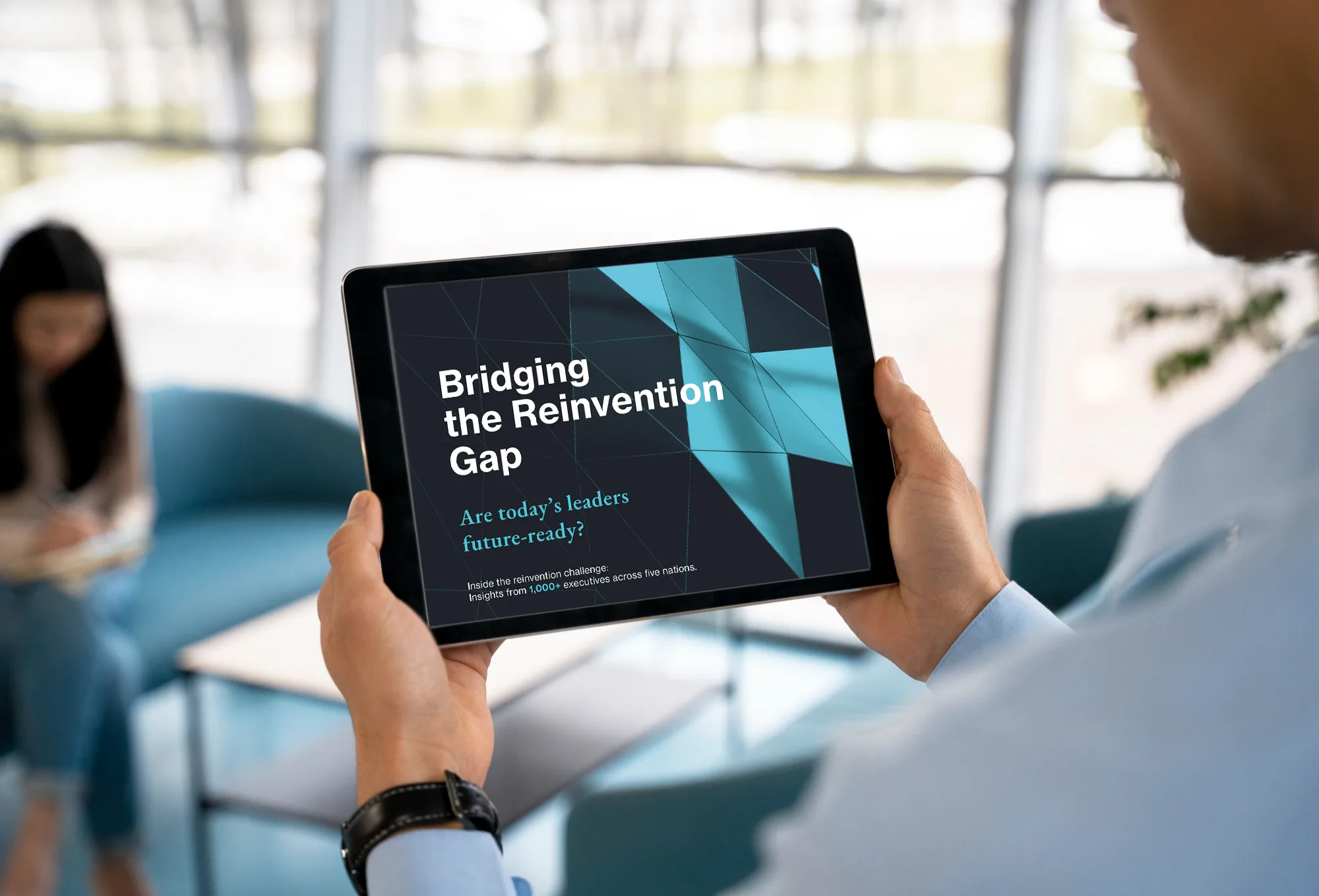
reinvention-rediness-report-Reinvention-gap-mockup-1

Bridging the Reinvention Gap

60-70% of change initiatives fail. You can avoid the same fate with one read. Download our data-driven roadmap for leaders who want to stop firefighting and start leading reinvention

Corporate life has been down this road. Blue-sky departments had a good decade. Bell Labs, the template, gave the world the transistor, the laser, information theory, Unix and nine Nobel Prizes. It could do so because AT&T was a regulated monopoly whose customer base could not be competed away, and whose utility rates allowed a pittance to be tucked into every American’s phone bill. Once the 1984 breakup exposed the company to actual competition, Bell Labs’ funding collapsed. Its successor, Lucent, was a husk within a decade. The research went. The Nobel Prizes stopped.

The same story has played out in sector after sector since. Xerox PARC invented the mouse and gave it to Apple. Area 120, Google’s internal incubator, was gutted in early 2023. X, Alphabet’s ‘moonshot factory’, began spinning projects out to outside venture capital in 2024, after the parent’s chief financial officer decided moonshots needed to pay for themselves; ‘unrestrained invention’ is no longer the pitch. Johnson & Johnson, Allianz and a gallery of chief innovation officers and corporate futurists have gone the same way. McKinsey’s ‘three horizons’ model, everywhere in 2015, is rarely cited in earnings calls these days.

The Federal Foresight Advocacy Alliance, an American pressure group, surveyed US government foresight offices last year and found that 73 per cent had suffered declines in funding, staffing or influence since 2024. Fifteen per cent had been eliminated outright. One practitioner put it plainly: “Survival takes up all the space and energy.”

Measuring what matters

Which does not mean long-term thinking is hopeless. It means the institutions that try to insert the long term as an add-on keep being out-engineered by the underlying incentives. The interesting reforms are less visible.

Finland’s Committee for the Future, a parliamentary body of 17 MPs established in 1993 and made permanent in 2000, has survived for more than three decades because it is wired into how the Eduskunta processes legislation, rather than bolted on beside it. New Zealand, Scotland and Iceland have been experimenting with wellbeing budgets that change what governments publish and track. Derek Walker’s own current campaign in Wales is less about expanding his remit than about ring-fencing prevention spending in each departmental budget. None of these is dramatic. All are attempts to change the plumbing rather than install a new thermostat.

The same logic applies in business. The firms that manage long horizons well tend to have ownership structures that insulate them from quarterly pressure. Roche runs drug pipelines across decades because its founding families retain voting control. Denmark’s pension funds think in 40-year increments because that is what their liabilities look like. Germany’s Mittelstand, Japan’s cross-shareholdings, the family holding companies that still dominate chunks of southern European industry: long-termism emerges from governance, not from organigrams. When a listed company appoints a chief futurist, the useful question is not what the futurist will say, but what happens to the futurist’s budget when the share price drops.

Central and Eastern European governments and companies flirting with foresight shops (the Emirati model is admired in the region, as are the Scottish and Finnish examples) should draw the obvious moral. A ministry of tomorrow, a commissioner for posterity: these are cheap to set up and easy to applaud. Whether they matter at all depends entirely on what happens, once the press release has yellowed, to spending flows, accounting rules and ownership structures.

Edmund Burke thought society a partnership between the dead, the living and the unborn. Governments honour the dead with statues. They honour the unborn with glossy reports and the occasional commissioner, when budgets permit. The more interesting question is not who speaks for tomorrow. It is who pays for it today, and who is allowed to pretend they are not.

Photo: Dreamstime.

Marek Grzegorczyk

Marek Grzegorczyk

Marek Grzegorczyk is an analyst at Reinvantage.

Share

Case study: Global technology company

1. The Client

A global technology company operating across EMEA, with a regional HQ in Istanbul. The company manages 20+ markets, handling everything from brand campaigns to strategic partnerships.

Role we worked with: The EMEA Head of Marketing (supported by two regional managers).

2. The Challenge

Despite strong products and a respected global brand, the regional team was struggling with:

  • Misaligned strategy across markets → campaigns executed with inconsistent narratives.
  • Slowed growth → lead generation plateaued despite increasing spend.
  • Internal friction → marketing, sales, and product teams disagreed on KPIs and priorities.

Traditional fixes (more meetings, more reporting) only created more noise.

3. The Sprint

We ran a 10-day Remote Reinvention Sprint with the regional HQ team.

  • Day 1–3: Intake → Reviewed decks, campaign data, and plans.
  • Day 4: Sprint Session (90 mins) → Breakthroughs:
    • Sales and marketing had different definitions of “qualified lead.”
    • 40% of spend was going into low-potential markets.
    • The team assumed the problem was lack of budget, but it was actually lack of alignment.
  • Day 5–10: Synthesis → Insights distilled into a Clarity Brief + Insight Canvas.
4. The Breakthrough

The Sprint uncovered that the issue wasn’t budget, but fragmentation.
Three sharp insights unlocked a way forward:

  1. Unified KPIs bridging marketing + sales.
  2. Market prioritisation → shifting budget to 5 high-potential markets.
  3. Simplified narrative → one EMEA core story, locally adaptable.
By just realigning resources and focus, the client could unlock an estimated £250,000 in efficiency gains within the next 12 months — far exceeding the Sprint’s value guarantee. The path to higher returns was already inside the business, hidden by misalignment.
5. From Sprint to Action (4 Pillars Applied)

With clarity secured, Reinvantage didn’t suggest “more projects.”

Instead, we used the Sprint findings to create laser-focused next steps — drawing only from the areas that would deliver the most impact:

  • Readiness → Alignment workshops for sales + marketing teams. New playbooks clarified “qualified lead” definitions and reduced internal disputes.
  • Foresight → A market-opportunity scan identified which 5 countries would deliver the highest ROI, removing the guesswork from allocation.
  • Growth → Guided the reallocation of €2M budget and designed a phased rollout strategy that protected risk while maximising return.
  • Positioning → Built a messaging framework balancing global consistency with local nuance, ensuring campaigns spoke with one clear voice.

Because the Sprint had stripped away noise, these actions weren’t generic consulting ideas — they were directly tied to the breakthroughs.

6. The Results
  • +28% increase in qualified leads across the region.
  • 30% faster campaign rollout due to streamlined approvals.
  • Budget efficiency gains → €2M redirected from low-return to high-potential markets.
  • Internal cohesion → marketing + sales now use a single shared dashboard.
The client came in believing they needed more budget.
The Sprint revealed that what they really needed was clarity and alignment.

With that clarity, the four pillars became not theory, but practical tools to deliver measurable impact.

The Sprint guaranteed at least £20,000 in value — but in this case, it helped unlock more than 10x that within six months.

Case study: Regional VC fund & accelerator

1. The Client

A regional venture capital fund and accelerator focused on early-stage tech start-ups in the Baltics and Central Europe.

The fund had raised a new round and was under pressure to deliver stronger returns while also building its reputation as the go-to platform for founders.

Role we worked with: Managing Partner, supported by the Head of Portfolio Development.

2. The Challenge

Despite a promising portfolio, results were uneven.

Key issues:

  • Scattered portfolio support → no consistent playbook for start-ups, every partner did things differently.
  • Weak differentiation → founders and co-investors saw the fund as “one of many” in the region.
  • Stretched team → too many small bets, not enough clarity on which companies to double down on.

The leadership team knew something was off, but disagreed on whether the issue was pipeline quality, market conditions, or internal capacity.

3. The Sprint

We ran a 10-day Remote Reinvention Sprint with the partners and portfolio team.

  • Day 1–3: Intake → Reviewed pitch decks, pipeline funnel data, and start-up performance reports.
  • Day 4: Sprint Session (90 mins) → Breakthroughs:
    • No shared definition of a “high-potential founder.”
    • Support resources were spread too thin across the portfolio.
    • The fund’s positioning was more reactive than proactive — it didn’t own a distinctive narrative in the market.
  • Day 5–10: Synthesis → Insights consolidated into a Clarity Brief + Insight Canvas.
4. The Breakthrough

The Sprint revealed that the challenge wasn’t pipeline quality — it was lack of focus and positioning.

Three core insights provided the turning point:

  1. Portfolio Prioritisation Framework → defined clear criteria for where to double down.
  2. Founder Success Playbook → standardised support model for portfolio companies.
  3. Differentiated Narrative → repositioned the fund as “the accelerator of reinvention-ready founders.”
These shifts alone gave the fund a path to add an estimated £2M+ in portfolio value over the following 18 months, by concentrating capital and resources where they could move the needle most.
5. From Sprint to Action (4 Pillars Applied)

With clarity from the Sprint, Reinvantage created a tailored support plan:

  • Readiness → Coached partners on using the new prioritisation framework and trained the team on deploying the Founder Success Playbook.
  • Foresight → Ran scenario analysis on regional tech trends, helping the fund anticipate where capital would flow next.
  • Growth → Guided resource reallocation across the portfolio and supported new co-investor pitches for top-performing start-ups.
  • Positioning → Crafted a sharper brand story for the fund, positioning it as the reinvention partner for globally minded founders.
6. The Results
  • 10 portfolio companies onboarded to the new Playbook → greater consistency of support.
  • Raised follow-on capital for 3 top start-ups with the new prioritisation framework.
  • +26% increase in inbound deal flow from founders citing the fund’s new positioning.
  • Stronger internal cohesion → partners aligned on where to focus resources.
The client thought the problem was pipeline quality.
The Sprint showed it was actually lack of clarity and focus inside the firm.

By applying the four pillars, Reinvantage helped turn scattered effort into concentrated value creation.

The Sprint guaranteed at least £20,000 in value; here it set the stage for multi-million-pound upside in portfolio growth.

Case study: International impact Organisation

1. The Client

A large international impact organisation focused on entrepreneurship and economic empowerment.
The organisation runs multi-country programmes across Eastern Europe and Central Asia, often in partnership with global donors and corporate sponsors.

Role we worked with: Senior Programme Director, responsible for regional coordination.

2. The Challenge

The organisation had launched a flagship regional initiative supporting women entrepreneurs, but the programme was underperforming.

Key issues:

  • Fragmented delivery → each country office interpreted the programme differently.
  • Donor frustration → reporting lacked consistency and clear impact metrics.
  • Lost momentum → staff energy was spent on administration rather than scaling success stories.

Traditional programme reviews had produced long reports, but no real alignment or action.

3. The Sprint

We ran a 10-day Remote Reinvention Sprint with the regional leadership team and representatives from two country offices.

  • Day 1–3: Intake → Reviewed donor reports, programme KPIs, and field feedback.
  • Day 4: Sprint Session (90 mins) → Breakthroughs:
    • Donors cared about quantifiable outcomes, but reporting focused on stories.
    • Staff were duplicating efforts across countries, wasting time and resources.
    • The initiative lacked a clear theory of change — everyone described its purpose differently.
  • Day 5–10: Synthesis → Insights distilled into a Clarity Brief + Insight Canvas.
4. The Breakthrough

The Sprint revealed that the issue wasn’t donor pressure or programme design — it was a lack of shared framework and alignment.

Three critical insights reshaped the path forward:

  1. One Unified Theory of Change → agreed narrative for why the programme exists.
  2. Core Impact Metrics → clear, comparable KPIs across all countries.
  3. Smart Resource Sharing → digital hub to stop duplication and accelerate knowledge flow.
By eliminating duplicated reporting and clarifying what success looks like, the client saw they could save the equivalent of £100,000 in staff time annually — while also unlocking stronger donor confidence and follow-on funding opportunities.
5. From Sprint to Action (4 Pillars Applied)

Armed with Sprint clarity, Reinvantage proposed a laser-focused support plan:

  • Readiness → Trained programme leads on using the new metrics and integrated them into existing workflows.
  • Foresight → Analysed donor trends and expectations, aligning the initiative with the next funding cycle.
  • Growth → Developed a funding case based on the new unified theory of change, securing higher renewal chances.
  • Positioning → Crafted a regional success narrative and storytelling toolkit, helping them showcase results consistently across markets.
6. The Results
  • 30% less time spent on reporting → freed capacity for programme delivery.
  • Donor satisfaction improved → positive feedback on the clarity of impact evidence.
  • Secured new funding commitment → one major donor increased their contribution by 20%.
  • Stronger internal morale → staff felt they were working with clarity, not chaos.
The client thought it needed better donor management.
The Sprint revealed it needed a shared foundation across its teams.

By anchoring on the four pillars, Reinvantage turned alignment into efficiency gains and fresh funding opportunities.

The Sprint guaranteed at least £20,000 in value; here it unlocked both six-figure savings and future-proofed funding.

Case study: National digital development agency

1. The Client

A national digital development agency tasked with driving the government’s digital transformation agenda, including e-services, citizen portals, and smart city pilots.

Role we worked with: Director of Digital Transformation, supported by IT and service delivery leads from three ministries.

2. The Challenge

The agency had strong political backing but faced hurdles in implementation.

Key issues:

  • Siloed projects → each ministry developed digital tools independently, leading to duplication.
  • Citizen frustration → services were digital in name, but still required multiple logins and offline steps.
  • Funding pressure → international partners demanded clearer impact in the short term.

The agency wanted to accelerate momentum but struggled to get alignment across ministries.

3. The Sprint

We ran a 14-day Immersive Reinvention Sprint with the agency’s leadership and digital focal points from three ministries.

  • Day 1–3: Intake → Reviewed strategy docs, donor reports, and citizen feedback data.
  • Day 4: Immersive Sprint Session (half-day) → Breakthroughs:
    • Each ministry had different definitions of “digital service.”
    • 20% of budget was going into overlapping pilot projects.
    • Citizens’ top frustrations were known — but not prioritised.
  • Day 5–14: Synthesis → Insights consolidated into a Clarity Brief + Insight Canvas.
4. The Breakthrough

The Sprint revealed that the biggest blocker wasn’t lack of funding, but lack of shared priorities.

Three practical insights stood out:

  1. One Definition of Digital Service → agreed across ministries.
  2. Quick-Win Prioritisation → focus on top 3 citizen pain points (ID renewal, business registration, healthcare booking).
  3. Shared Resource Map → pool budgets to eliminate duplication.
These changes alone allowed the agency to unlock £75,000 in immediate savings and deliver 2–3 visible improvements in the next quarter — meeting donor expectations and building citizen trust.
5. From Sprint to Action (4 Pillars Applied)

Based on the Sprint clarity, Reinvantage proposed a modest, targeted package of support:

  • Readiness → Facilitated inter-ministerial workshops to embed the “one digital service” definition.
  • Foresight → Analysed citizen feedback trends to shape the quick-win roadmap.
  • Growth → Supported the reallocation of funds to joint projects, reducing overlap.
  • Positioning → Crafted a communication plan highlighting early digital wins to donors and citizens.
6. The Results
  • 2 pilot services integrated into the central portal (ID renewal + healthcare booking).
  • Budget savings of £75,000 from eliminating overlapping projects.
  • Citizen satisfaction up modestly → call centre complaints on digital services dropped by 12%.
  • Donor confidence improved → short-term impact report received positive feedback.
The client thought it needed more funding and bigger projects.
The Sprint revealed it first needed clarity and alignment.

By applying the four pillars to a targeted scope, Reinvantage helped deliver visible results within a single quarter — proving progress to citizens and donors and laying the groundwork for deeper transformation.

You must be logged in to view this page. Login here.

Bridging the Reinvention Gap: Fill this form and get your preview copy immediately.

Future of IT: Fill this form and get your preview copy immediately.

War for Talent: Fill this form and get your copy immediately.

The Voice of Ukrainian Start-ups: Fill this form and get your copy immediately.

The uncounted engine: Ukraine’s start-up rise. Fill this form and get your copy immediately.

The Investment Promotion Playbook 2025: Fill this form and get your preview copy immediately.

The Reinvention Masterclass for Start-up Founders: Join the private cohort

Beyond Borders: Join the private edition