


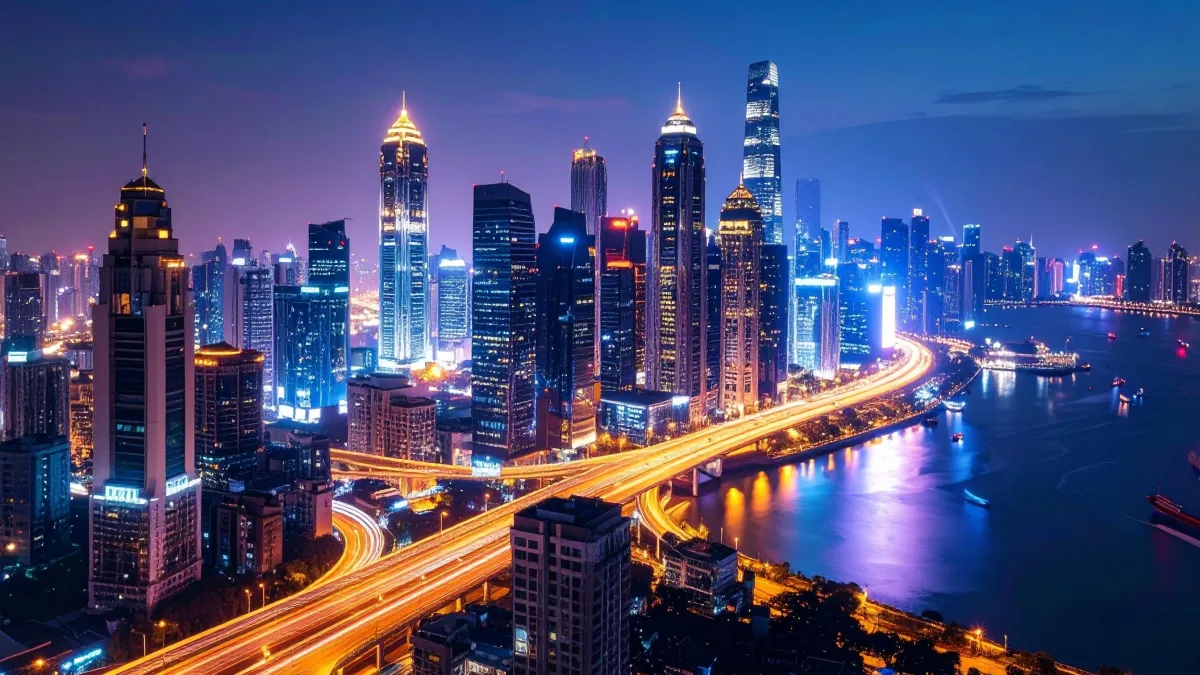
In a hall full of global executives in Beijing last week, the pitch was not what it used to be. No talk of breakneck growth, no grand promises of limitless expansion. Instead, China’s premier, Li Qiang, offered something more subdued, and far more telling: stability. A ‘harbour of certainty’ in an uncertain world.
It was a carefully chosen line. For decades, China’s value proposition to business was built on scale and speed. It was the place where things happened faster, cheaper, and bigger. Now, the message has shifted. China is no longer selling momentum. It is selling predictability.
That shift says less about China than it does about the world it is speaking to. Because certainty, once assumed, has become scarce. Trade flows that once felt frictionless are now political instruments. Supply chains that were optimised for efficiency are being reworked for resilience. Regulation no longer evolves gradually; it arrives abruptly, often shaped by forces far outside the market. In that context, predictability becomes something companies will pay for—even if they’re not sure it’s real but because it is deeply desired.
The strategic move
China understands this. Whether its system is genuinely more predictable or simply more controlled—and therefore more legible on its own terms—is almost beside the point. The strategic move is to position itself as a counterweight to a fragmented, volatile global landscape. A place where, at least in theory, the rules are clearer, the direction more deliberate, the signals easier to read.
Convenient? Certainly. Credible? To some extent. But above all, timely. For business leaders, this creates a more complicated dilemma than the familiar ‘China or not’ debate. The question is no longer about market entry or exit. It is about what kind of certainty you are willing to rely on. Political predictability comes with trade-offs. So does regulatory transparency. So does alignment with home markets that are themselves becoming more interventionist. What looks stable from one vantage point may look opaque from another.
And that is precisely the tension. The same system that offers consistency can also obscure. The same environment that feels controlled can feel closed. The idea that any major market today is fully predictable is, at best, optimistic. Which is why the deeper shift is not geographic. It is strategic. Too many organisations are still treating uncertainty as a phase to manage through—something to hedge, buffer, or wait out. They diversify supply chains, build contingencies, and hope for a return to something resembling normal. But normal is no longer on offer.
Stability as positioning
What we are seeing instead is a structural change in how the global economy operates. Stability is no longer a given; it is a positioning. And increasingly, it is being marketed as such. That leaves companies with a choice. Not between stable and unstable markets—that distinction is eroding—but between different forms of uncertainty, each with its own logic, risks, and constraints. The mistake will be to believe that this is a problem that can be solved by choosing correctly. It cannot.
Because predictability is not something you can outsource to a market, a government, or a system. Not anymore.
The real task is harder, and less comfortable. It is to build organisations that can operate without it.
That means developing the capacity to move across shifting regulatory environments without losing coherence. To make decisions without complete information. To hold competing assumptions about risk at the same time — and still act. In other words, to replace the search for certainty with a capability for navigating uncertainty.
China’s message in Beijing was clear: we can offer you a degree of stability in a volatile world. For some, that will be enough. For others, it will raise more questions than it answers. But perhaps the more important question is not where stability can be found, but whether it can be relied upon at all.
In a world where every system claims to be predictable, the advantage will not belong to those who pick the safest harbour. It will belong to those who learn how to sail in open water.
Photo: Dreamstime.