



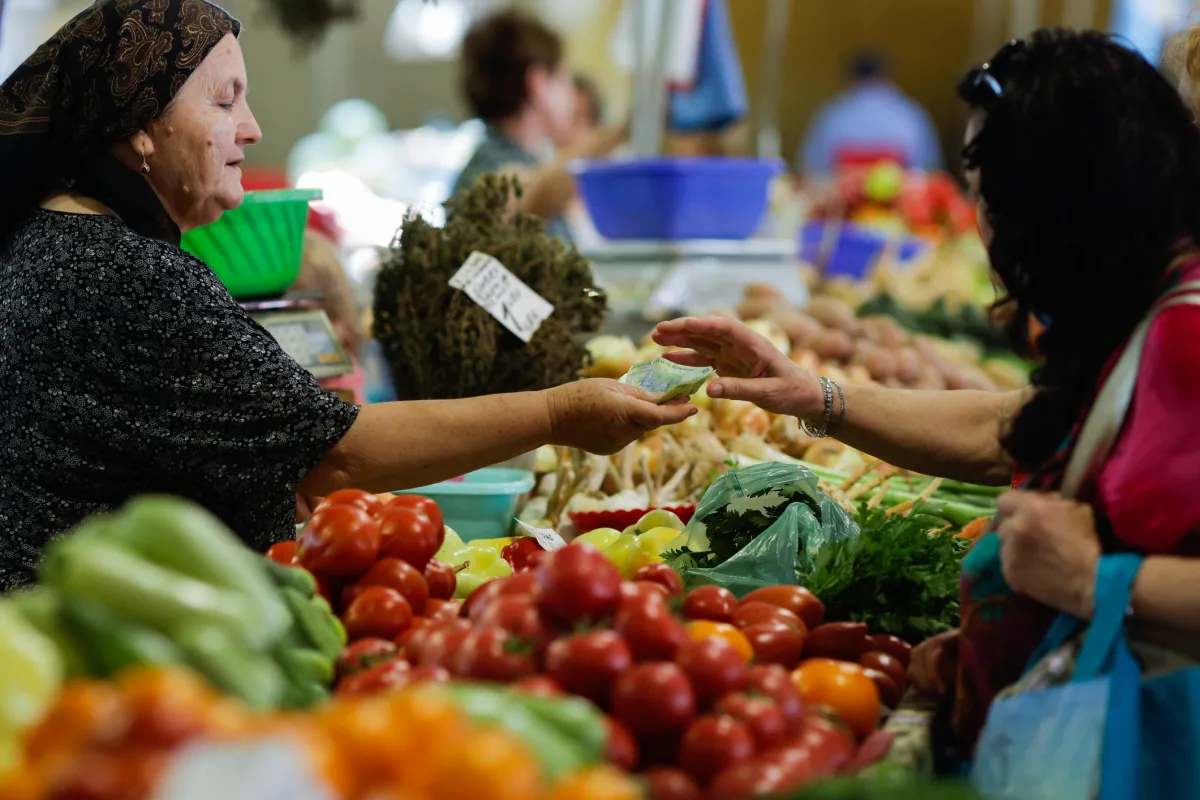
In Maramureș, in the far north west of Romania, Maria Păduran tends her three hectares as her grandfather did: compost for fertiliser, manual weeding, heirloom seeds saved each autumn. No pesticides touch her tomatoes. No synthetic fertilisers leach into the soil. Her methods would delight Munich’s organic-obsessed consumers, who routinely pay anything from five euros for a kilo of certified organic tomatoes. Maria’s—grown with precisely the techniques those Germans romanticise—fetch, depending on the season, a maximum of two euros at the local market, but often far less.
Through a combination of post-communist collapse, rural poverty, and institutional failure, parts of Central and Eastern Europe spent much of the 1990s accidentally cultivating one of Europe’s most valuable agricultural advantages—then systematically squandered it. Whilst Germany spends 17 billion euros each year on organic food and drink, and 70 per cent of European consumers willingly pay premiums for chemical-free food, Central and Eastern European farmers practicing de facto organic agriculture earn commodity prices.
The accidental advantage
The region’s organic credentials emerged not from environmental conviction but economic catastrophe. When communism collapsed, collective farms disintegrated. The average Romanian organic farm manages just five hectares of pasture with two to five cows—too small for industrial methods, too poor for expensive inputs. Fertiliser use in Romania hovers around 50 kilogrammes per hectare, compared with over 200 in the Netherlands. This wasn’t sustainability; it was poverty.
Three decades later, however, this backwardness looks remarkably like a strategic advantage. Romania expanded its organic area by 123 per cent between 2012 and 2022. Bulgaria increased by 182 per cent. This growth sounds impressive until one examines the base: despite dramatic percentage increases, organic farming still represents merely 4.3 per cent of Romanian agricultural land. Austria, by contrast, has converted 26 per cent of its farmland. Estonia 23 per cent. Sweden 20 per cent.
The gap between potential and reality is staggering. Romania possesses Europe’s largest rural population, extensive low-input farming, and biodiversity that Western Europe lost to industrial agriculture decades ago. It should dominate European organic markets. Instead, it exports raw commodities whilst importing processed organic products from countries with far fewer natural advantages.
The certification wall
Certification, which costs money small farmers don’t have, is the biggest obstacle. EU organic certification requires a minimum of 500 euros (and usually a lot more) annually—a prohibitive sum for farmers earning just a few thousand euros each year. The process also demands detailed record-keeping, multilingual documentation, and three-year conversion periods during which farmers bear organic production costs without receiving organic prices. Wealthier Western European farmers absorb these expenses. Eastern Europeans cannot.
A Romanian farmer converting five hectares to certified organic production therefore faces three years of reduced yields whilst learning new methods, plus certification fees, plus the risk that organic premiums won’t materialise. The rational response is continuing conventional production. Except most aren’t using conventional methods anyway—they’re simply unable to prove it.
Only 66 per cent of Romania’s organic land is fully certified, compared with over 90 per cent in Estonia, Sweden, and Denmark. Bulgaria manages just 55 per cent. These figures suggest not inadequate organic farming but inadequate certification—farmers practicing organic methods without bureaucratic blessing.
The human capital deficit compounds the problem. Just 1.5 per cent of Romanian organic farm managers possess full agricultural training, compared with 75 per cent in the Netherlands. When certification requires dealing with complex EU regulations in multiple languages, illiteracy in bureaucratic procedures becomes disqualifying.
The marketing void
Not that certification guarantees success. Eastern European organic products lack brand recognition, distribution networks, and marketing sophistication. Germany’s organic sector spent three decades building specialised retailers, premium positioning, and consumer education. Romania has none of this infrastructure.
When Romanian organic products reach Western European supermarkets—a rare enough occurrence—farmers receive 15-20 per cent of final retail prices. Importers capture 30-40 per cent margins. Certification bodies, logistics companies, and retailers claim the rest. The farmer who grew authentically organic tomatoes for decades earns little more than conventional agriculture provides.
Western European organic distribution evolved through co-operatives that aggregate supply, share certification costs, invest in processing facilities, and negotiate with retailers. Post-communist Eastern Europe, scarred by collective farm memories, largely rejected co-operative organisation. Farmers operate individually—unable to meet volume requirements, unable to afford certification, unable to access premium markets.
The absence is particularly galling given Austria’s success. Austrian bio-farming associations provide certification support, collective marketing, and export facilitation. Austrian farmers producing organic products on five-hectare plots earn comfortable livings. Romanian farmers on identical holdings scrape by. The difference isn’t land, climate, or farming methods—it’s institutional infrastructure and state support.
The policy failure
Governments had decades to address this. They didn’t. Agricultural ministries continued promoting intensive methods. EU Common Agricultural Policy funds flowed to large operations rather than small organic-potential farms. Support for certification costs—covering 100 per cent in Austria—remained minimal or non-existent in Romania and Bulgaria.
Portugal offers an instructive contrast. Facing similar challenges of small farms and limited certification, the Portuguese government implemented aggressive support measures in 2020. The organic area under conversion increased ten-fold in two years, from 50,000 to 491,000 hectares. Conversion continues. The policy is simple: remove financial barriers to certification.
Eastern European governments pursued the opposite strategy. Rather than facilitating organic transition for farms already practicing low-input methods, policies encouraged consolidation and intensification. The result was predictable: small farmers either emigrated or continued subsistence agriculture, whilst organic premiums flowed to Western European producers who had successfully positioned themselves in affluent markets.
The co-operative collapse compounded policy failures. Distrust of collective organisation—entirely rational given communist history—prevented farmers from organising effectively. Individual smallholders cannot negotiate with supermarket chains, cannot afford certification, and cannot achieve economies of scale in processing or marketing. The Austrian and Italian models demonstrate that organic agriculture at small scale requires collective action. Eastern Europe never built the institutions to enable it.
The closing window
The opportunity for Eastern Europe isn’t gone but it’s narrowing fast. Three forces conspire against late movers. First, Western European organic production expands rapidly. As supply increases, premiums compress. Second, demographic decline empties Eastern European villages. Those remaining often pursue intensive agriculture, not organic traditionalism. Traditional farming knowledge disappears with elderly generations. Third, certification and distribution infrastructure requires years to build. First-mover advantages calcify into structural barriers.
Some success stories exist. Polish organic berry and mushroom exporters captured market segments. Bulgarian rose oil commands premiums globally. Hungarian paprika maintains reputation. These successes share common features: niche products, clear quality differentiation, organised producer groups, and deliberate branding strategies. They prove that Eastern European organic positioning is possible—but only through coordinated effort that broader agriculture never received.
The demographic reality is particularly unforgiving. Young people flee rural Eastern Europe for cities or Western Europe. Those who remain often view organic methods as backward poverty rather than marketable authenticity. The Romanian organic sector attracts some educated entrepreneurs, but too few to counteract rural depopulation. In twenty years, traditional farming knowledge may simply not exist.
Strategic malpractice
This isn’t market failure—it’s policy failure wrapped in institutional incompetence, garnished with co-operative collapse. Western European consumers desperately want what Eastern European farmers accidentally produce. Capturing even modest market share could transform rural economies.
However, capturing that share requires precisely the institutions Eastern Europe never built: certification support systems, marketing organisations, distribution networks, and co-operative structures. It requires governments treating organic agriculture as economic development opportunity rather than backward poverty. It requires recognition that authenticity without marketing is worthless, and that traditional methods without certification generate no premiums.
The opportunity may not be entirely lost. EU funds theoretically available for rural development could subsidise certification. E-commerce platforms could enable direct sales to Western consumers. Blockchain verification might bypass expensive bureaucratic certification. A new generation of educated rural entrepreneurs could bridge cultural and linguistic gaps that stymied their parents.
But the trajectory is unpromising. In two decades, organic tomatoes in Munich may well carry certified labels—grown by Dutch companies in climate-controlled facilities with computerised inputs. Meanwhile, Maria’s granddaughter will have migrated to Bucharest or Berlin. The fields in Maramureș will grow wild, perfectly organic produce, feeding precisely nobody. Strategic failures become historical footnotes. This one isn’t written yet—but the ink is drying.
Photo: Dreamstime.