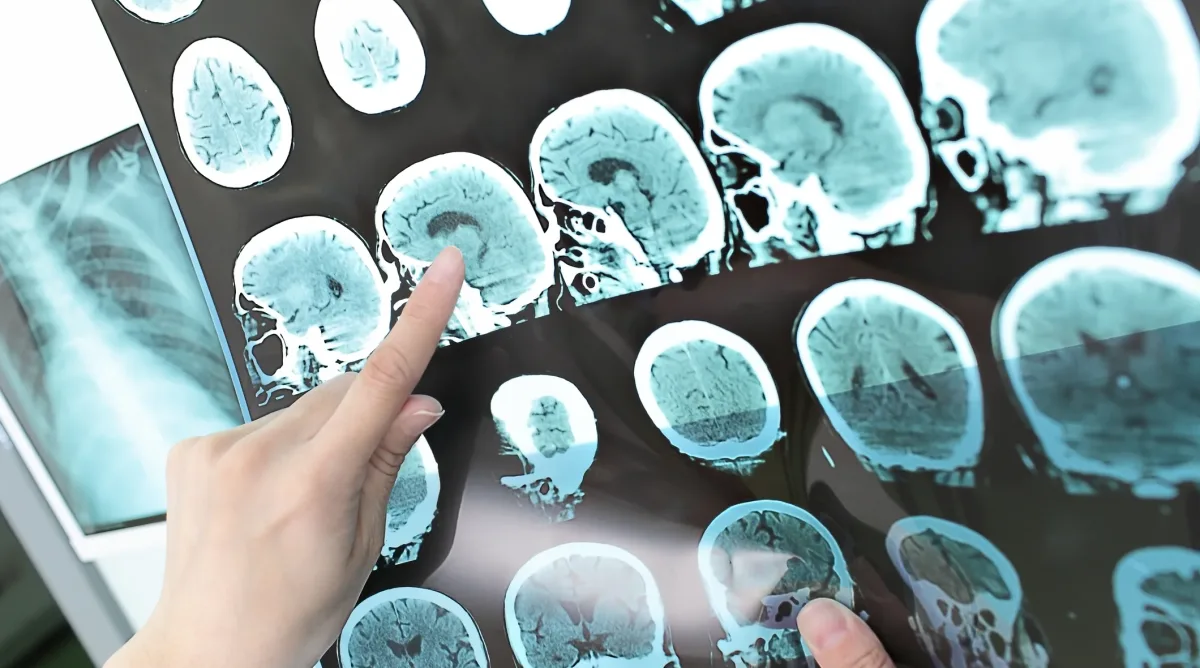



Imagine cancer treatment where radiation exposure is no longer estimated, inferred or reconstructed after the fact, but measured in real time — inside the patient’s body, during the procedure itself. Where oncologists know instantly whether a healthy organ is receiving too much radiation, and where predictive algorithms help prevent complications before they appear. This is not a distant promise. For Lithuania’s BrachyDOSE, it is the clinical reality they are building step by step.
The company’s origin is rooted not in a university lab but in the everyday reality of oncology wards. As a medical physicist working across Lithuanian hospitals, BrachyDOSE co-founder and CEO Neringa Šeperienė saw first-hand how often patients experienced radiation-related injuries during brachytherapy. The pattern was repeating, predictable—and avoidable. “I saw many people suffering from radiation side effects,” she recalls. “As an engineer and physicist, I knew we could use our knowledge to help these patients and to support the doctors caring for them.”
From that observation grew a device now attracting interest across the Baltics and Western Europe. BrachyDOSE has developed a flexible, single-use sensor—placed in the body before high-dose rate brachytherapy—that collects radiation dose data in real time. Once the procedure is complete, the sensor is removed and scanned, giving clinicians immediate visibility into the exact dose delivered to nearby healthy organs.
Machine-learning algorithms then translate this data into actionable insights, helping doctors anticipate which side effects may emerge and how to reduce risk in future sessions.
Fertile ground
The impact of such precision is significant. Early research, conducted with hospitals in Lithuania, Estonia, Latvia, France and Germany, shows that the device can cut staff time by around 50 per cent and reduce patient-related costs by a quarter. Because the sensor is single-use, clinics also avoid the expense and logistical burden of cleaning and re-sterilising equipment—a pain point often overlooked until hospitals calculate its true impact.
Yet turning a promising prototype into a clinically validated medical device has never been straightforward. Building hardware for the healthcare sector requires navigating a complex regulatory landscape, and the timelines of MDR and CE marking rarely match the pace of early-stage innovation. “A start-up moves very fast,” Šeperienė says. “Regulators move slowly. Aligning these two worlds is one of the biggest challenges for any medtech company.” The differences between jurisdictions—from Europe’s MDR requirements to the FDA process in the US—complicate the journey further.
Despite these obstacles, the Baltic region has proved fertile ground for BrachyDOSE’s development. Lithuania’s medtech ecosystem has grown steadily over the past decade, supported by strong technical education, accessible public institutions and a growing community of entrepreneurs. When Šeperienė joined an early Kaunas accelerator in 2018, only a handful of startups participated; now, the weekly meet-ups are crowded with founders, investors and clinicians eager to collaborate.
The region’s small scale, often viewed as a limitation, has in some cases become an advantage. It is easier to reach decision-makers, test early prototypes and build relationships with clinicians and hospital heads than in larger systems such as Germany, France or the UK. At the same time, the small domestic market forces Baltic startups to think globally from the outset, validating their solutions abroad and proving competitiveness against more established players.
The Data Pilot Initiative
One of the most meaningful accelerators for BrachyDOSE came through Lithuania’s Data Pilot Initiative, supported by EIT Health. Access to structured, anonymised health data is a major barrier for European start-ups; many hospitals lack clear procedures for sharing information, and risk aversion often leads to a blanket refusal. Before the pilot, BrachyDOSE had repeatedly requested access to radiation-related patient data—information necessary to refine their algorithms and understand treatment pathways—but hospitals declined, citing the absence of formal mechanisms. The Data Pilot Initiative changed that.
Working with the National Data Agency and Lithuanian University of Health Sciences, the team gained access to anonymised records on cancer incidence, treatment methods, side effects and associated costs. The resulting white paper not only highlighted national gaps in data governance but also demonstrated the value of structured collaboration between government, start-ups and clinical institutions.
For Šeperienė, the responsibility is shared. Governments must modernise their data frameworks, she argues, but startups must also demonstrate readiness: clear procedures, dedicated data specialists and the ability to protect sensitive information. Hospitals, meanwhile, need designated staff to manage data processes so medical professionals are not overloaded with administrative tasks on top of patient care.
As the company looks ahead, the next milestones follow a clear line: securing MDR and CE marking, entering the Baltic market, scaling into Germany and other major European healthcare systems, and laying groundwork for an eventual move into the United States. It is a long game, but one that the team is preparing for early—a necessity in medtech, where regulatory timelines can stretch unpredictably.
At its core, BrachyDOSE’s story is a reminder that innovation often emerges from the quiet frustrations of practitioners who see recurring problems and decide that the status quo is simply not good enough. A flexible sensor may look modest, but its promise — fewer complications, more predictable outcomes, and more informed decision-making — is profound. For cancer patients and clinicians across Europe, it signals a shift towards more transparent, data-driven, personalised care.
In a region often described as ’emerging’, and in a sector dominated by global incumbents, BrachyDOSE is demonstrating something quietly significant: with persistence, collaboration and a keen eye on clinical realities, a small Baltic start-up can meaningfully influence the future of oncology.
Photo: Dreamstime.