

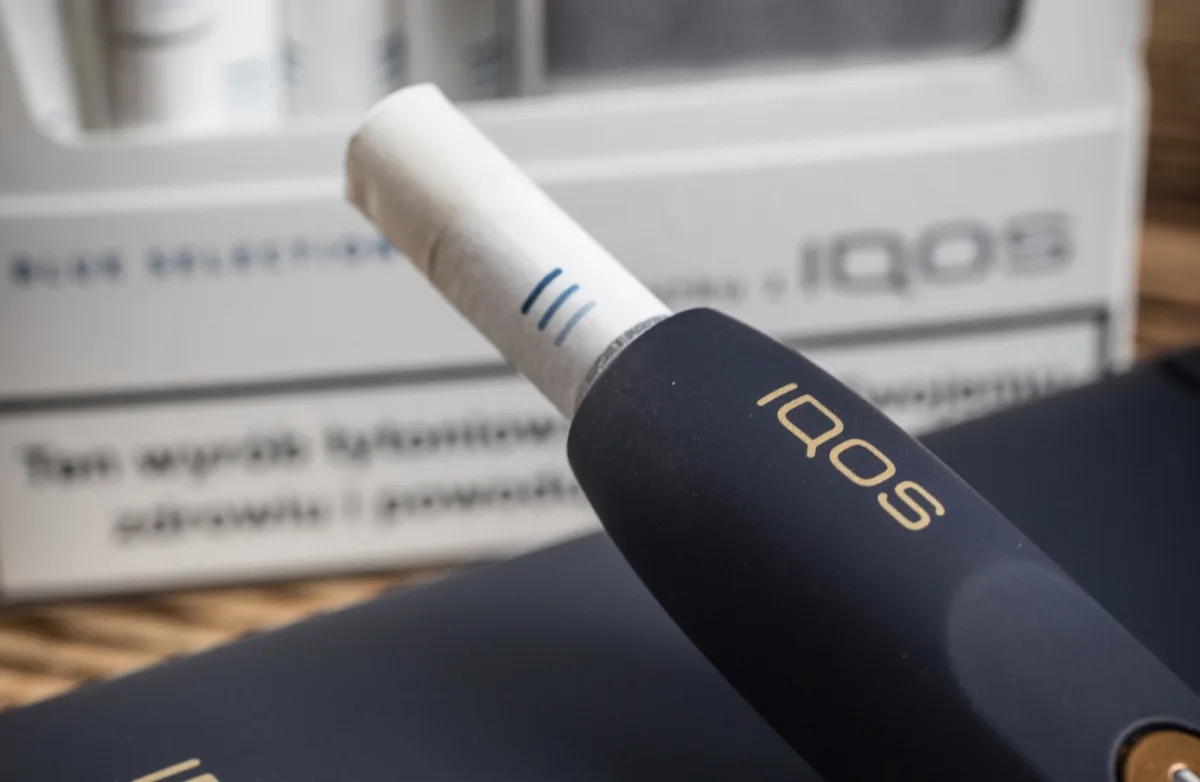
It was in Japan, so often a sandbox for innovation, that in 2014 Philip Morris International test-launched a peculiar-looking gadget that heated rather than burnt tobacco. Within a decade, the country had become the world’s largest laboratory for what the tobacco giants insist on calling reinvention.
Walk through Tokyo today (or indeed, any major city across the world), and you’ll spot plenty of people puffing on electronic devices instead of cigarettes. Heated tobacco products now account for around 40 per cent of Japan’s total tobacco market. Cigarette sales have plummeted by 52 per cent since heated tobacco products (HTPs) arrived.
Instead, it is the growth rate of heated tobacco that has set the sector alight. The global market for heated tobacco products was worth 49.14 billion US dollars in 2024 and is projected to hit nearly 900 billion US dollars by 2030, a compound annual growth rate of 63.2 per cent. Traditional cigarette sales continue their long march downward. Philip Morris International, which makes Marlboro cigarettes, says that shipments fell from 927 billion units in 2012 to 617 billion in 2024.
That’s a lot to inhale, but few tobacco firms are feeling the heat, given that it is largely the same companies offering the new, much-heralded alternatives. PMI’s IQOS commands roughly two-thirds of Japan’s heated tobacco market. British American Tobacco sells its glo devices alongside Dunhill cigarettes. Japan Tobacco’s Ploom range sits comfortably next to its conventional products. The top five tobacco companies (PMI, BAT, Japan Tobacco, Altria, and Imperial Brands) collectively control 19.5 per cent of the global tobacco market and are the dominant forces in heated tobacco and vaping alike.
Diversification or reinvention?
A great deal of excitement greeted a report by Public Health England, published in 2015, that claimed vaping, where a liquid containing nicotine is heated and inhaled, is “95 per cent less harmful” than smoking. The report, however, emerged from a workshop where 12 experts—several with industry ties—scored products based largely on opinion rather than hard evidence. The medical journal The Lancet subsequently described the foundation as “extraordinarily flimsy”. Even so, the figure has achieved almost gospel status among advocates of both vaping and heated tobacco. Both produce fewer toxins than burning tobacco; that much seems clear. The burning question of whether this translates to meaningfully reduced disease, especially of the lungs, over decades, remains an open question that likely won’t be answered for another generation.
Some governments aren’t waiting for those answers. Thailand banned e-cigarettes in 2014 and treats violators to fines up to 500,000 baht or a decade in prison. Singapore imposes equally draconian penalties. Vietnam joined the prohibition club in January 2025. Cambodia, Laos, and Myanmar round out Southeast Asia’s abstinence brigade.
The rationale varies. Some cite health concerns. Thailand’s government points to protecting the youth. Cynics note that Thailand operates a state tobacco monopoly and that banning alternatives eliminates competition. Whatever the stated reasoning, the effect remains the same: people who might have switched to less harmful products keep smoking cigarettes instead.
Japan offers the counter-example. After HTPs arrived, cigarette sales began declining five times faster than before—an annual drop of 9.5 per cent compared with the previous glacial pace. Total tobacco use fell too, suggesting genuine switching rather than merely adding new products to existing habits. Dual-use rates remain low at 13 per cent of heated tobacco users. The WHO reports 1.25 billion tobacco users globally, down from one in three adults in 2000 to one in five now. Markets with alternatives available often see sharper declines.
Smoke stack
The question of whether bans prove counterproductive has no easy answer. They almost certainly prevent some young people from ever starting. They probably also condemn some smokers to continuing a habit they might otherwise have quit. Public health operates in a fog of counterfactuals. We’ll never know how many lives Thailand’s ban has saved or cost.
What we do know is that the tobacco giants are making fortunes from reinvention rhetoric whilst controlling both the problem and the purported solution. PMI now trumpets that IQOS revenue surpassed Marlboro for the first time in 2024. The firm proclaims a “smoke-free future” whilst selling 617 billion cigarettes last year. BAT’s ‘Build a Smokeless World’ strategy aims for half its revenue to come from non-combustibles by 2035, which rather suggests the other half will still derive from setting things on fire.
True reinvention would see new entrants disrupting incumbents, not Marlboro makers selling you heated Marlboro. The technology has changed. The business model barely has. Big Tobacco has simply discovered it can profit from people’s desire to quit the very products it spent a century persuading them to buy.
Perhaps this counts as progress. Harm reduced, even marginally, is harm reduced. Markets that ban these products in the name of purity may be condemning their citizens to unnecessary deaths. But calling it reinvention stretches language past its breaking point. When the same companies control both problems and solutions, when switching products changes delivery mechanisms but not profit recipients, you’re watching adaptation, not transformation.
The tobacco industry isn’t reinventing itself. It’s doing what it has always done brilliantly: selling nicotine whilst staying one step ahead of regulators and public sentiment.
Photo: Dreamstime.