

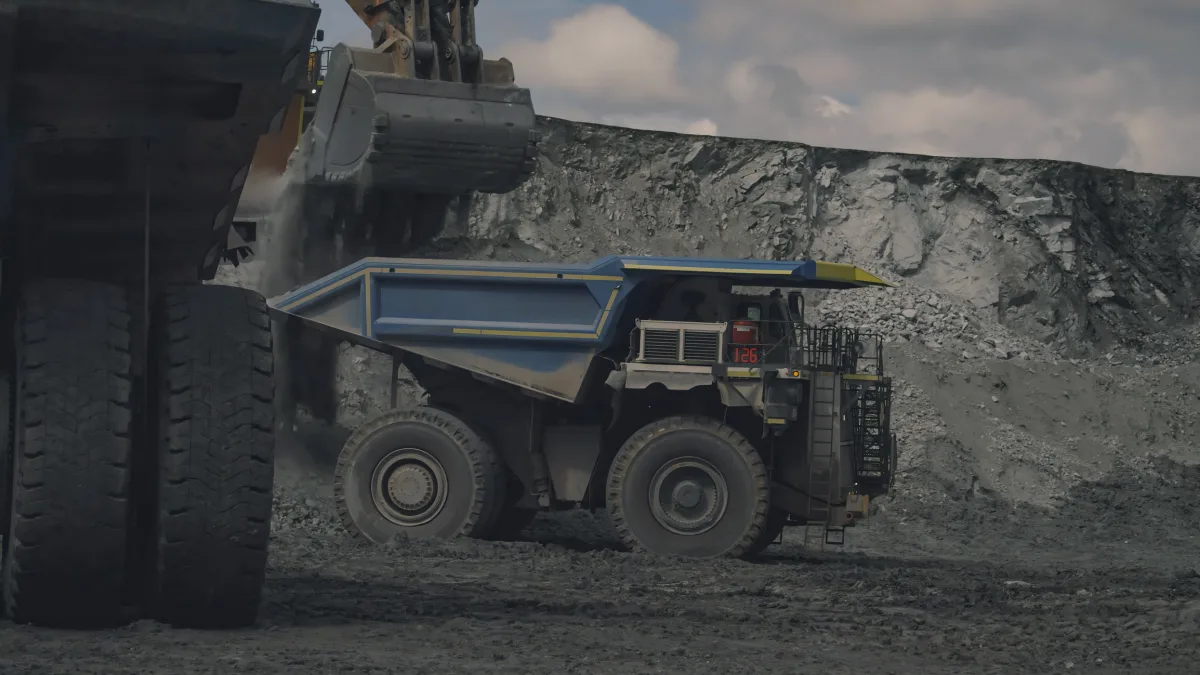
Ask a room full of executives which industry is leading the world in artificial-intelligence adoption and they will almost certainly reach for the usual suspects: technology, finance, pharmaceuticals, perhaps. The correct answer, according to a global survey carried out in autumn 2025 by the Association of International Certified Professional Accountants (AICPA and CIMA) and North Carolina State University’s Enterprise Risk Management (ERM) Initiative, is mining. Forty-five per cent of mining executives surveyed reported that AI is already reshaping their business models; 48 per cent said it was delivering strategic advantage. No other sector came close.
That surprise is, in some ways, the point. The survey, which drew on responses from 1,735 executives across eight industries and eight geographies, is full of findings that cut against the obvious narrative. The AI story as usually told is one of triumphant tech hubs in California and London, of gleaming offices full of engineers rewriting the rules of the modern economy. What the data shows, with some force, is something rather different.
Across the full sample, executives in South Africa, Central and South Asia, and East and Southeast Asia reported that AI was having a strategic impact on their organisations at rates of between 36 and 42 per cent. In North America and Europe, the equivalent figure was just 18 to 22 per cent. The regions that invented the modern internet, and which host the bulk of the world’s AI research capacity, are apparently less transformed by the technology than those markets that have, in the past, been dismissed as followers rather than leaders. Whether this reflects genuine deployment or wishful thinking is a fair question. But the gap is too large to wave away.
The worry premium
Then there is what might be called the worry premium. The survey identified a subset of 453 organisations where AI is already ‘mostly’ or ‘extensively’ reshaping their business, these it dubbed AI Transformed Entities. Among this group, 73 per cent said AI was giving them a competitive edge. But 69 per cent also classified AI as a top-ten or major risk concern. Across the full sample of organisations, by contrast, only 46 per cent flagged AI as a significant risk. Those further behind are, apparently, less alarmed. You do not worry about the engine until you have turned the ignition.
The finding has real consequences for corporate governance. Among AI Transformed Entities, 65 per cent said AI risk was a focus of executive leadership; across the general sample, only 30 per cent could say the same. Boards at companies that have not yet deployed AI at scale are, in effect, making a kind of accidental bet: that nothing will go wrong before they figure out what is actually happening inside their own systems. That is a reasonable bet only if the timeline for deployment is longer than it looks. Most evidence suggests it is not.
The readiness numbers are grim. Only 24 to 27 per cent of organisations in the full sample said they had adequate AI-skilled talent, IT infrastructure, or regulatory preparedness. Smaller organisations fared worse still, given that fewer than one in five could point to sufficient capability on any of those three measures. AI Transformed Entities, by contrast, reported roughly twice that level of readiness—50 per cent on talent, 48 per cent on technology, 51 per cent on regulatory knowledge. The gap is widening, not narrowing.
Critical, not optional
Mark Beasley, director of NC State’s ERM Initiative and one of the report’s authors, frames it plainly. Organisations with a deliberate approach to readiness are already pulling ahead in measurable ways, he notes, while governance, talent, and infrastructure are “critical, not optional”.
The industries hardest hit by competitive anxiety tell their own story. Financial services firms, for all their technical sophistication, were the sector most likely to worry that rivals would outrun them, with 33 per cent expressing that concern. Transport and professional services are further along the automation curve than their public profiles might suggest. Construction and retail, meanwhile, still trail, weighed down by legacy systems and fragmented operations.
None of this is entirely surprising. Large, data-heavy industries with clear operational use cases (moving rock, moving money, moving packages) have more immediate returns to show from AI investment than those in which the production process is fragmented and idiosyncratic.
What is striking is the speed at which the gap is consolidating. Among AI Transformed Entities, 60 per cent say the risk landscape around AI is shifting ‘mostly’ or ‘extensively’. For everyone else, only 26 per cent say the same. The laggards are also slower to grasp how quickly the terrain is changing.
The mining industry, in this reading, is a useful corrective to a certain kind of complacency. Shovels and drill bits may not conjure images of algorithmic sophistication. Someone, apparently, has been paying attention.
Photo: Dreamstime.