




Everyone, it seems, is future-ready. The IMD Future Readiness Indicator now ranks 182 companies across six industries. Consultancies flog ‘future-readiness assessments’. LinkedIn groans with executives who’ve wedged the phrase into their bios, usually between ‘thought leader’ and ‘change agent’.
Buzzwords come and go, but this particular one has developed a life of its own, becoming a comfort blanket that signals the end of thinking, not the start of change. When a company declares itself future-ready, it’s often announcing, without quite realising, that it has stopped reinventing itself altogether.
From aspiration to alibi
Once, the concept actually meant something. When Austrian American management consultant Peter Drucker and his contemporaries banged on about preparing for discontinuity, readiness implied building new capabilities under genuine uncertainty. Tolerating expensive experiments. Asking uncomfortable questions about which bits of the business model ought to be taken out and shot.
Then readiness drifted from capability to credentialing. It became something to be certified, badged, benchmarked. You can trace the shift in corporate communications: ‘ready’ has migrated from strategic plans (where it once flagged capability gaps) to annual reports (where it now burnishes reputation). The grammar tells you everything. ‘We need to be ready’ has given way to ‘we are ready’. The journey became the destination.
This drift changes behaviour. When readiness was aspirational, it licensed discomfort—gave executives cover to challenge the core business, to cannibalise profitable lines, to pour money into ventures that wouldn’t show returns for years. Readiness-as-alibi does the opposite. It reassures boards that management has everything under control. That the future, whatever it brings, has already been pencilled into the spreadsheet.
The measurement trap
All those readiness indices have made things worse. IMD’s indicator ranks companies on seven factors including financial fundamentals, research and development spend and workforce diversity. It’s methodologically sophisticated, produced by serious academics. It is also, inevitably, backward-looking.
Pharma giant Pfizer ranked first in IMD’s 2022 indicator—crowned most future-ready in its sector. By 2024 it had tumbled to ninth. Covid revenues collapsed from 57 billion US dollars in 2022 to eight billion US dollars two years later. The share price, which peaked at 61 US dollars in late 2021, now bumps along around 25 US dollars. Pfizer’s response has not been reinvention but cost-cutting: a four billion US dollars realignment programme, hundreds of redundancies, shuttered sites.
None of this indicts IMD’s methodology. It measures what can be measured. That’s precisely the trap. Indicators that reward stability and accumulated capability necessarily discount the messy, destructive work of genuine reinvention. A company preparing to cannibalise its core would score terribly on short-term financials—even as it positions itself to survive.
The indices have spawned a new strain of Goodhart’s Law. Once readiness becomes a metric, chasing the score crowds out the behaviours the score was meant to capture. Companies assemble future-readiness task forces, hire chief future officers, commission readiness audits. None of which requires changing anything fundamental.
The readiness fallacy
The deepest trouble with readiness is conceptual. The word assumes a knowable future you might prepare for. That made sense in slower industries where competitive dynamics shifted over decades. It makes rather less sense now.
Notice how differently companies talk when they’re actually reinventing themselves. Netflix, which has pivoted three times—DVD rental to streaming to original content—explicitly rejects readiness-speak. Reed Hastings, its co-founder, talks instead of ‘constant reinvention’. The culture assumes the current business model is temporary. Adequate performance—being ready enough—gets you sacked.
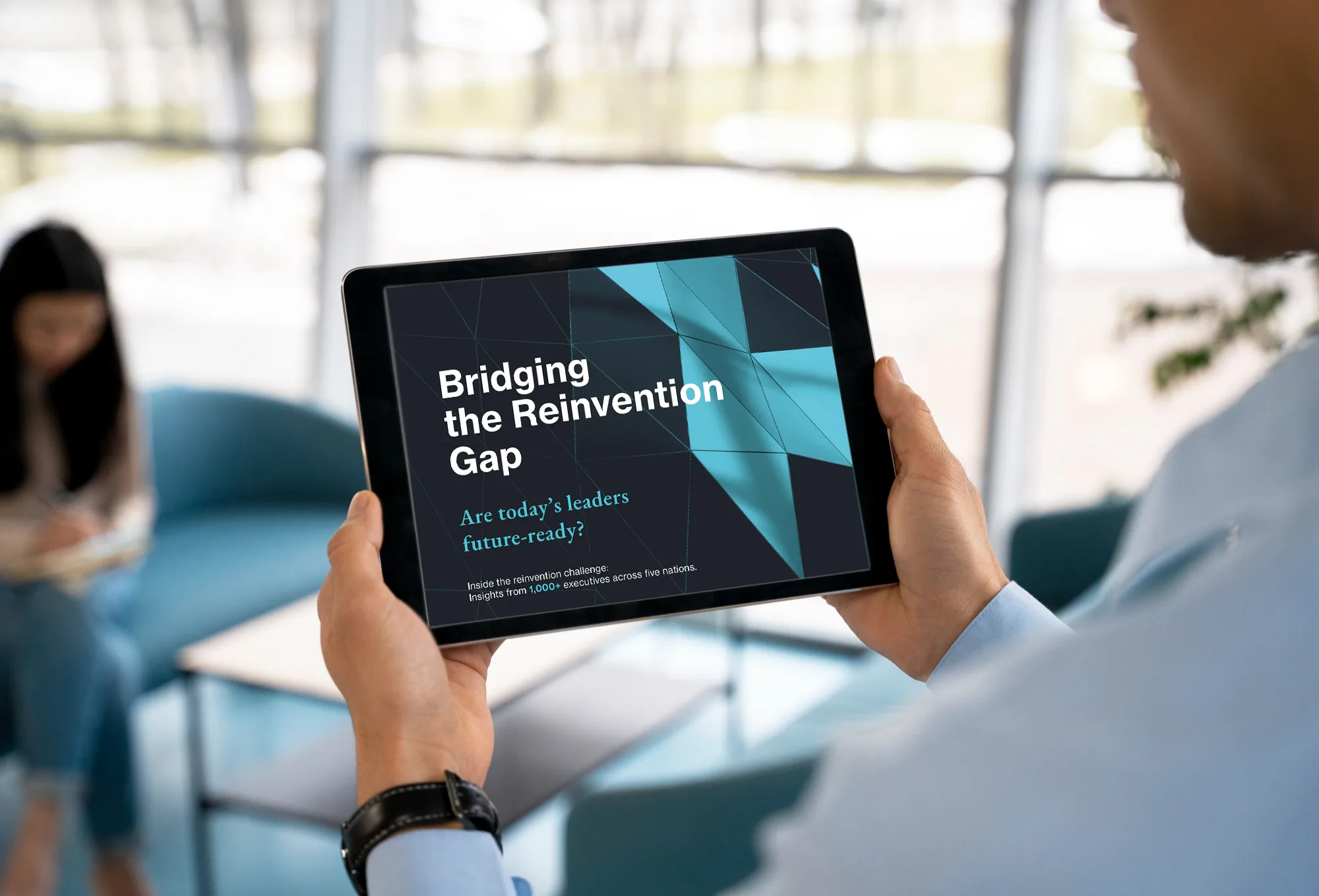
Bridging the Reinvention Gap
Readiness implies preparation for a future that will arrive. Reinvention implies participation in a future being created. Ready organisations wait; reinventing ones act. Ready organisations polish existing capabilities. Reinventing ones ask whether those capabilities will matter in five years.
The distinction shows up in how capital gets allocated. Ready organisations hedge: they maintain optionality, diversify across scenarios, keep powder dry for opportunities that may never come. Reinventing organisations commit: concentrated bets, acceptance that some will fail spectacularly, suspicion that diversification signals strategic confusion rather than prudence.
Retiring the word
What might take its place? Probably not another noun. Organisations that navigate real discontinuity tend to speak in verbs: unlearn, divest, rewire, experiment. These words resist completion. You can’t be ‘unlearned’ or ‘divested’ the way you can be ‘ready’. The work never finishes.
This matters beyond linguistic tidiness. The verbs carry different accountability. A chief executive who declares the organisation future-ready has made a claim impossible to falsify until it’s too late. One who commits to specific acts of unlearning or divestment has made a claim testable by the next earnings call.
Perhaps the most telling sign of genuine reinvention is that organisations doing it rarely claim readiness for anything. They describe themselves, with varying degrees of discomfort, as perpetually incomplete. ‘Future-ready’ belongs to the vocabulary of reassurance—the language executives reach for when they want to sound bold without doing anything disruptive.
The most resilient outfits have grasped something the readiness-industrial complex hasn’t. In a world of genuine uncertainty, the feeling of being ready is usually a warning sign. It means you’ve stopped asking hard questions. Mistaken preparation for a known threat for preparation for the unknown.
It means you’re ready for nothing at all.
Photo: Dreamstime.