


Europe is increasing defence spending. It is projected to reach 381 billion euros this year, a 37 per cent increase since 2021). The headline, however, misses the point. The continent is repositioning itself in response to a strategic environment that no longer resembles the one it relied on for three decades. The assumptions that shaped its approach to security, industry and alliances are no longer stable.
What sometimes looks like a budget debate is, in practice, a reorganisation of Europe’s economic and geopolitical posture.
From discussion to action
The immediate trigger is familiar. The war in Ukraine continues without a foreseeable, credible end point. US attention is stretched and increasingly conditional. China’s pressure on supply chains exposes how vulnerable Europe is to external leverage. None of this is new, but the accumulation of risks has pushed Europe from discussion to action.
The emerging approach treats defence not as a silo but as part of the continent’s economic base. Governments are setting up long-term procurement programmes that deliberately link military capability with industrial capacity. The expectation is that predictable demand will underpin sectors that Europe considers strategically sensitive: satellites, cybersecurity, advanced materials, propulsion systems, and other dual-use technologies.
This is not framed as a ‘military-first’ model. It is simply recognition that several core technologies will not develop at the required pace without government demand anchored in security policy.
Selective insulation
This shift is also about sovereignty, although policymakers rarely use the term directly. Europe depended heavily on external suppliers for critical systems, especially the US. The arrangement worked when geopolitical conditions were benign. Reliance has now become a vulnerability. The response is not autarky; it is selective insulation. Europe wants greater control over specific capabilities—missile defence, space assets, secure communications—and tighter oversight of the inputs that feed them. The aim is resilience, not separation.
The structural challenge is familiar and persistent. Europe is not a unitary actor. Defence planning is split across national capitals with different priorities, political constraints and industrial lobbies. France emphasises autonomy. Germany prioritises industrial renewal. Poland wants rapid capability above all else. Others are sceptical about sustained increases in military budgets during a period of fiscal strain. The result is uneven progress and lengthy decision cycles. Money is increasing, but the system that allocates and absorbs it has not yet adapted.
There are, however, signs of movement. Several countries are experimenting with joint procurement arrangements that would have been politically unworkable a decade ago. Defence industrial clusters are emerging around cyber and drone technologies, where smaller firms can supply multiple states without the political weight attached to traditional platforms. Some governments are adjusting fiscal rules to allow long-term defence commitments outside conventional budget strictures. These developments are incremental, but they point towards a more integrated model.
The wider neighbourhood
The implications extend beyond the EU. European states in the Balkans, the Baltics and the Nordic region are repositioning themselves around access to European industrial and security frameworks. Ukraine, in particular, is becoming intertwined with European defence planning simply through necessity.
Defence investment is now a tool of influence, shaping relationships through training, technology transfer and industrial cooperation. Europe’s neighbourhood will feel the effects well before defence transformation is visible to the general public.
For industry and investors, the landscape is shifting quickly. Defence-adjacent technologies that once struggled for stable demand now have a clearer trajectory. Space firms building communications or observation systems are receiving both civilian and defence interest. Drone and sensor manufacturers have moved from niche status to essential suppliers. Cybersecurity firms are being classified as critical infrastructure. The investment flows follow this logic. Europe is not trying to replicate the US. system, but it is creating a more predictable environment for dual-use innovation.
Preparing for uncertainty
The political risks are significant. Public opinion across Europe remains ambivalent about sustained defence expansion, especially during a cost-of-living squeeze. Governments have not settled on a narrative that connects defence spending to economic resilience, industrial capability or national stability. Without that argument, the policy shift could face resistance as fiscal pressures rise.
Even so, the direction is set. Europe is reconfiguring how it thinks about security and industry. Defence is becoming an organising principle rather than an afterthought. The continent is not preparing for a specific conflict; it is preparing for uncertainty.
The real test will be whether Europe can convert increased budgets into coherent capability—and whether it can maintain political support long enough to complete the transition.
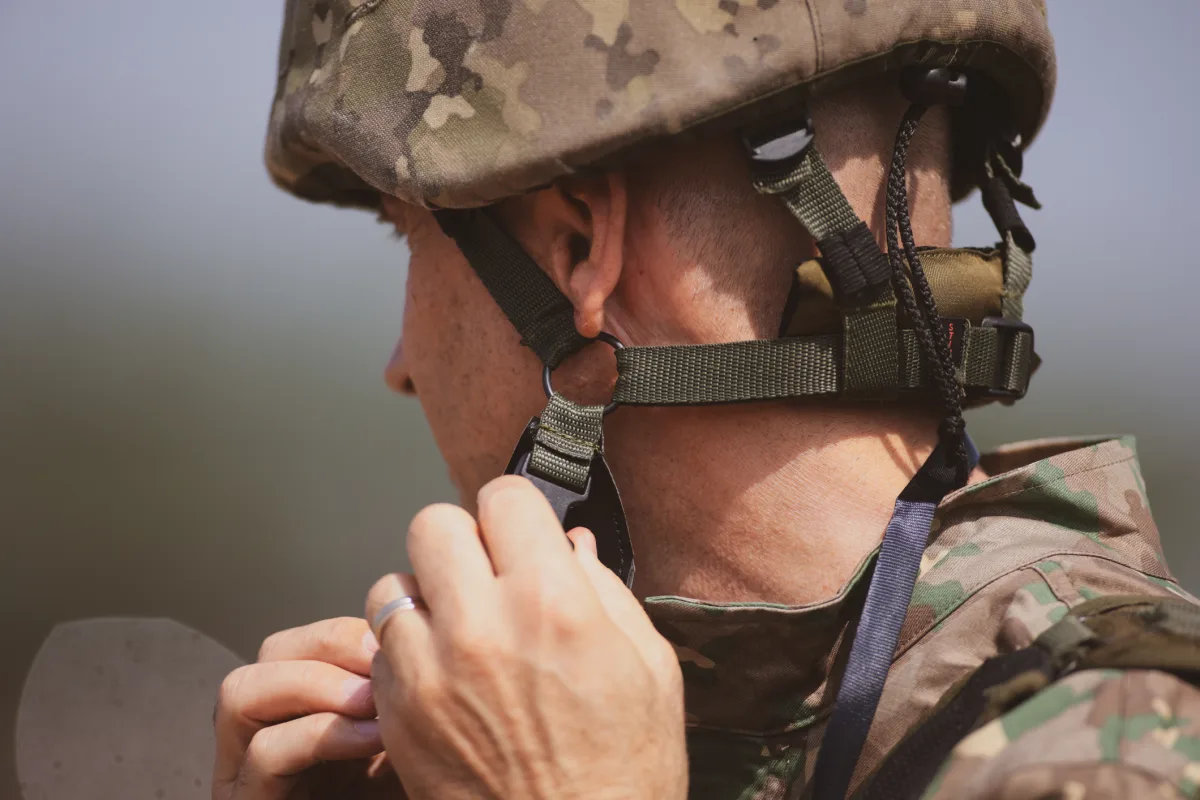
Photo: Dreamstime.