

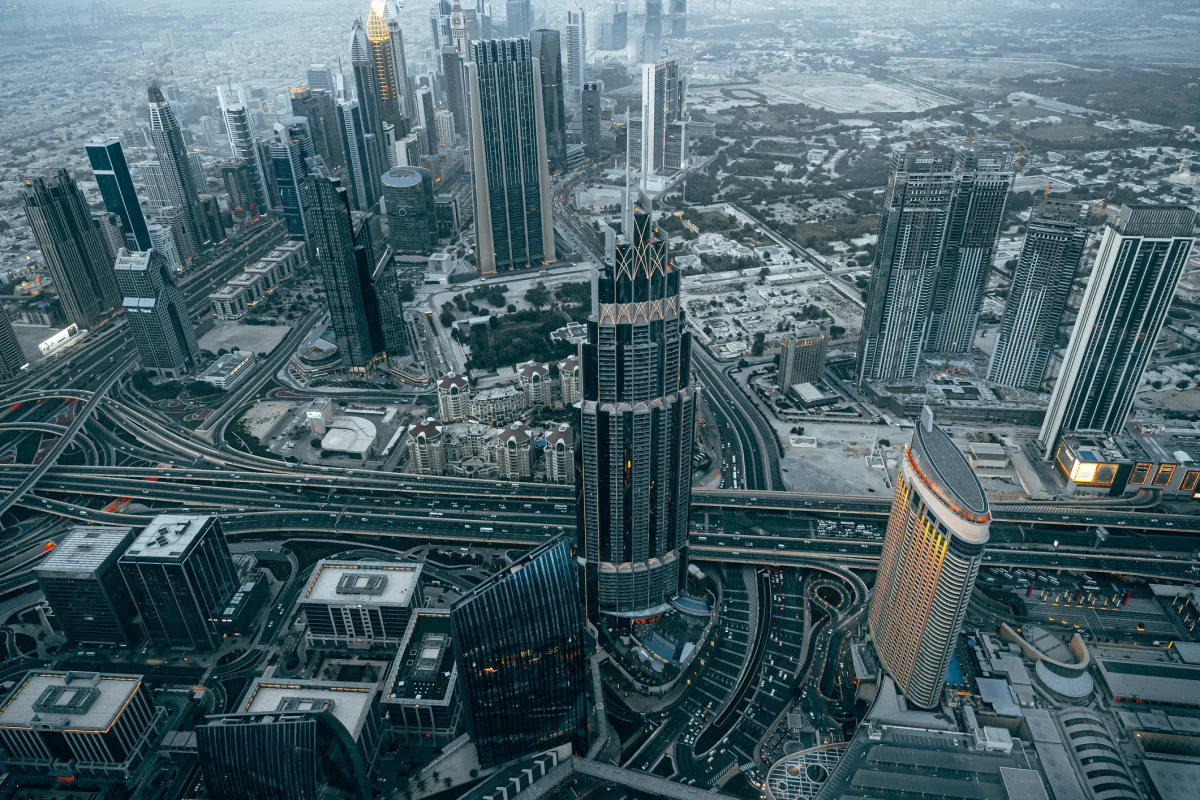
A 60-year-old Londoner on holiday in Dubai filmed Iranian missiles over the city. He deleted the footage immediately when asked. He still faces up to two years in prison.
The man, as yet unnamed, is one of 21 people charged under the UAE’s cyber-crime laws for posting or circulating material related to the Iranian attacks. The charges include using “an information network or information technology tool to broadcast, publish, republish or circulate false news, rumours or provocative propaganda that may incite public opinion or disturb public security”. Radha Stirling, chief executive of Detained in Dubai, an advocacy group, says people face arrest for “something as simple as sharing or commenting on a video that is already circulating online.”
The UAE has a motive beyond mere authoritarianism. Its government does not want images of Dubai under missile fire imprinted on people’s minds. It is, as Stirling told reporters, “PR more than anything.” Around 240,000 British migrants live in the city. Influencers have built entire careers on filming everything they see. The irony of a country that actively recruits “filmmakers, social media influencers, or digital storytellers” through its Creators HQ scheme now threatening them with jail for doing exactly that has not gone unnoticed. Andreas Krieg, associate professor at King’s College London’s Defence Studies Department, notes that the UAE “should be smarter than imprisoning a British tourist over a cybercrime offense at a time when it needs to reassure expats to stay and/or return to Dubai.”
Real enough
Set aside, for a moment, the heavy-handedness, and the UAE’s problem is real. Deepfakes have crossed what the World Economic Forum describes as a “critical threshold” in 2026, with earlier tell-tale glitches largely eliminated. Synthetic images, cloned voices, and fabricated footage are all now accessible to anyone with a smartphone and an axe to grind. In a city already under missile attack, a single convincing fake video of a landmark collapsing could trigger a panic the real strikes have so far failed to produce. The UAE’s authorities are not wrong to be sensitive. They are merely wrong in their methods.
The case also highlights that the information ecosystem surrounding modern conflict has become genuinely illegible. During the protests in Iran earlier this year, the regime cut internet access to near zero and yet still struggled to contain footage. Footage is everywhere, all the time, from everyone, and the question is not whether you can see it, but whether you can trust it. NewsGuard, a firm that rates the reliability of online sources, counted more than 1,200 AI-generated news and information sites by May 2025, a more than 20-fold jump in two years. Some have been linked to by the Washington Post, Politico and the Guardian, not because those outlets are reckless, but because the fakes are that good.
Worth the press
The professional journalist’s position in all this deserves scrutiny. The old model of be there and be first has been comprehensively disrupted. Ordinary people with phones now break almost every story of consequence. The foreign correspondent who parachutes in has a narrowing advantage over the tourist who happens to be there; in Dubai’s case, some of those tourists are now in police custody for their trouble. What remains of the journalist’s distinctive value lies not in gathering material but in verifying it, and in having the institutional credibility that makes verification mean something.
This is, counterintuitively, good news for serious news organisations. Research published by the Centre for Economic Policy Research suggests that exposure to AI-generated misinformation, rather than destroying trust in all media, can increase the premium audiences place on outlets with genuine reputations. Trust, in other words, becomes scarcer and therefore more valuable. The difficulty is surviving long enough (both financially and institutionally) to capitalise on that position. Newsrooms have shrunk. Local journalism in many markets is effectively dead. The economics of digital advertising have eviscerated the business model that once paid for foreign correspondents to spend months developing the expertise and contacts needed to separate signal from noise.
There is also a structural absurdity baked into the UAE’s approach. Arresting people for filming real events drives authentic footage underground while AI-generated fabrications circulate freely, since their creators face no such legal risk. A tourist with a phone is arrestable. A server farm in Cambodia generating plausible fake videos of Dubai burning is not. The law, as currently applied, has the potential to suppress the real while leaving the synthetic untouched.
What’s worse, none of the tools that actually matter, such as provenance technology, content authentication watermarks, the EU AI Act’s forthcoming requirements for labelling synthetic content, media literacy programmes, and the kind of patient, expensive, trust-building journalism that institutions like Reuters still attempt, require investment, co-ordination, and a willingness to accept that the information problem cannot be solved by threatening holidaymakers.
The 60-year-old Londoner did nothing more than point his phone at the sky. In a different time and city, that instinct would have been called bearing witness. Now it carries a potential prison sentence. Reinventing journalism, in the end, is to make the distinction between those two things legible again. And then to argue, loudly, that it still matters.
Photo: Dreamstime.