


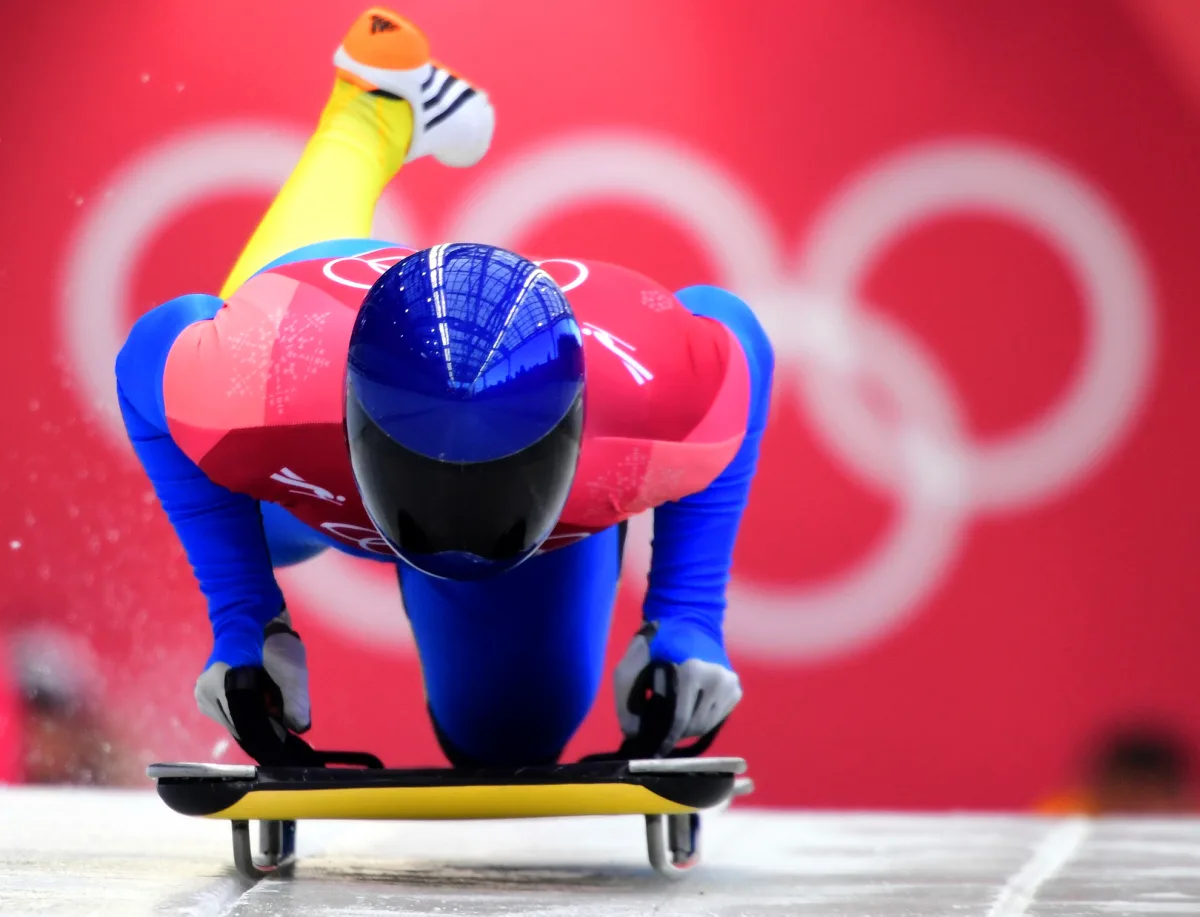
Was it ever thus? Just a couple of weeks out from the 2026 Winter Olympics, some venues remain incomplete, including a 16,000-seat ice hockey arena. The cost of hosting the Games, which begin on February 6, has swollen from the 1.3 billion euros promised when Milan-Cortina won the bid in 2019 to well over three billion euros. Prosecutors have arrested people in connection with corruption allegations. Someone even sabotaged the bobsled track. None of this is ideal, but history points to it all being fairly standard Olympic preparation.
Indeed, every single Olympic Games since 1960 has exceeded its budget, a perfect record of fiscal incontinence unmatched by any other category of megaproject, including nuclear power plants and radioactive waste storage, according to an Oxford University study published in 2024. The average cost overrun reaches 172 per cent in real terms. Five of the past six Games more than doubled their budgets.
Just the one host city, Los Angeles in 1984, has ever turned a profit. The city was the sole bidder after all others withdrew, thereby allowing it to set its own terms and use existing stadiums. The resulting 215 million US dollars surplus set off a bidding frenzy. Cities competed to outdo one another with ever grander promises, and costs spiralled accordingly.
Russia spent a reported 51 billion US dollars on Sochi in 2014, likely to remain an Olympic record for years. Tokyo’s Covid-19-delayed Games cost 13 billion US dollars, more than double the original projection. Paris 2024, touted as the frugal Olympics, came in at 8.7 billion US dollars with a 115 per cent overrun, according to the Oxford researchers (its French organisers dispute this).
Unconvincing promises
Host cities are invariably assured that tourist spending, infrastructure upgrades, and the intangible glow of global attention will justify the expense. Economists are unconvinced. Hosting has no discernible long-term impact on GDP, says a study published by the National Bureau of Economic Research. Tourism benefits are mixed at best, given that visitors who might otherwise come stay away to avoid crowds and inflated prices. The infrastructure often ends up as white elephants: Athens’s 2004 venues lie largely abandoned, while Beijing’s Bird’s Nest does little more than host the occasional concert.
Barcelona 1992 often gets trotted out as the counterexample, a Games that genuinely transformed a city. Indeed, the Catalans used the Olympics to put themselves on the global map. London managed something similar in 2012, regenerating an erstwhile scruffy bit of east London. But both cities had money, competent governments and knew what they were doing. Most hosts lack all three.
Small wonder democracies are increasingly reluctant to host. Local referendums have killed Olympic bids in Boston, Hamburg, Calgary, and Innsbruck. Stockholm and Barcelona have alternately entered and withdrawn from the bidding process for winter editions. British Columbia rejected Vancouver’s bid for 2030, deeming 1.2 billion US dollars in public funding too high a price. For the 2022 Winter Games, the IOC was left to choose between China and Kazakhstan after the European and North American candidates withdrew.
The IOC has tried to stem the tide. Its Agenda 2020 reforms encourage reusing existing venues and simplifying bidding. Milan-Cortina boasts that 85 per cent of its venues already exist. But the promised cost savings have not materialised. Reuse “did not have the desired effect for Tokyo 2020 and also looks ineffective for Paris 2024,” says the Oxford study. Besides, when venue costs fall, organisers simply find other ways to spend the cash.
Enter the autocrats
Saudi Arabia won the 2034 FIFA World Cup as the sole bidder. The tournament, warns Human Rights Watch, will be “stained with pervasive rights violations.” The kingdom is also spending billions to build an artificial winter wonderland to host the 2029 Asian Winter Games, drawing scorn from environmental groups.
Qatar and Saudi Arabia have their eyes on the 2036 Summer Olympics. Thomas Bach, the IOC’s honorary president, insists the games will “not be sold to the highest bidder”. Given that the organisation relies on autocracies’ willingness to write blank cheques while democracies refuse to participate, one wonders how long such principles will survive contact with financial reality.
The Games were always political, from ancient Greece to Hitler’s Berlin. Pierre de Coubertin’s vision of athletic competition as a means of fostering worldwide harmony was touching but naive. What has changed is the sheer scale of expenditure required to stage the spectacle, and the sad fact that only governments unconstrained by pesky voters seem willing to pay it. As Mariah Carey prepares to belt out a song or two at the opening ceremony in Milan (ironically set to be held at San Siro, a once state-of-the-art stadium now slated for demolition), the world’s biggest sporting events look increasingly like a luxury that only the rich and unaccountable can afford.
Photo: Dreamstime.