


Working from home, learning from home, exercising from home, even socialising (in the form of online quizzes and ‘watchalongs’ of popular television shows or films) became common practice during the Covid-19 pandemic. The inability to go out for long periods during the various lockdowns created a plethora of new routines and habits, many of which have remained common practice long since Covid-19 stopped being a daily preoccupation.
Of all these home-based routines and habits, however, few have become as common as testing ourselves for various ailments and deficiencies. Testing for Covid-19, which did not simply go away, remains big business, worth several billion euros globally each year. Increasingly, we are also testing ourselves for a great deal more than just Covid-19 from the familiar surroundings of our own bedrooms, bathrooms, and kitchens. There are home diagnostic kits for urinary tract infections, stool tests for colon cancer, blood sugar tests, tests for sexually transmitted diseases, even HIV.
We’ve come a long way since the only thing we were likely to test ourselves for at home was pregnancy.
The wrong hands
More than 500 home testing kits are currently on the market or in development worldwide. The appeal of home testing is obvious, not least for those of us with an innate aversion to waiting rooms and awkward conversations with our GP. Getting results in a few minutes, as opposed to waiting days, or weeks, is equally appealing. For overstretched health systems (the NHS in Britain spends an estimated 2.2 billion UK pounds each year on laboratory tests in primary care alone), patients taking matters into their own hands is, at least in theory, promising.
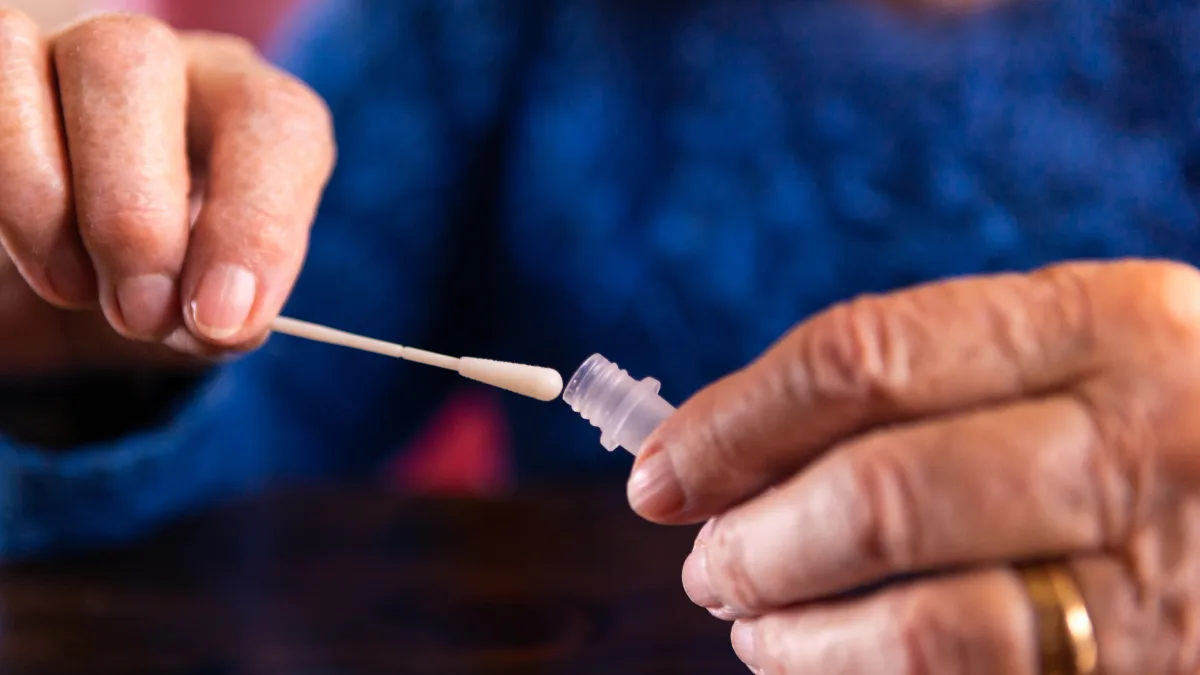
The trouble is that home testing kits are only as good as the people using them, and most of those people are not trained phlebotomists. The kits themselves, when deployed correctly, can be impressively accurate. Home STI tests using nucleic acid amplification reach sensitivity rates of 85–95 per cent, not far off clinical settings. But laboratory precision and bathroom-floor reality are two very different things. Studies show that around five per cent of self-collected samples are deemed inadequate for testing, compared with less than one per cent of those collected by a clinician. A swab not inserted deeply enough, a blood sample that fails to fill the tube, a test taken too soon after exposure can skew results. User error, not test design, is the Achilles heel.
That skewing cuts both ways, and neither is comforting. False positives send people tumbling down what clinicians call a ‘diagnostic cascade’: one dodgy result triggers follow-up appointments, specialist referrals, and invasive procedures. Fecal immunochemical tests (FIT) for colorectal cancer, for example, pick up 92 per cent of cancers. But the false-positive rate sits at around 13 per cent, according to Harvard Medical School. A study presented at Digestive Disease Week in 2021 found that among 450 people with a positive stool test, just two per cent actually had cancer; two-thirds had received a false positive. Each of those people was then sent for a colonoscopy, the very procedure they had been trying to avoid.
Rapid antigen tests for Covid-19, researchers at UMass Chan Medical School found, can also throw up persistent false positives in some users, confounding patients and their doctors alike. In low-prevalence settings (precisely the conditions under which most home testing takes place) the probability that a positive rapid antigen result is wrong can exceed 80 per cent, according to a model published by the CDC.
False negatives
The Royal College of General Practitioners (RCGP) in Britain has been blunt about the fallout. In a position statement in 2023 it warned that patients are turning up at surgeries distressed by misleading results from self-testing, and called for manufacturers to take responsibility for aftercare rather than dumping the burden on the NHS.
GPs now spend up to two hours a day reviewing test results, quadruple the time they spent in 2000, according to a study in BMC Family Practice, and that is before patients start walking in with results from home kits. “General practice is already stretched to the limit,” the RCGP noted. “It isn’t a good use of our time to be explaining the results of unnecessary tests.”
False negatives pose a different, arguably more dangerous, problem. A person who tests positive may at least seek confirmation. A person who tests negative tends to stop worrying. With STIs, the window period (the gap between exposure and the point at which a test can detect infection) can stretch to three months for HIV. Someone who self-tests during that window receives a clean bill of health they do not deserve, and may unwittingly spread the infection.
No panacea
Regulation has not kept pace with the boom. Many home testing kits on the market have not been independently validated or approved by bodies such as NICE in Britain. The RCGP wants a quality-mark system and clearer labelling of the risks. Prostate Cancer UK has raised similar concerns about the rapid-result PSA blood tests sold in chemists and online, noting that a raised reading without the context of a clinical conversation can lead to unnecessary anxiety or false reassurance.
None of which means home testing is a bad idea. For cervical cancer screening, NHS England is rolling out self-sampling HPV kits, targeting women who are overdue for screening, a group that could number 400,000 a year. Used wisely, home diagnostics can catch diseases earlier and reach people who might never have visited their GP. But the idea that they will ease the strain on health services requires, at the very least, a second opinion.
Photo: Dreamstime.