



The global market for software development operates on a peculiar logic. Western companies seek technical talent wherever it can be found yet remain stubbornly attached to familiar geographies. Poland, Romania, and Ukraine dominate European nearshoring not because they possess monopolies on programming ability, but because they achieved critical mass early enough to become default choices. Breaking into this club requires more than competent developers; it demands proof.
Albania has been building that proof for over a decade. The country’s IT sector—employing more than 21,000 professionals as of 2023, up from 15,600 in 2020—delivers software development, quality assurance, DevOps, and UI/UX services to international clients. This is not theoretical capability. Albanian developers write production code for German manufacturers, test applications for Swiss financial institutions, and manage cloud infrastructure for Nordic start-ups. The work happens daily, unremarked and reliable. What it lacks is visibility.
A helping hand, says Christian Dölker, managing partner at hyretech, which supplies elite developer teams for German companies, is being provided by tourism. “A few years ago I needed to tell my German colleagues where Albania was on the map. Now, most have them have visited.”
A mature capability
Albania’s IT services exports reached 221.5 million euros in 2024, around 0.88 per cent of GDP. These figures place Albania firmly in the second tier of European IT destinations—substantial enough to matter, small enough to maintain cost advantages.
The sector’s composition reflects genuine sophistication. Software development and data services account for nearly a quarter of Albanian tech companies, demonstrating that local talent can build scalable products, not merely execute specifications written elsewhere. Quality assurance has become a particular strength, with Albanian teams testing everything from mobile applications to enterprise software. DevOps and cloud infrastructure management represent growing specialisations, as do UI/UX design services.
Datamax is an Albanian IT company specialising in end-to-end AI solutions. “We started four years ago and now we’re at revenue of over one million euros,” says Bujar Bakiu, the firm’s co-founder and CEO. “Ninety per cent of our clients are from Germany and the rest of Western Europe. Albania is very good at working together with people in Germany and Austria.”
Technical talent emerges from multiple sources. Universities produce approximately 1,500 graduates in IT annually. Vocational training has expanded considerably, with bootcamps and specialised programmes addressing specific skill gaps. The Deutsche Gesellschaft für Internationale Zusammenarbeit (GIZ) ProSEED 2.0 programme integrates digital skills into vocational education, targeting 5,000 people through formal and non-formal qualification measures.
Average gross ICT salaries stood at 1,165 in 2024—79 per cent growth since 2020, outpacing the 63.2 per cent average across comparable markets. This wage inflation signals genuine demand, yet Albanian developers remain considerably cheaper than their Western European counterparts. A senior developer in Tirana costs perhaps 40 per cent of a Berlin equivalent, creating a compelling economic case for nearshoring whilst ensuring local talent is well-compensated by domestic standards.
Not that Albanian is (or indeed wants to be) simply a ‘low-cost’ destination. “We can’t compete with day rates with India,” says Bakiu, “it is a race to the bottom. We compete on expertise, and quality of work. Our rates are similar to those in Eastern Europe.”
Innovation as standard practice
The relationship between Albanian IT providers and foreign clients has evolved beyond simple staff augmentation. Whilst body-shopping—providing developers to work under client management—remains common, increasingly sophisticated engagements involve Albanian teams owning entire product components or managing complex technical workstreams independently.
This shift reflects both capability and necessity. Albanian firms cannot compete on scale with Indian outsourcers or on proximity with Polish competitors. What they offer instead is a particular combination: European working culture, genuine technical skill, cost efficiency, and—critically—time zone alignment that enables real-time collaboration. A German company working with an Albanian development team can conduct daily standups at convenient hours, iterate rapidly, and visit the team with minimal travel disruption.
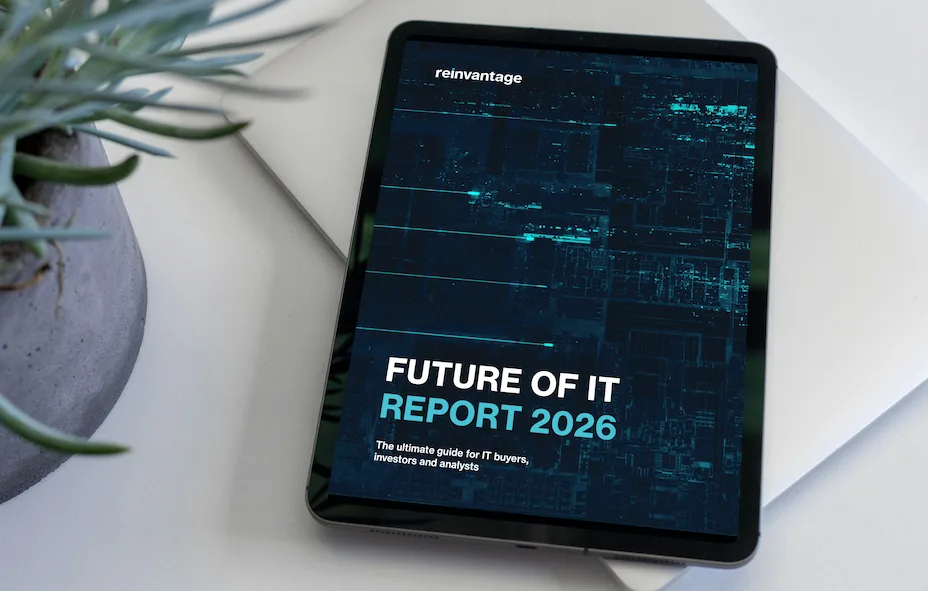
The Future of IT Report 2026
The Albanian Investment Development Agency (AIDA) plays a strategic role in positioning Albania as a competitive and reliable destination for investment in the ICT and BPO sectors, which it considers key drivers of the country’s export of services.
“We actively promote Albania as a full-service destination, capable of delivering a wide range of value-added services, from software development and IT maintenance to finance, accounting, digital marketing and business support functions,” says Sara Zotaj, FDI team leader at AIDA.
“Our focus is on enabling long-term sector development, encouraging higher-value activities, and ensuring that new investments align with Albania’s broader digital priorities.”
ICT’s share of employment reached 1.72 per cent in 2024, up from 1.26 per cent in 2020—below the nearly three per cent average across comparable markets, but growing steadily. The absolute numbers matter less than the trajectory, which suggests an industry expanding its talent base whilst maintaining service quality. Albanian IT firms report relatively low staff turnover compared to regional competitors, partly because the domestic job market offers fewer competing opportunities.
Building an ecosystem
Beyond services delivery, Albania has developed a nascent start-up ecosystem. The country hosts approximately 40 start-ups, ranking 83rd globally in StartupBlink’s 2025 ecosystem rankings. This is not Sofia or Zagreb, but it represents genuine entrepreneurial activity in a country where such ventures barely existed a decade ago. Since 2017, Albania has attracted over 17 million US dollars in start-up investment—modest by regional standards, yet sufficient to validate several business models.
The Albanian Investment Development Agency (AIDA) provides practical support for tech companies, from site selection to regulatory navigation. Programmes like AlbaniaTech, ICTSlab, and Swiss Entrepreneurship Albania build entrepreneurial skills and connections. The EU4Innovation programme, with its 11.75 million euros budget, works to strengthen the start-up and innovation ecosystem through collaboration between government, private sector, and academic institutions.
“By the end of 2026, we aim for 20–25 per cent of IT exports to stem from product-based work where Albanian teams own or co-own components,” says Anxhela Buxhati, director of Business Promotion Policies at Albania’s Ministry of Economy and Innovation. “This shift will be driven by innovation-friendly procurement, co-funded R&D schemes, IP-supportive tax rules and strengthened STEM and digital-skills programmes, fully aligned with to transition toward an innovation-driven economy.”
International development support reinforces these domestic initiatives. GIZ Albania has collaborated with the Albanian government on skills development and economic competitiveness for over three decades. Through programmes like ProSEED 2.0, GIZ helps modernise vocational education, integrating digital and green skills into curricula. The EU4Innovation programme involves GIZ implementation, focusing on improving the business environment and increasing Albanian startup exposure regionally and internationally.
“German companies are increasingly collaborating with Albanian IT teams to build digital solutions together. The focus is on long-term cooperation, shared learning, and reliable delivery. These partnerships are no longer experimental—they are creating lasting value and skilled jobs.” says Annabell Kreuzer, senior advisor at the Partners in Transformation Desk Western Balkans of the Agency for Business and Economic Development.
Structural realities
Honesty demands acknowledging constraints. ICT services exports comprised just 0.88 per cent of GDP in 2024—lower than the approximately 2.3 per cent average for comparable countries and indicating substantial untapped potential. Value added to GDP stood at 2.26 per cent, nearly half the average. Both metrics grew in absolute terms during 2024, suggesting progress even if the sector remains small relative to overall economic output.
Albania’s fundamental challenge is scale. With a population under three million, the country cannot produce the developer volumes that larger markets provide. This limits both the diversity of available skills and the capacity to handle truly large projects. Brain drain compounds the problem—talented developers can earn significantly more in Germany or Switzerland, and many do precisely that. The reverse migration of returning diaspora helps, but imperfectly.
Competition intensifies as nearshoring becomes mainstream. Poland, Romania, Bulgaria, and increasingly Moldova offer similar proximity advantages. Ukraine’s tech sector, despite ongoing conflict, maintains considerable appeal due to its depth and proven track record. Albania must differentiate not merely on price—which erodes as wages rise—but on service quality and reliability.
Infrastructure gaps persist, particularly outside Tirana. Whilst the capital enjoys broadband coverage exceeding 80 per cent and mobile penetration above 100 per cent, secondary cities lag.
Proven competence
What Albania’s IT sector has demonstrated is that geographic scale need not determine technical capability. Albanian developers write clean code, Albanian QA engineers find bugs, Albanian DevOps teams maintain uptime. These are not remarkable achievements in themselves—competent developers exist everywhere—but they disprove the assumption that only established tech hubs can deliver reliable services.
The sector has moved beyond opportunistic pricing to genuine value creation. Clients return not because Albanian services are cheap—though they remain cost-effective—but because they work. Projects deliver on time, communication happens in real time, and quality meets expectations. This reliability, accumulated over thousands of projects and millions of lines of code, represents the sector’s true competitive advantage.
Growth will continue, barring geopolitical disruptions or policy missteps. The 5.20 per cent projected annual growth through 2030 seems achievable given current trajectories. Whether Albania can break into the first tier of European IT destinations depends on factors beyond pure technical merit: building brand recognition, achieving sufficient scale to handle large projects, and convincing risk-averse enterprises that Albanian providers warrant consideration alongside Polish or Romanian alternatives. Christian Dölker of hyretech, which recently took on Deutsche Telekom as a client, believes that two things in particular will help: more big German names using Albanian IT firms, and the talent stream. “Albania has a young population,” he says. “There will be no problem finding talent in the medium term.”
Anxhela Buxhati at the Ministry of Economy and Innovation is equally optimistic. “Albania will develop innovation-ready tech parks supported by simpler digital administration, modernised incentive frameworks, clear stock-option taxation and multi-year schemes with defined sunset dates,” she says.
“Independent metrics, IT exports, venture activity, tech-park performance and enterprise innovation demand, will be reported annually to give transparent evidence of progress toward an investable, EU-aligned tech ecosystem.”
For companies seeking nearshore IT services, Albania presents a straightforward proposition: proven technical capability at competitive prices, with the geographic and temporal proximity that makes collaboration practical. The sector will not challenge Bangalore or Kraków soon. But for a growing range of projects and clients, it does not need to. Being competent, reliable, and accessible proves sufficient. In an industry prone to overpromising, Albania’s IT sector has learnt the value of simply delivering.
Photo: Dreamstime.