
Twenty-five years is a long time to negotiate a trade deal. Children born when the EU and Mercosur began talking in 1999 are now old enough to have children of their own. France is on its fourth president since negotiations began. Counting those who have held the post provisionally, Argentina is on its 12th. Meanwhile, an entire generation of trade negotiators have come and gone. On January 9, however, EU member states finally gave the green light to the world’s largest free-trade zone.
The agreement brings together more than 700 million consumers across Europe and Mercosur—Argentina, Brazil, Paraguay and Uruguay—into a single trading bloc. It comes at a time when both sides need alternatives. Donald Trump’s tariffs have battered European exporters; Brazil faces an additional 40 per cent levy on top of baseline American duties. China’s dominance of critical-mineral supply chains has concentrated minds in Brussels. And the Mercosur countries, having watched their regional influence wane as Beijing hoovered up commodity exports, are hungry for a partnership that offers more than extraction.
The art of the possible
Ursula von der Leyen, the European Commission president, called the deal a “win-win”. For once, the cliché is justified. Mercosur will eliminate duties on 91 per cent of EU exports over 15 years; the EU will reciprocate for 92 per cent of Mercosur goods within a decade. European companies stand to save four billion euros annually in customs duties. The Commission reckons EU exports to Mercosur could grow by 50 billion euros by 2040, creating more than 440,000 jobs across the bloc.
For the Mercosur four, this is their first major external trade agreement—a remarkable fact for economies that collectively represent the world’s sixth-largest. The deal positions them ahead of both China and America in securing preferential access to the EU’s 450 million consumers. Once fully ratified, the EU’s trade network will cover 97 per cent of Latin America’s GDP, double the market penetration enjoyed by Washington. Beijing, for all its infrastructure loans and commodity purchases, has managed just 14 per cent.
Steak and stakes
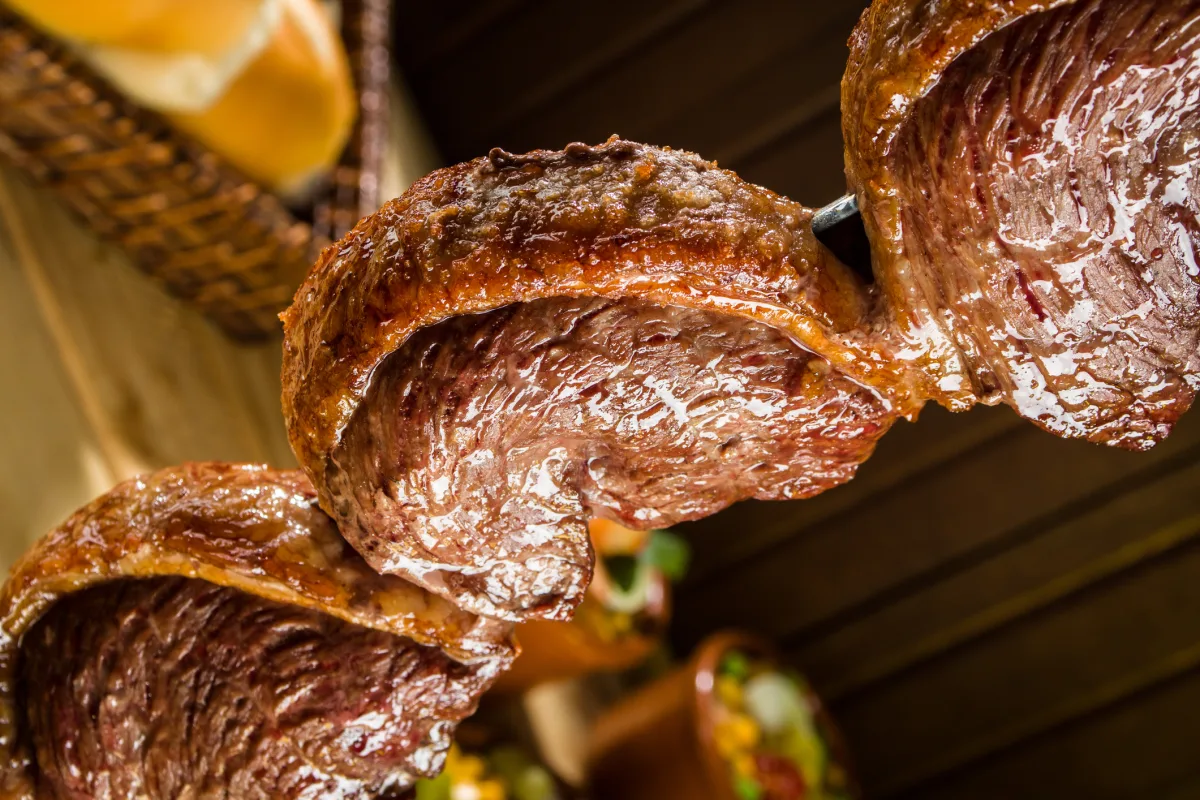
French farmers have, predictably, denounced the agreement as a betrayal. Tractors have blockaded Paris; agricultural unions speak darkly of cheap Brazilian beef flooding European supermarkets. Their concerns are sincere but overstated. The 99,000-tonne beef quota represents just 1.5 per cent of total European production—less than half of current Mercosur imports. As one Atlantic Council analyst noted, it amounts to roughly one South American steak per EU citizen per year.
Regardless, the EU, ever wary of its agricultural lobby, has built in safeguards. A dedicated regulation allows Brussels to suspend imports of sensitive produce if they cause market disruption. Only deforestation-free products may enter the European market—beef, soya, palm oil and the rest. Stringent sanitary standards remain unchanged. Any importer failing to meet EU requirements will find the door firmly shut, deal or no deal.
Digging for victory
The real prize, perhaps, lies underground. Latin America sits on half of the world’s lithium reserves, more than a third of its copper and roughly a fifth of its nickel and rare earths. Brazil alone accounts for 88 per cent of global niobium production, a metal essential for high-strength steel alloys and superconducting magnets. Argentina, alongside Bolivia and Chile, forms the ‘lithium triangle’ containing about half of the world’s measured reserves of the battery metal.
Europe’s dependence on China for these materials is acute. Beijing supplies 98 per cent of the EU’s rare-earth elements and dominates the processing of lithium, cobalt and copper. The Mercosur agreement establishes binding provisions that prohibit export restrictions and eliminate the opaque licensing procedures that have long frustrated European buyers. Lower tariffs on processed materials should encourage Mercosur to develop local value-added industries rather than simply shipping raw ore to Chinese refineries. For European battery-makers and carmakers, diversification of supply is no longer a strategic aspiration but an operational necessity.
Southern comfort
Mercosur’s gains extend well beyond commodity exports. The agreement protects 344 European geographical indications—Parmigiano-Reggiano, Champagne, Prosciutto di Parma—from imitation in South American markets. But it also opens European public procurement to Mercosur firms and grants Latin American service providers access to EU markets in digital technologies and finance. The EU is already Mercosur’s largest foreign investor, with a stock of 390 billion euros. This deal will likely add more.
For Brazil, the bloc’s economic anchor, the timing is particularly fortuitous. President Luiz Inácio Lula da Silva, who will seek a new term in office in October, called the agreement a “victory for dialogue” in a world of growing protectionism. Environmental clauses that once threatened to scupper negotiations now position Brazil to expand exports in renewable energy, biofuels and green hydrogen. The country’s farmers gain preferential access to a market where European tariffs on beef currently run at 12.8 per cent plus a variable levy, on poultry at 26 per cent, and on sugar at prohibitive levels.
The waiting game
Obstacles remain. The European Parliament must still approve the deal, and there are plenty of MEPs have vowed resistance. Furthermore, full ratification of the partnership agreement requires consent from all 27 national parliaments—a process that could take years. But the interim trade agreement, covering the commercial provisions, falls within the EU’s exclusive competence and requires no national ratification. It should enter into force relatively swiftly.
Critics who dismiss the deal as marginal—adding perhaps 0.05 per cent to EU growth—miss the point. At a time when America has weaponised tariffs and China has cornered critical supply chains, the value of rules-based trade agreements should not be measured in GDP points alone.
The Mercosur deal took 25 years. Given what it delivers—market access, supply-chain security, geopolitical ballast—that may prove to have been time well spent.
Photo: Dreamstime.