



After the architects
micro reinvention
Small wonders
parallax background

A single solution

Britain's migration muddle has an answer nobody wants to discuss

December 15, 2025

9 min read

December 15, 2025

9 min read

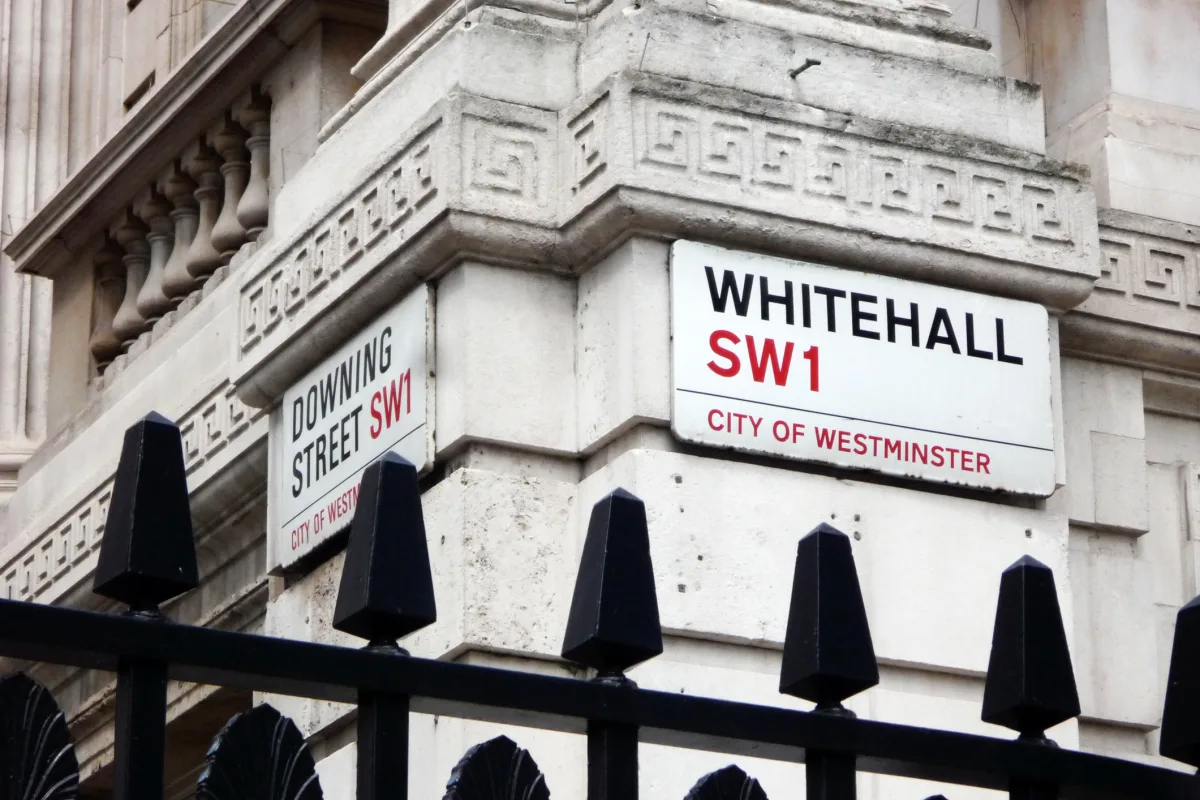
Photo: Dreamstime.

Britain’s fickle voters know a dud when they see one, and Brexit is perhaps the ultimate dud. More than half of Britons now reckon Brexit was wrong. Some 62 per cent call it an outright failure. 

Westminster, however, pretends not to notice. Prime Minister Keir Starmer treats Europe much like a live grenade—mention it and he dives for cover. The Conservatives, having delivered the mess in the first place, now compete with Reform to see who can demand the hardest borders. The Lib Dems mumble about “closer cooperation” without defining what that means. Even the surging Greens, who openly advocate for rejoining the EU, have said that doing so is not a priority.

Nobody will say what the data makes plain: Britain’s migration crisis—the very thing that drove Brexit—could be solved by rejoining the European Single Market. Not full EU membership, which remains toxic and would drag in euro and Schengen membership and resurrect the divisions of 2016. Just the European Economic Area arrangement that Norway, Iceland and Liechtenstein use. It’s sitting there in plain sight. Both sides of the Brexit debate ignore it for opposite reasons. 

The Brexit migration muddle 

Brexit promised control. It delivered chaos. Net migration from the EU predictably collapsed—from over 200,000 annually to slightly negative. In this sense, Brexit has been a complete success. Free movement has ended. 

But the vacuum got filled. Non-EU migration rose from roughly 300,000 in 2019 to 1.1 million in 2023. Net migration hit a record 906,000 in the year to June 2023. The much-heralded ‘Australian-style’ points system that replaced free movement was quietly loosened to plug desperate labour gaps, especially in health and social care. Boris Johnson’s so-called ‘Boriswave’ brought more migration than Britain ever saw under free movement. Just from Nigeria, India, Pakistan and the Philippines instead of Poland, Romania and Bulgaria. 

The difference matters, though nobody in polite society wants to examine why. EU migrants under free movement were overwhelmingly young, economically active, and often temporary. They came, worked, left. Employment rates ran higher than British natives—86 per cent for EU-born men versus 78 per cent for UK citizens in 2022. They paid more tax than they consumed in services. They filled hospitality, construction, agriculture and logistics jobs that needed little training but considerable flexibility.

The new regime works differently. Work visas need employer sponsorship and minimum salaries, encouraging permanent settlement over circular migration. Students bring dependants at extraordinary rates—sub-Saharan African students brought 103 dependants per hundred students in 2022-23. The care sector got unlimited work visas in 2022 and turned into an immigration motorway. This isn’t temporary labour filling gaps. It’s permanent settlement with all the pressure on housing, schools and public services that entails. 

And illegal migration? Soared. Small boat crossings rose from 300 in 2018 to over 37,000 in 2024. Nearly 190,430 people have crossed since 2018. Last year was the deadliest—73 deaths. Britain burned billions on the Rwanda scheme that never took a single deportation flight. The asylum backlog stretches years. The ‘control’ Brexit promised turned out to be entirely fictional. 

The Single Market solution 

The EEA extends the EU’s Single Market to Norway, Iceland and Liechtenstein without requiring EU membership. These countries adopt the four freedoms—goods, services, capital, people—but stay outside the Common Agricultural Policy and Common Fisheries Policy. They join programmes like Erasmus+ and Horizon Europe, match regulatory standards for the Single Market, and contribute to EU cohesion funds at roughly three per cent what full members pay. 

For Britain, this solves the migration problem precisely. Restoring freedom of movement reopens access to that flexible, temporary European labour that kept the service economy running pre-Brexit. Polish builders, Romanian fruit-pickers, Spanish hospitality workers, Italian baristas—the workers who filled gaps without needing permanent infrastructure. Employers could hire them directly without bureaucracy. They’d come and go with economic cycles instead of settling permanently. 

That’s genuine control. Not the theatrical sovereignty of visa requirements, but practical ability to match labour supply to demand flexibly. EU workers need no integration support, no settlement infrastructure. They arrive, work, pay taxes, often leave. Norway demonstrates this works: despite free movement, it runs lower immigration per capita than post-Brexit Britain. 

What’s more, freedom of movement might actually reduce the migration that bothers voters most. Britain’s labour shortages force expensive recruitment from South Asia and Africa. With EU labour available, pressure to issue non-EU work visas drops substantially. The care sector could recruit from Romania and Bulgaria instead. Workers who adapt faster, and cost less to bring given fewer dependants tag along. 

Transforming Britain’s position

Brexit smashed Britain’s illegal migration toolkit. Leaving Dublin III killed the primary mechanism for returning asylum seekers to EU countries they’d travelled through. Pre-Brexit returns were modest—roughly 560 annually—but the system provided legal authority and cooperation frameworks. 

Post-Brexit? Gone. Britain proposed bilateral returns agreements with France, Germany and others. All refused, citing lack of reciprocity and no interest in helping a departed member. The ‘inadmissibility’ rules Britain adopted—declaring asylum claims invalid if applicants passed through safe countries—can’t work without agreements to actually send people back. The 2025 UK-France returns deal permits a pilot potentially returning 50 people weekly. That’s nothing compared to arrivals. 

EEA membership wouldn’t automatically restore Dublin access—Norway uses separate Schengen arrangements—but it transforms Britain’s position. As a Single Market participant paying EU funds and accepting free movement, Britain becomes a cooperative partner instead of a defector demanding favours. Bilateral agreements become feasible when counterparties see burden-sharing rather than burden-shirking. 

Britain would regain Europol for intelligence on smuggling networks, Frontex for border management expertise, the EU’s network of readmission agreements with source countries. Britain operates alone now, without leverage from EU-wide coordination. Joining this cooperative framework wouldn’t solve Channel crossings overnight, but it provides tools and partners currently absent. 

Political impossibilities and possible politics 

The objection arrives immediately: voters rejected free movement in 2016. How could any government propose restoring it? 

The question assumes public opinion is physics when it’s actually weather. In 2016, free movement meant unlimited EU migration when net arrivals exceeded 300,000 annually. Eastern European workers flooded labour markets after 2004 enlargement. Wages stagnated, public services felt strained, the ‘temporary’ nature of such migration hadn’t yet revealed itself. 

Non-EU migration dwarfs anything under free movement. That record 906,000 in 2023 makes 2016’s 300,000 look insignificant. Housing waiting lists stretch longer, GP appointments grow scarcer, visible demographic change continues faster—just from different countries. Labour shortages persist across the economy, from fruit farms to building sites to restaurants. 

The pitch writes itself: “We tried leaving Europe’s Single Market. Didn’t work. Migration went up, not down. Labour markets seized up. We lost control and gained nothing. Let’s try something different—restore the flexible European labour system that actually worked, cutting dependence on permanent migration from elsewhere.” 

This isn’t a referendum on the euro or Schengen. No ‘ever closer union’ rhetoric required. Norway manages EEA membership with fierce independence in other spheres—oil, fisheries. Britain could copy this model, trading regulatory sovereignty for economic access. Every trade agreement involves that bargain. 

The political path exists, if narrow. A weakened Conservative party bleeding voters to Reform UK lacks authority for this shift. Labour, terrified of Red Wall seats and determined to avoid Brexit betrayal accusations, sits paralysed. But the surging Greens could force it. If they keep climbing in the polls, the Overton window could shift. 

Or, economic necessity forces hands. Brexit was meant to reduce migration. It exploded instead. If Starmer’s new visa restrictions—aiming to cut net migration by 100,000—actually work, labour shortages become acute. Employers scream, services deteriorate, government faces an ugly choice: relax restrictions and admit failure, or find new flexible labour sources. 

The pragmatist’s reformation 

This doesn’t address Brexit’s other wounds—trade friction, regulatory divergence, financial services fragmentation, diplomatic isolation. Nor does it resolve Britain’s European identity crisis. Those matter. 

But they’re separate. The migration question stands alone as uniquely solvable through Single Market membership, precisely because it was Brexit’s defining issue and clearest failure. Voters tolerate economic complications they barely grasp. They notice immediately when promised control produces its opposite. 

Britain needn’t reverse Brexit entirely to fix its worst mistake. The EEA model offers pragmatic reformation: acknowledging error without the trauma of a full mea culpa referendum splitting the country again. It provides what Britain desperately needs—flexible labour markets, cooperation on illegal migration, genuine rather than theatrical border control—without requiring the euro, Schengen, or full EU acquis. 

The case for Single Market accession is profoundly conservative: recognising the current system doesn’t work, drawing on proven templates rather than utopian schemes, proposing evolution not revolution. Norway, Iceland, Liechtenstein demonstrate daily you can stay outside the EU yet inside its economic orbit, maintaining sovereignty where it counts whilst cooperating where national interest benefits. 

That Britain’s politicians won’t discuss this seriously reveals contemporary British statecraft’s bankruptcy. Both of the traditionally major parties remain trapped in Brexit’s amber, unable to acknowledge failures without triggering internal wars. Yet polls show voters have moved on, even if Westminster hasn’t. They see what evidence screams: Brexit produced more migration, less control, diminished prosperity. They want alternatives. 

The Single Market offers exactly that—not Brexit betrayal but course correction. Britain chose leaving the European Union. It needn’t stay outside Europe’s economic structures forever. The former was political statement; the latter, economic mistake that can be remedied without referendums or constitutional anguish. 

The irony of course is that restoring freedom of movement—the thing Brexit meant to end—might be the only way to achieve what Brexit actually promised. A migration system serving British interests rather than defying them. Sometimes progress requires admitting error. More often, it requires admitting yesterday’s solution became today’s problem, and having the wit to change course. 

Britain spent four years negotiating EU departure, five more discovering departure’s consequences. Perhaps time to spend less energy defending the indefensible, more finding the pragmatic middle path serving actual national interests. 

Photo: Dreamstime.

Craig Turp-Balazs

Craig Turp-Balazs

Craig Turp-Balazs is head of insight and analysis at Reinvantage.

Share

Case study: Global technology company

1. The Client

A global technology company operating across EMEA, with a regional HQ in Istanbul. The company manages 20+ markets, handling everything from brand campaigns to strategic partnerships.

Role we worked with: The EMEA Head of Marketing (supported by two regional managers).

2. The Challenge

Despite strong products and a respected global brand, the regional team was struggling with:

  • Misaligned strategy across markets → campaigns executed with inconsistent narratives.
  • Slowed growth → lead generation plateaued despite increasing spend.
  • Internal friction → marketing, sales, and product teams disagreed on KPIs and priorities.

Traditional fixes (more meetings, more reporting) only created more noise.

3. The Sprint

We ran a 10-day Remote Reinvention Sprint with the regional HQ team.

  • Day 1–3: Intake → Reviewed decks, campaign data, and plans.
  • Day 4: Sprint Session (90 mins) → Breakthroughs:
    • Sales and marketing had different definitions of “qualified lead.”
    • 40% of spend was going into low-potential markets.
    • The team assumed the problem was lack of budget, but it was actually lack of alignment.
  • Day 5–10: Synthesis → Insights distilled into a Clarity Brief + Insight Canvas.
4. The Breakthrough

The Sprint uncovered that the issue wasn’t budget, but fragmentation.
Three sharp insights unlocked a way forward:

  1. Unified KPIs bridging marketing + sales.
  2. Market prioritisation → shifting budget to 5 high-potential markets.
  3. Simplified narrative → one EMEA core story, locally adaptable.
By just realigning resources and focus, the client could unlock an estimated £250,000 in efficiency gains within the next 12 months — far exceeding the Sprint’s value guarantee. The path to higher returns was already inside the business, hidden by misalignment.
5. From Sprint to Action (4 Pillars Applied)

With clarity secured, Reinvantage didn’t suggest “more projects.”

Instead, we used the Sprint findings to create laser-focused next steps — drawing only from the areas that would deliver the most impact:

  • Readiness → Alignment workshops for sales + marketing teams. New playbooks clarified “qualified lead” definitions and reduced internal disputes.
  • Foresight → A market-opportunity scan identified which 5 countries would deliver the highest ROI, removing the guesswork from allocation.
  • Growth → Guided the reallocation of €2M budget and designed a phased rollout strategy that protected risk while maximising return.
  • Positioning → Built a messaging framework balancing global consistency with local nuance, ensuring campaigns spoke with one clear voice.

Because the Sprint had stripped away noise, these actions weren’t generic consulting ideas — they were directly tied to the breakthroughs.

6. The Results
  • +28% increase in qualified leads across the region.
  • 30% faster campaign rollout due to streamlined approvals.
  • Budget efficiency gains → €2M redirected from low-return to high-potential markets.
  • Internal cohesion → marketing + sales now use a single shared dashboard.
The client came in believing they needed more budget.
The Sprint revealed that what they really needed was clarity and alignment.

With that clarity, the four pillars became not theory, but practical tools to deliver measurable impact.

The Sprint guaranteed at least £20,000 in value — but in this case, it helped unlock more than 10x that within six months.

Case study: Regional VC fund & accelerator

1. The Client

A regional venture capital fund and accelerator focused on early-stage tech start-ups in the Baltics and Central Europe.

The fund had raised a new round and was under pressure to deliver stronger returns while also building its reputation as the go-to platform for founders.

Role we worked with: Managing Partner, supported by the Head of Portfolio Development.

2. The Challenge

Despite a promising portfolio, results were uneven.

Key issues:

  • Scattered portfolio support → no consistent playbook for start-ups, every partner did things differently.
  • Weak differentiation → founders and co-investors saw the fund as “one of many” in the region.
  • Stretched team → too many small bets, not enough clarity on which companies to double down on.

The leadership team knew something was off, but disagreed on whether the issue was pipeline quality, market conditions, or internal capacity.

3. The Sprint

We ran a 10-day Remote Reinvention Sprint with the partners and portfolio team.

  • Day 1–3: Intake → Reviewed pitch decks, pipeline funnel data, and start-up performance reports.
  • Day 4: Sprint Session (90 mins) → Breakthroughs:
    • No shared definition of a “high-potential founder.”
    • Support resources were spread too thin across the portfolio.
    • The fund’s positioning was more reactive than proactive — it didn’t own a distinctive narrative in the market.
  • Day 5–10: Synthesis → Insights consolidated into a Clarity Brief + Insight Canvas.
4. The Breakthrough

The Sprint revealed that the challenge wasn’t pipeline quality — it was lack of focus and positioning.

Three core insights provided the turning point:

  1. Portfolio Prioritisation Framework → defined clear criteria for where to double down.
  2. Founder Success Playbook → standardised support model for portfolio companies.
  3. Differentiated Narrative → repositioned the fund as “the accelerator of reinvention-ready founders.”
These shifts alone gave the fund a path to add an estimated £2M+ in portfolio value over the following 18 months, by concentrating capital and resources where they could move the needle most.
5. From Sprint to Action (4 Pillars Applied)

With clarity from the Sprint, Reinvantage created a tailored support plan:

  • Readiness → Coached partners on using the new prioritisation framework and trained the team on deploying the Founder Success Playbook.
  • Foresight → Ran scenario analysis on regional tech trends, helping the fund anticipate where capital would flow next.
  • Growth → Guided resource reallocation across the portfolio and supported new co-investor pitches for top-performing start-ups.
  • Positioning → Crafted a sharper brand story for the fund, positioning it as the reinvention partner for globally minded founders.
6. The Results
  • 10 portfolio companies onboarded to the new Playbook → greater consistency of support.
  • Raised follow-on capital for 3 top start-ups with the new prioritisation framework.
  • +26% increase in inbound deal flow from founders citing the fund’s new positioning.
  • Stronger internal cohesion → partners aligned on where to focus resources.
The client thought the problem was pipeline quality.
The Sprint showed it was actually lack of clarity and focus inside the firm.

By applying the four pillars, Reinvantage helped turn scattered effort into concentrated value creation.

The Sprint guaranteed at least £20,000 in value; here it set the stage for multi-million-pound upside in portfolio growth.

Case study: International impact Organisation

1. The Client

A large international impact organisation focused on entrepreneurship and economic empowerment.
The organisation runs multi-country programmes across Eastern Europe and Central Asia, often in partnership with global donors and corporate sponsors.

Role we worked with: Senior Programme Director, responsible for regional coordination.

2. The Challenge

The organisation had launched a flagship regional initiative supporting women entrepreneurs, but the programme was underperforming.

Key issues:

  • Fragmented delivery → each country office interpreted the programme differently.
  • Donor frustration → reporting lacked consistency and clear impact metrics.
  • Lost momentum → staff energy was spent on administration rather than scaling success stories.

Traditional programme reviews had produced long reports, but no real alignment or action.

3. The Sprint

We ran a 10-day Remote Reinvention Sprint with the regional leadership team and representatives from two country offices.

  • Day 1–3: Intake → Reviewed donor reports, programme KPIs, and field feedback.
  • Day 4: Sprint Session (90 mins) → Breakthroughs:
    • Donors cared about quantifiable outcomes, but reporting focused on stories.
    • Staff were duplicating efforts across countries, wasting time and resources.
    • The initiative lacked a clear theory of change — everyone described its purpose differently.
  • Day 5–10: Synthesis → Insights distilled into a Clarity Brief + Insight Canvas.
4. The Breakthrough

The Sprint revealed that the issue wasn’t donor pressure or programme design — it was a lack of shared framework and alignment.

Three critical insights reshaped the path forward:

  1. One Unified Theory of Change → agreed narrative for why the programme exists.
  2. Core Impact Metrics → clear, comparable KPIs across all countries.
  3. Smart Resource Sharing → digital hub to stop duplication and accelerate knowledge flow.
By eliminating duplicated reporting and clarifying what success looks like, the client saw they could save the equivalent of £100,000 in staff time annually — while also unlocking stronger donor confidence and follow-on funding opportunities.
5. From Sprint to Action (4 Pillars Applied)

Armed with Sprint clarity, Reinvantage proposed a laser-focused support plan:

  • Readiness → Trained programme leads on using the new metrics and integrated them into existing workflows.
  • Foresight → Analysed donor trends and expectations, aligning the initiative with the next funding cycle.
  • Growth → Developed a funding case based on the new unified theory of change, securing higher renewal chances.
  • Positioning → Crafted a regional success narrative and storytelling toolkit, helping them showcase results consistently across markets.
6. The Results
  • 30% less time spent on reporting → freed capacity for programme delivery.
  • Donor satisfaction improved → positive feedback on the clarity of impact evidence.
  • Secured new funding commitment → one major donor increased their contribution by 20%.
  • Stronger internal morale → staff felt they were working with clarity, not chaos.
The client thought it needed better donor management.
The Sprint revealed it needed a shared foundation across its teams.

By anchoring on the four pillars, Reinvantage turned alignment into efficiency gains and fresh funding opportunities.

The Sprint guaranteed at least £20,000 in value; here it unlocked both six-figure savings and future-proofed funding.

Case study: National digital development agency

1. The Client

A national digital development agency tasked with driving the government’s digital transformation agenda, including e-services, citizen portals, and smart city pilots.

Role we worked with: Director of Digital Transformation, supported by IT and service delivery leads from three ministries.

2. The Challenge

The agency had strong political backing but faced hurdles in implementation.

Key issues:

  • Siloed projects → each ministry developed digital tools independently, leading to duplication.
  • Citizen frustration → services were digital in name, but still required multiple logins and offline steps.
  • Funding pressure → international partners demanded clearer impact in the short term.

The agency wanted to accelerate momentum but struggled to get alignment across ministries.

3. The Sprint

We ran a 14-day Immersive Reinvention Sprint with the agency’s leadership and digital focal points from three ministries.

  • Day 1–3: Intake → Reviewed strategy docs, donor reports, and citizen feedback data.
  • Day 4: Immersive Sprint Session (half-day) → Breakthroughs:
    • Each ministry had different definitions of “digital service.”
    • 20% of budget was going into overlapping pilot projects.
    • Citizens’ top frustrations were known — but not prioritised.
  • Day 5–14: Synthesis → Insights consolidated into a Clarity Brief + Insight Canvas.
4. The Breakthrough

The Sprint revealed that the biggest blocker wasn’t lack of funding, but lack of shared priorities.

Three practical insights stood out:

  1. One Definition of Digital Service → agreed across ministries.
  2. Quick-Win Prioritisation → focus on top 3 citizen pain points (ID renewal, business registration, healthcare booking).
  3. Shared Resource Map → pool budgets to eliminate duplication.
These changes alone allowed the agency to unlock £75,000 in immediate savings and deliver 2–3 visible improvements in the next quarter — meeting donor expectations and building citizen trust.
5. From Sprint to Action (4 Pillars Applied)

Based on the Sprint clarity, Reinvantage proposed a modest, targeted package of support:

  • Readiness → Facilitated inter-ministerial workshops to embed the “one digital service” definition.
  • Foresight → Analysed citizen feedback trends to shape the quick-win roadmap.
  • Growth → Supported the reallocation of funds to joint projects, reducing overlap.
  • Positioning → Crafted a communication plan highlighting early digital wins to donors and citizens.
6. The Results
  • 2 pilot services integrated into the central portal (ID renewal + healthcare booking).
  • Budget savings of £75,000 from eliminating overlapping projects.
  • Citizen satisfaction up modestly → call centre complaints on digital services dropped by 12%.
  • Donor confidence improved → short-term impact report received positive feedback.
The client thought it needed more funding and bigger projects.
The Sprint revealed it first needed clarity and alignment.

By applying the four pillars to a targeted scope, Reinvantage helped deliver visible results within a single quarter — proving progress to citizens and donors and laying the groundwork for deeper transformation.

You must be logged in to view this page. Login here.

Bridging the Reinvention Gap: Fill this form and get your preview copy immediately.

Future of IT: Fill this form and get your preview copy immediately.

War for Talent: Fill this form and get your copy immediately.

The Voice of Ukrainian Start-ups: Fill this form and get your copy immediately.

The uncounted engine: Ukraine’s start-up rise. Fill this form and get your copy immediately.

The Investment Promotion Playbook 2025: Fill this form and get your preview copy immediately.

The Reinvention Masterclass for Start-up Founders: Join the private cohort

Beyond Borders: Join the private edition