


Earlier this week, I found myself in an unexpectedly revealing conversation. Someone asked me—with genuine curiosity, not provocation—where I stood on the political spectrum. My answer probably disappointed them. I said I was an observer. Not neutral. Not disengaged. Simply observant. I’ve learnt that most of the interesting questions sit somewhere between certainty and doubt.
To make the point, I offered an example that usually short-circuits polite discussion: Donald Trump. Chaotic, theatrical, often ridiculous in form—and yet, if you strip away the noise, undeniably effective at forcing systems to react. He moves things. Sometimes crudely. Sometimes destructively. But he exposes just how rigid many institutions really are.
And to avoid misunderstanding, let me be clear from the outset: I am not a supporter of Donald Trump. His politics, his tone and much of his conduct are not mine. But observing leadership today requires separating form from effect. Even deeply flawed actors can expose uncomfortable truths about the systems they put under pressure.
Whether the movements Mr Trump provokes lead anywhere constructive is open to debate. But the reactions they trigger tell us something important about how brittle many of our leadership models have become.
Living with a rupture
That exchange stayed with me because it exposed something deeper than ideology. It highlighted how shallow much contemporary leadership thinking is—and how poorly equipped it remains for the world we now inhabit.
That same tension surfaced again a few days later—this time on a much bigger stage.
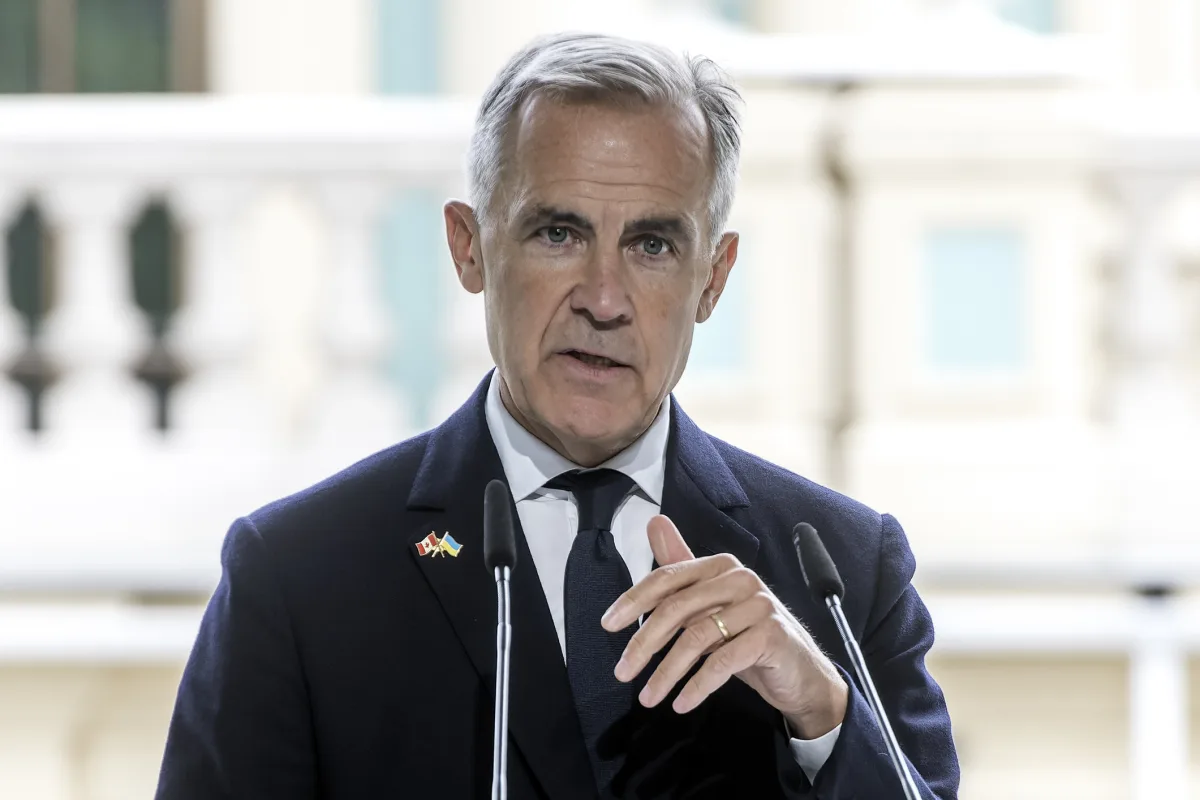
At the World Economic Forum in Davos, Canadian PM Mark Carney struck a markedly different note. Speaking less like a politician and more like a systems engineer, he suggested that the world is no longer passing through a phase but living with a rupture. That some of the rules leaders still rely on are not temporarily bent, but structurally broken. There was no promise of restoration, no language of recovery—only an implicit challenge: if you are still organising for stability, you are already behind. It wasn’t a rousing speech. Nor was it especially comforting. Which may be the point.
The global model that shaped the past few decades was built on efficiency, optimisation and predictability. It assumed disruption was temporary, that shocks were external, and that stability would return if leaders simply held their nerve. That model is now broken—not because of one crisis, but because of many, arriving faster than institutions can absorb.
Geopolitics has accelerated the breakdown. Trade has been weaponised. Energy security has returned as a strategic concern. Industrial policy is back in fashion. But geopolitics alone does not explain the failure. Leadership does.
Too many leaders are still managing for reassurance rather than relevance—and mistaking it for the same thing. They speak fluently about resilience while clinging to electoral cycles, quarterly targets and comforting narratives. They promise recovery, normalisation, a return to something familiar. And that, increasingly, is the problem.
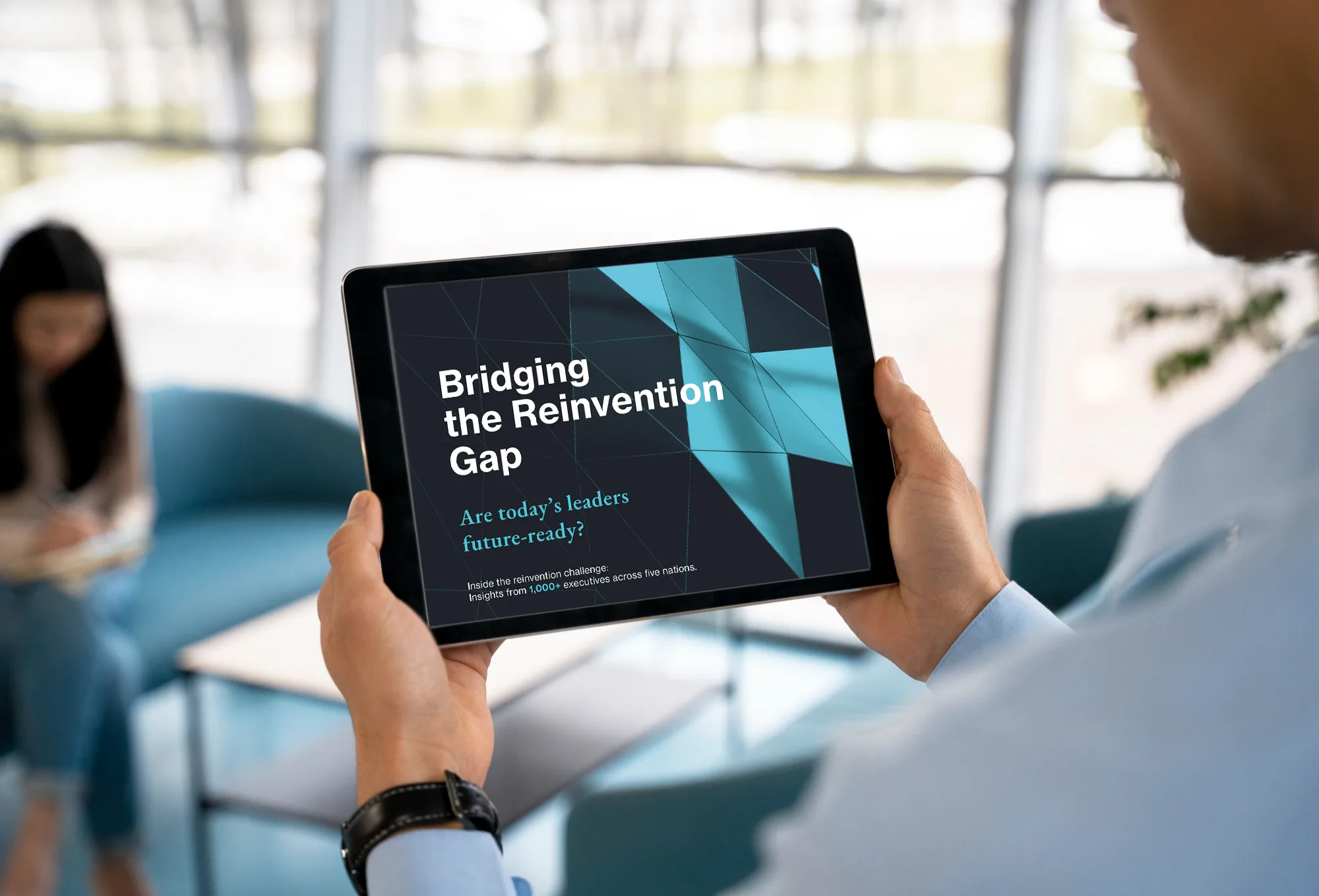
Bridging the Reinvention Gap
Resilience is not a value proposition
Resilience, as it is commonly understood, is the ability to absorb stress and bounce back. It sounds sensible, even prudent. But the ‘bounce back’ should give us pause. Because by the time you bounce back, the world has already shifted. The conditions you are returning to no longer exist.
This tension was evident at Davos this year, where resilience, discussed as a foundational operating principle for governments, corporations, and financial systems, featured heavily in the language of leaders and institutions alike. Again and again, it was framed as a virtue—the capacity to endure, absorb shocks and recover. Yet beneath the rhetoric sat a quieter anxiety: recover to what, exactly? In a world defined by compounding disruption, returning to a previous state may be neither possible nor desirable.
Across supply chains, labour markets, technology systems and institutions, shocks are no longer isolated events. They are systemic and simultaneous. In that environment, resilience framed as recovery is not just insufficient—it is actively misleading. It encourages leaders to prepare for yesterday’s disruption rather than tomorrow’s reality.
This is why I am sceptical of the growing tendency to treat resilience as the value proposition. It isn’t. Anticipation is. Future relevance is. Reinvention is.
Deferring the reckoning
The organisations and countries most likely to remain relevant over the next decade will not be those best at responding after the fact, but those that have invested in the harder work of imagining what might happen next—and getting ready in advance. That means cultivating optionality. Running experiments before they are needed. Testing alternatives while there is still room to fail.
None of this is easy. Anticipation doesn’t fit neatly into political cycles or boardroom dashboards. It demands decisions without certainty and investment without immediate reward. It also requires leaders to give up something they are deeply attached to: the illusion of control.
Politically, the trade-off is obvious. Anticipatory action often delivers benefits beyond the next election, while the costs are immediate and visible. That makes it unattractive in systems designed around short-term accountability. Yet refusing to act does not preserve stability; it merely defers the reckoning.
What we see instead is a widening gap between the language leaders use and the systems they actually build. They talk about resilience while doubling down on brittle structures. They celebrate agility while punishing deviation. They promise preparedness while rewarding compliance.
The uncomfortable truth is that the future will not be kind to institutions optimised for reassurance. It will favour those willing to design for uncertainty—deliberately, systematically and early. That is the real shift underway. Not resilience as endurance, but anticipation as strategy. The ability to sense, design and implement change before it is forced upon you.
The next decade will not be defined by who withstands the shock, but by who sees it coming—and has already moved.
Photo: Dreamstime.