


Estonians are used to topping the charts. From its tax system (first among members of the Organisation for Economic Co-operation and Development; OECD) to its IT sector (last week named the most competitive among 32 countries surveyed by Reinvantage), the country excels at a great deal.
Its democratic credentials are sound too. Second in the world, according to Varieties of Democracy (V-Dem), run by the University of Gothenburg in Sweden. The Washington-based Freedom House, however, which publishes its own annual report on global democracy, places the Baltic state joint 12th. The Economist Intelligence Unit (EIU), meanwhile, believes that the country deserves no better than joint 21st place.
That the same country can produce three rather different results is less a reflection of its democratic credentials—Estonia is clearly one of the most free and democratic countries on the planet—than the difficulties in gauging what a successful democracy actually looks like. Can democracy even be measured? Its essence reduced to a couple of decimal places?
In all truthfulness, no. At least not in the way that GDP (itself not perfect) or infant mortality can be measured. But that hasn’t stopped organisations such as V-Dem, the EIU, and Freedom House (which has been publishing its report since 1972) from trying. Although their rankings may not always align—a consequence of their different methodologies (the EIU for example gives more weight to political participation)—their overall findings are broadly similar. If all three agree that democracy in a certain country is in retreat, it probably is.
Democracy is not a number
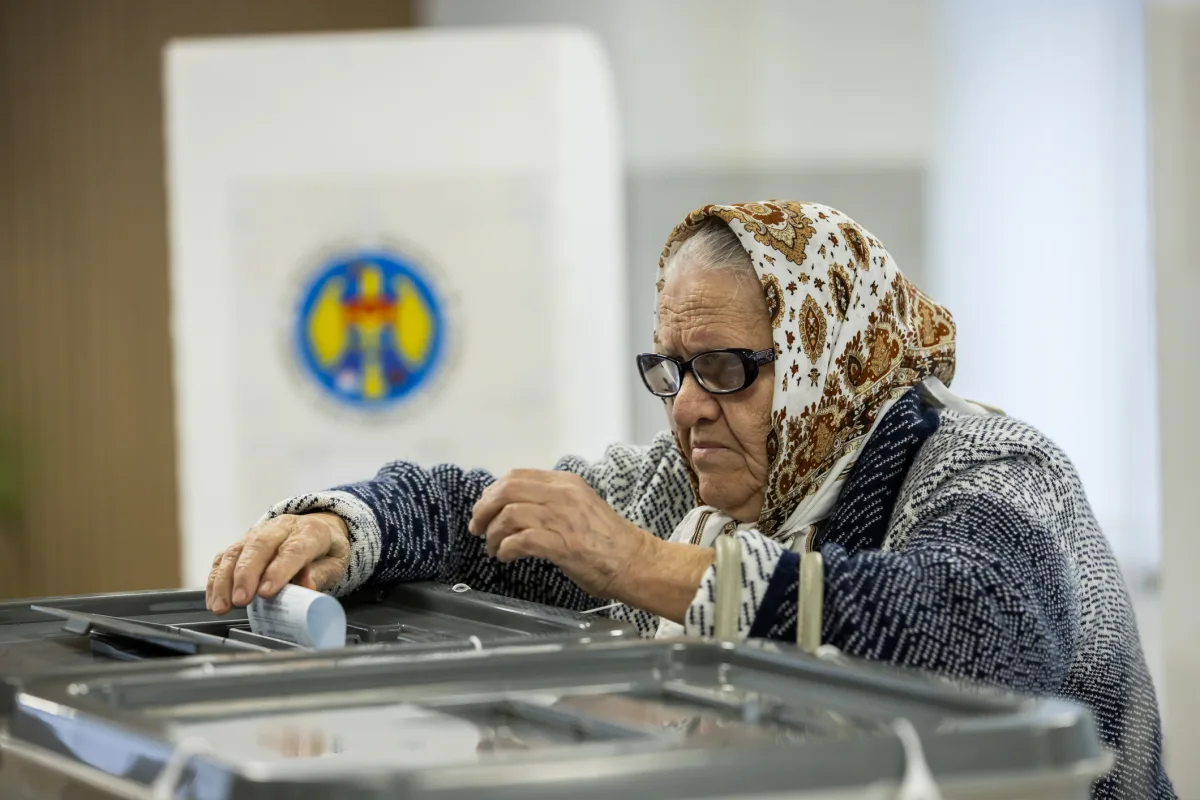
Where all three go wrong is attempting to quantify democracy as a number. In 2024, Moldova simultaneously held a presidential election and a referendum on European Union membership. The Organisation for Security and Co-operation in Europe (OSCE) declared that both elections were well managed, and that contestants campaigned freely despite concerns over illicit foreign interference and active disinformation efforts.
Nevertheless, Freedom House ranks the country as being only ‘Partly Free’, citing “pervasive corruption in the government sector, links between major political parties and powerful economic interests, and deficiencies in the rule of law [that] continue to hamper democratic governance.”
The EIU meanwhile classes Moldova as a ‘Flawed Democracy’, which is at least more than can be said of its EU-member neighbour, Romania, which was downgraded to ‘Hybrid Regime’ last year following the cancellation of a presidential election.
Just five decimal places separate the two countries in the EIU’s index. Moldova scores 6.04 (out of 10) and Romania 5.99. The line that separates a ‘Flawed Democracy’ from a ‘Hybrid Regime’ is set at 6.00. Is Romania, with the checks and balances that EU membership offers, really less democratic than Moldova? Probably not.
The focus on numbers, scores and definitions also blurs objective realities. Cancelling the second round of its 2024 election just days before voting began likely saved Romania’s democracy, given that the probable winner, Călin Georgescu, has since been charged with plotting to endanger national security and the country’s constitutional order.
Democracy is in the eye of the beholder
Perhaps the deeper problem is that all of these indices measure democracy from the top down. Experts assess institutions, laws, participation, and procedures. Citizens, on the other hand, experience democracy through their daily encounters with the state and their sense of whether their voices count.
Surveys worldwide often reveal that many citizens believe they live in democracies, even when experts classify their governments as authoritarian. In 2022, Pew Research revealed that 78 per cent of Singaporeans were satisfied with how democracy works in their country. Freedom House, however, classifies the country as only ‘Partly Free’, noting how the same party has ruled the island since 1959.
This, of course, is because the word ‘democracy’ triggers different associations for different people. For some, mostly in North America and Europe, it means free elections. For others, it encompasses economic equality, minority protection, or direct popular participation. Indeed, according to the Democracy Perception Index, prepared by the Alliance of Democracies, globally, more people say the main purpose of democracy is to improve living standards rather than to organise free elections or protect civil liberties.
That different people have different expectations of democracy is perhaps why its quantification has proven so difficult and problematic. That does not mean we should stop trying, however. Freedom House, V-Dem, the EIU, and the Alliance of Democracies have every right to publish their reports and indices and should continue to do so. They might, however, do well to place more emphasis on the voices of citizens, not experts.
For those of us who pore over the results, we might in turn reinvent the way we approach our analysis. We should be less worried about which countries are 13th and 14th and more concerned with the overall direction of travel, and all the indices tell us that democracy is in retreat.
Ultimately, democracy is a process, not a number. It is a continual struggle over how power is distributed and exercised, and how citizens view their relationship with the state. Anyone who tells you that global democracy this year scores 5.17 out of 10 is missing its true meaning.
Photo: Dreamstime.