

Do better
parallax background

The reinvention corridor

Why CEE and Mercosur are about to discover each other

August 28, 2026

10 min read

August 28, 2026

10 min read

Photo: Dreamstime.

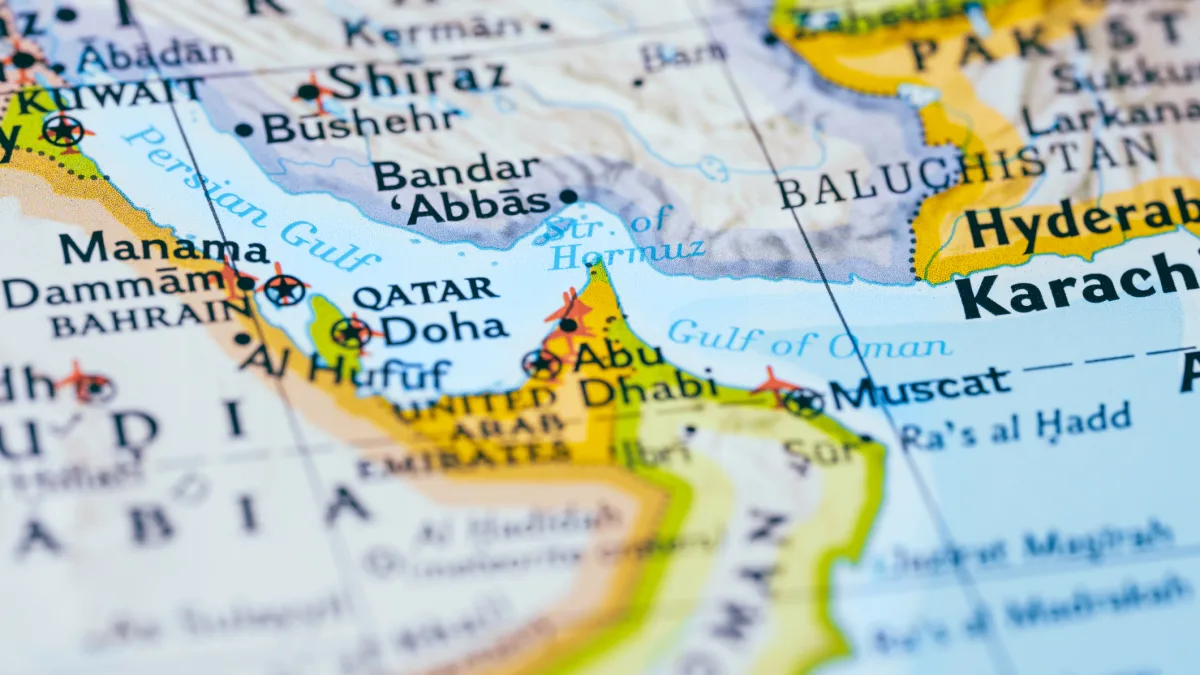
History occasionally creates unlikely winners—not because they planned everything correctly, but because the world changes around them and suddenly makes their geography, capabilities and relationships far more valuable. Central and Eastern Europe and Mercosur may be two such regions.

Calling them ‘darlings of history’ sounds paradoxical—and deliberately so. History has rarely treated either region kindly. CEE spent much of the twentieth century caught between empires, wars, occupations and imposed political systems; South America knows its own long story of instability, military rule and economic crisis. Neither has had the luxury of assuming history would work in its favour. But history is rarely linear. Periods of disruption open windows in which regions once considered peripheral become central to the calculations of much larger powers. This is one of those moments.

What makes CEE and Mercosur temporary darlings of history is not that their problems have vanished—they plainly have not. It is that other powerful actors increasingly need what they have. Washington, Brussels and Beijing are paying more attention to South America; the United States, Western Europe and NATO to Europe’s eastern half. Capital, security, energy, food, minerals, industrial capacity and geography are all being repriced. Attention is not prosperity. But attention creates leverage, and leverage, used well, creates opportunity.

History can punish geography—then reprice it

For decades, CEE was defined by what it was becoming: Western, democratic, capitalist, European. Its model was convergence: attract investment, plug into Western supply chains, access the Single Market, close the income gap. It worked remarkably well. Now the region is entering a different phase. Poland is becoming one of Europe’s consequential powers, Romania has sharply increased its economic weight, Czechia remains a formidable industrial economy, the Baltics have built real technological depth, and defence spending is opening another industrial frontier. Then there is Ukraine: whatever the eventual settlement, its reconstruction will be one of Europe’s largest economic undertakings in decades, turning Poland, Romania, Slovakia and their neighbours into logistics, manufacturing and capital platforms. CEE is moving from Europe’s convergence zone towards one of its strategic centres of gravity.

This is not an escape from history. War has returned to the neighbourhood, demographic pressures are severe, and institutions remain uneven. But the same geography that once made CEE vulnerable now makes it valuable. That is the paradox. History can punish geography, then reprice it.

Mercosur is living through its own repricing. Brazil is at once an agricultural superpower, an energy player, an industrial economy and a diplomatic heavyweight; Argentina holds extraordinary agricultural, energy and mineral potential; Uruguay and Paraguay bring their own advantages to a bloc increasingly courted by larger powers. Here too, history has hardly been gentle. But the new international system suddenly assigns great value to what Mercosur has in abundance—food, energy, critical minerals, renewable potential, large consumer markets and, above all, geopolitical optionality. China wants more from South America. Washington is refocusing on its hemisphere. And Europe has finally concluded a deal it pursued for more than a quarter-century. When everybody needs optionality, the countries able to work with several centres of power become more valuable.

That is why I call both regions darlings of history—not because history has favoured them, but because it has temporarily placed both closer to the centre of other people’s strategies. The challenge is to convert attention into agency before the window shifts again.

The agreement changes the map

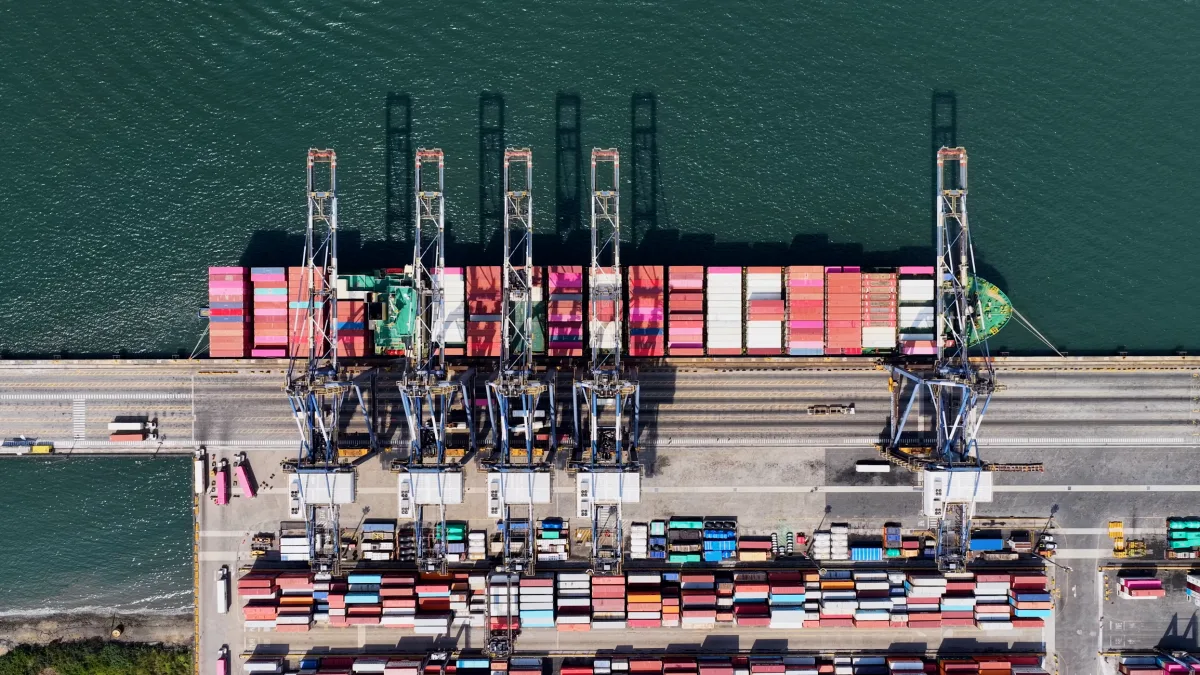
The EU–Mercosur agreement is far more than another trade deal. A political agreement was reached in December 2024; the partnership and interim trade agreements were formally signed in January 2026, and the interim trade agreement has applied provisionally since 1 May 2026. Together, the agreements are intended to create what EU institutions describe as the world’s largest free-trade area, covering more than 700 million consumers and over one-fifth of global GDP. EU–Mercosur trade in goods totalled about 109 billion euros in 2025, with tens of billions more in services.

But headline figures mislead. ‘EU–Mercosur trade’ does not mean every part of Europe trades equally with every part of Mercosur. Economic geography has memory. Spain and Portugal enjoy obvious linguistic and historical advantages in Latin America; Italy has deep human ties; France and Germany have decades of corporate experience across the continent. CEE starts elsewhere. For most of the last 35 years, its companies had little reason to look across the South Atlantic—they had a transformation to finish at home. That is now changing. And that is where the real opportunity begins.

Two regions, one two-way discovery

For South American executives, ‘Europe’ has long meant Madrid, Lisbon, Paris, London, Frankfurt, Milan. There were good reasons—capital, language, diaspora, established multinationals. But twenty-first-century Europe has a different map. Warsaw matters more. Bucharest matters more. Prague matters more. The Baltic, Black Sea and Adriatic corridors matter more; the eastern flank matters enormously for security and energy; and Ukraine’s reconstruction will pull economic gravity further east. Mercosur companies should start seeing CEE not as Europe’s distant periphery but as an alternative gateway into Europe’s next growth geography—in food and agritech, energy, critical minerals, aerospace, defence, mobility, digital services, logistics and industrial technology, areas in which the two regions are genuinely complementary.

The discovery has to run the other way too. CEE’s first globalisation was inbound: foreign capital came to us, Western firms built factories, global corporations opened service centres. The region became exceptionally good at participating in other people’s internationalisation. The next stage must be outbound. Polish, Czech, Romanian, Hungarian, Baltic and other companies increasingly need to buy, build and partner abroad—partly as a matter of ambition and partly as a matter of mathematics, as domestic markets and demographics impose limits. Latin America belongs on that map. For Romania, there is an added edge I have called the ‘Latin network’: using cultural and linguistic affinity with Europe’s Latin economies and with Latin America as an additional form of infrastructure for internationalisation. Romania is at once Central European, European and Latin. That identity has been more cultural than commercial. It does not have to stay that way.

Competitive connectivity, not a new patron

The timing is favourable for a deeper reason: the Western Hemisphere is strategically competitive again. Washington’s renewed focus on its neighbourhood—the ‘Donroe’ Doctrine—is changing Latin American calculations, as China’s presence already has. This should not be read through Cold War logic, in which South America must pick one patron. The more interesting future is competitive connectivity. Washington offers security, capital and proximity; China offers scale, infrastructure and demand; Europe offers a vast market, investment, technology and standards. Mercosur’s opportunity is to avoid dependence by keeping all three relationships alive. The EU–Mercosur deal strengthens the European leg of that triangle—and produces a second-order effect that deserves far more attention. Brussels has not only connected Mercosur with Western Europe. It has connected Mercosur with CEE. That is a much newer relationship.

The reinvention corridor

Here the story becomes one of reinvention. Mercosur is evolving from a regional arrangement discussed mostly in terms of commodities into a more consequential platform in global competition. CEE is evolving from a low-cost convergence region into a strategic European centre for industry, technology, defence, energy and reconstruction. And the EU itself is being forced to reinvent its global economic role. I argued previously in Reinvantage that Europe has quietly assembled an impressive architecture of trade agreements but now needs companies willing to walk through the doors Brussels has opened. EU–Mercosur is the perfect test—because reinvention is often less about acquiring new capabilities than about connecting old ones to opportunities that did not exist before.

Picture a new Reinvention Corridor: South America across the Atlantic into CEE and onwards to Ukraine and Europe’s eastern neighbourhood—and, in reverse, CEE through the EU–Mercosur framework into South America’s large markets and the wider Latin American economy. The corridor does not yet exist at scale. That is precisely why it is interesting. Reinvention is most valuable before everyone else sees the opportunity.

Treaties do not create trade; companies do, and Europe has repeatedly shown that signing a deal and exploiting it are different skills. This relationship needs infrastructure beneath the agreement: business missions, chambers and councils, cross-Atlantic investment funds, CEO networks, university and technology partnerships, direct flights, stronger Spanish- and Portuguese-language capabilities inside CEE firms and more CEE expertise inside South American ones—and, above all, corporate curiosity. A Brazilian CEO weighing Europe should have Warsaw and Bucharest on the map beside Madrid and Frankfurt; a Polish, Czech or Romanian CEO thinking globally should have São Paulo, Buenos Aires and Montevideo beside New York, London and Dubai. The relationship becomes real when those cities enter each other’s boardrooms.

Agriculture will be the obvious obstacle—and CEE farmers have legitimate concerns about competition and standards that should not be dismissed. But agriculture need not define the relationship; it could become one of its most interesting frontiers. CEE has land, farming traditions and a growing agritech sector; Brazil and Argentina are home to some of the world’s most sophisticated large-scale agricultural systems. The question is not only who sells more into Europe, but what these two agricultural regions can build together—in precision farming, biotech, food processing, machinery, climate resilience and digital farm management. I previously wrote on Reinvantage that the future of agriculture will increasingly be found where soil meets code. This is a remarkable laboratory for exactly that.

Attention is an asset—but a depreciating one

There is a warning inside the phrase ‘darlings of history’. History keeps favourites only briefly. Today’s indispensable geography can become tomorrow’s forgotten periphery; today’s commodity edge can be disrupted; today’s attention can move on. Both regions should treat this moment not as validation but as a window—and convert geopolitical attention into economic infrastructure before it closes: trade routes, investment relationships, acquisitions, research partnerships, supply chains and personal ties between CEOs. Those things survive headlines. It is the deeper lesson of both regions’ difficult histories: opportunity is rarely permanent, but institutions can make more of its benefits permanent.

CEE–Mercosur trade will not suddenly rival either region’s largest partnerships, and no one should invent artificial targets. The opportunity is subtler. Two regions whose relevance is rising are discovering each other exactly when the system rewards diversification. Mercosur wants options; CEE needs markets. Mercosur companies need new gateways into Europe; CEE companies need to learn how to globalise outwards. The pieces increasingly fit.

For 35 years, CEE’s story was about connecting east to west; for Mercosur, this century has been about balancing north, west and east. The next map can be more imaginative. Southwest can meet northeast. Brussels has built the bridge, great-power competition has created the incentive, Ukraine’s reconstruction will raise CEE’s gravity, and the world’s rediscovery of South America will raise Mercosur’s. History has not suddenly turned kind to either region. It has done something more useful: made both more relevant to the ambitions of others. That relevance creates attention, attention creates leverage, and leverage opens a window for agency. Now business has to turn that window into relationships that outlast the moment. The next chapter of globalisation may not be written only between the world’s traditional centres. It may be written between its newly central regions. CEE and Mercosur have spent decades looking elsewhere. Their next reinvention should be to look at each other.

Photo: Dreamstime.

Radu Magdin

Radu Magdin

Strategic communications analyst, consultant and former prime ministerial advisor in Romania and Moldova.

Share

Case study: Global technology company

1. The Client

A global technology company operating across EMEA, with a regional HQ in Istanbul. The company manages 20+ markets, handling everything from brand campaigns to strategic partnerships.

Role we worked with: The EMEA Head of Marketing (supported by two regional managers).

2. The Challenge

Despite strong products and a respected global brand, the regional team was struggling with:

  • Misaligned strategy across markets → campaigns executed with inconsistent narratives.
  • Slowed growth → lead generation plateaued despite increasing spend.
  • Internal friction → marketing, sales, and product teams disagreed on KPIs and priorities.

Traditional fixes (more meetings, more reporting) only created more noise.

3. The Sprint

We ran a 10-day Remote Reinvention Sprint with the regional HQ team.

  • Day 1–3: Intake → Reviewed decks, campaign data, and plans.
  • Day 4: Sprint Session (90 mins) → Breakthroughs:
    • Sales and marketing had different definitions of “qualified lead.”
    • 40% of spend was going into low-potential markets.
    • The team assumed the problem was lack of budget, but it was actually lack of alignment.
  • Day 5–10: Synthesis → Insights distilled into a Clarity Brief + Insight Canvas.
4. The Breakthrough

The Sprint uncovered that the issue wasn’t budget, but fragmentation.
Three sharp insights unlocked a way forward:

  1. Unified KPIs bridging marketing + sales.
  2. Market prioritisation → shifting budget to 5 high-potential markets.
  3. Simplified narrative → one EMEA core story, locally adaptable.
By just realigning resources and focus, the client could unlock an estimated £250,000 in efficiency gains within the next 12 months — far exceeding the Sprint’s value guarantee. The path to higher returns was already inside the business, hidden by misalignment.
5. From Sprint to Action (4 Pillars Applied)

With clarity secured, Reinvantage didn’t suggest “more projects.”

Instead, we used the Sprint findings to create laser-focused next steps — drawing only from the areas that would deliver the most impact:

  • Readiness → Alignment workshops for sales + marketing teams. New playbooks clarified “qualified lead” definitions and reduced internal disputes.
  • Foresight → A market-opportunity scan identified which 5 countries would deliver the highest ROI, removing the guesswork from allocation.
  • Growth → Guided the reallocation of €2M budget and designed a phased rollout strategy that protected risk while maximising return.
  • Positioning → Built a messaging framework balancing global consistency with local nuance, ensuring campaigns spoke with one clear voice.

Because the Sprint had stripped away noise, these actions weren’t generic consulting ideas — they were directly tied to the breakthroughs.

6. The Results
  • +28% increase in qualified leads across the region.
  • 30% faster campaign rollout due to streamlined approvals.
  • Budget efficiency gains → €2M redirected from low-return to high-potential markets.
  • Internal cohesion → marketing + sales now use a single shared dashboard.
The client came in believing they needed more budget.
The Sprint revealed that what they really needed was clarity and alignment.

With that clarity, the four pillars became not theory, but practical tools to deliver measurable impact.

The Sprint guaranteed at least £20,000 in value — but in this case, it helped unlock more than 10x that within six months.

Case study: Regional VC fund & accelerator

1. The Client

A regional venture capital fund and accelerator focused on early-stage tech start-ups in the Baltics and Central Europe.

The fund had raised a new round and was under pressure to deliver stronger returns while also building its reputation as the go-to platform for founders.

Role we worked with: Managing Partner, supported by the Head of Portfolio Development.

2. The Challenge

Despite a promising portfolio, results were uneven.

Key issues:

  • Scattered portfolio support → no consistent playbook for start-ups, every partner did things differently.
  • Weak differentiation → founders and co-investors saw the fund as “one of many” in the region.
  • Stretched team → too many small bets, not enough clarity on which companies to double down on.

The leadership team knew something was off, but disagreed on whether the issue was pipeline quality, market conditions, or internal capacity.

3. The Sprint

We ran a 10-day Remote Reinvention Sprint with the partners and portfolio team.

  • Day 1–3: Intake → Reviewed pitch decks, pipeline funnel data, and start-up performance reports.
  • Day 4: Sprint Session (90 mins) → Breakthroughs:
    • No shared definition of a “high-potential founder.”
    • Support resources were spread too thin across the portfolio.
    • The fund’s positioning was more reactive than proactive — it didn’t own a distinctive narrative in the market.
  • Day 5–10: Synthesis → Insights consolidated into a Clarity Brief + Insight Canvas.
4. The Breakthrough

The Sprint revealed that the challenge wasn’t pipeline quality — it was lack of focus and positioning.

Three core insights provided the turning point:

  1. Portfolio Prioritisation Framework → defined clear criteria for where to double down.
  2. Founder Success Playbook → standardised support model for portfolio companies.
  3. Differentiated Narrative → repositioned the fund as “the accelerator of reinvention-ready founders.”
These shifts alone gave the fund a path to add an estimated £2M+ in portfolio value over the following 18 months, by concentrating capital and resources where they could move the needle most.
5. From Sprint to Action (4 Pillars Applied)

With clarity from the Sprint, Reinvantage created a tailored support plan:

  • Readiness → Coached partners on using the new prioritisation framework and trained the team on deploying the Founder Success Playbook.
  • Foresight → Ran scenario analysis on regional tech trends, helping the fund anticipate where capital would flow next.
  • Growth → Guided resource reallocation across the portfolio and supported new co-investor pitches for top-performing start-ups.
  • Positioning → Crafted a sharper brand story for the fund, positioning it as the reinvention partner for globally minded founders.
6. The Results
  • 10 portfolio companies onboarded to the new Playbook → greater consistency of support.
  • Raised follow-on capital for 3 top start-ups with the new prioritisation framework.
  • +26% increase in inbound deal flow from founders citing the fund’s new positioning.
  • Stronger internal cohesion → partners aligned on where to focus resources.
The client thought the problem was pipeline quality.
The Sprint showed it was actually lack of clarity and focus inside the firm.

By applying the four pillars, Reinvantage helped turn scattered effort into concentrated value creation.

The Sprint guaranteed at least £20,000 in value; here it set the stage for multi-million-pound upside in portfolio growth.

Case study: International impact Organisation

1. The Client

A large international impact organisation focused on entrepreneurship and economic empowerment.
The organisation runs multi-country programmes across Eastern Europe and Central Asia, often in partnership with global donors and corporate sponsors.

Role we worked with: Senior Programme Director, responsible for regional coordination.

2. The Challenge

The organisation had launched a flagship regional initiative supporting women entrepreneurs, but the programme was underperforming.

Key issues:

  • Fragmented delivery → each country office interpreted the programme differently.
  • Donor frustration → reporting lacked consistency and clear impact metrics.
  • Lost momentum → staff energy was spent on administration rather than scaling success stories.

Traditional programme reviews had produced long reports, but no real alignment or action.

3. The Sprint

We ran a 10-day Remote Reinvention Sprint with the regional leadership team and representatives from two country offices.

  • Day 1–3: Intake → Reviewed donor reports, programme KPIs, and field feedback.
  • Day 4: Sprint Session (90 mins) → Breakthroughs:
    • Donors cared about quantifiable outcomes, but reporting focused on stories.
    • Staff were duplicating efforts across countries, wasting time and resources.
    • The initiative lacked a clear theory of change — everyone described its purpose differently.
  • Day 5–10: Synthesis → Insights distilled into a Clarity Brief + Insight Canvas.
4. The Breakthrough

The Sprint revealed that the issue wasn’t donor pressure or programme design — it was a lack of shared framework and alignment.

Three critical insights reshaped the path forward:

  1. One Unified Theory of Change → agreed narrative for why the programme exists.
  2. Core Impact Metrics → clear, comparable KPIs across all countries.
  3. Smart Resource Sharing → digital hub to stop duplication and accelerate knowledge flow.
By eliminating duplicated reporting and clarifying what success looks like, the client saw they could save the equivalent of £100,000 in staff time annually — while also unlocking stronger donor confidence and follow-on funding opportunities.
5. From Sprint to Action (4 Pillars Applied)

Armed with Sprint clarity, Reinvantage proposed a laser-focused support plan:

  • Readiness → Trained programme leads on using the new metrics and integrated them into existing workflows.
  • Foresight → Analysed donor trends and expectations, aligning the initiative with the next funding cycle.
  • Growth → Developed a funding case based on the new unified theory of change, securing higher renewal chances.
  • Positioning → Crafted a regional success narrative and storytelling toolkit, helping them showcase results consistently across markets.
6. The Results
  • 30% less time spent on reporting → freed capacity for programme delivery.
  • Donor satisfaction improved → positive feedback on the clarity of impact evidence.
  • Secured new funding commitment → one major donor increased their contribution by 20%.
  • Stronger internal morale → staff felt they were working with clarity, not chaos.
The client thought it needed better donor management.
The Sprint revealed it needed a shared foundation across its teams.

By anchoring on the four pillars, Reinvantage turned alignment into efficiency gains and fresh funding opportunities.

The Sprint guaranteed at least £20,000 in value; here it unlocked both six-figure savings and future-proofed funding.

Case study: National digital development agency

1. The Client

A national digital development agency tasked with driving the government’s digital transformation agenda, including e-services, citizen portals, and smart city pilots.

Role we worked with: Director of Digital Transformation, supported by IT and service delivery leads from three ministries.

2. The Challenge

The agency had strong political backing but faced hurdles in implementation.

Key issues:

  • Siloed projects → each ministry developed digital tools independently, leading to duplication.
  • Citizen frustration → services were digital in name, but still required multiple logins and offline steps.
  • Funding pressure → international partners demanded clearer impact in the short term.

The agency wanted to accelerate momentum but struggled to get alignment across ministries.

3. The Sprint

We ran a 14-day Immersive Reinvention Sprint with the agency’s leadership and digital focal points from three ministries.

  • Day 1–3: Intake → Reviewed strategy docs, donor reports, and citizen feedback data.
  • Day 4: Immersive Sprint Session (half-day) → Breakthroughs:
    • Each ministry had different definitions of “digital service.”
    • 20% of budget was going into overlapping pilot projects.
    • Citizens’ top frustrations were known — but not prioritised.
  • Day 5–14: Synthesis → Insights consolidated into a Clarity Brief + Insight Canvas.
4. The Breakthrough

The Sprint revealed that the biggest blocker wasn’t lack of funding, but lack of shared priorities.

Three practical insights stood out:

  1. One Definition of Digital Service → agreed across ministries.
  2. Quick-Win Prioritisation → focus on top 3 citizen pain points (ID renewal, business registration, healthcare booking).
  3. Shared Resource Map → pool budgets to eliminate duplication.
These changes alone allowed the agency to unlock £75,000 in immediate savings and deliver 2–3 visible improvements in the next quarter — meeting donor expectations and building citizen trust.
5. From Sprint to Action (4 Pillars Applied)

Based on the Sprint clarity, Reinvantage proposed a modest, targeted package of support:

  • Readiness → Facilitated inter-ministerial workshops to embed the “one digital service” definition.
  • Foresight → Analysed citizen feedback trends to shape the quick-win roadmap.
  • Growth → Supported the reallocation of funds to joint projects, reducing overlap.
  • Positioning → Crafted a communication plan highlighting early digital wins to donors and citizens.
6. The Results
  • 2 pilot services integrated into the central portal (ID renewal + healthcare booking).
  • Budget savings of £75,000 from eliminating overlapping projects.
  • Citizen satisfaction up modestly → call centre complaints on digital services dropped by 12%.
  • Donor confidence improved → short-term impact report received positive feedback.
The client thought it needed more funding and bigger projects.
The Sprint revealed it first needed clarity and alignment.

By applying the four pillars to a targeted scope, Reinvantage helped deliver visible results within a single quarter — proving progress to citizens and donors and laying the groundwork for deeper transformation.

You must be logged in to view this page. Login here.

Bridging the Reinvention Gap: Fill this form and get your preview copy immediately.

Future of IT: Fill this form and get your preview copy immediately.

War for Talent: Fill this form and get your copy immediately.

The Voice of Ukrainian Start-ups: Fill this form and get your copy immediately.

The uncounted engine: Ukraine’s start-up rise. Fill this form and get your copy immediately.

The Investment Promotion Playbook 2025: Fill this form and get your preview copy immediately.

The Reinvention Masterclass for Start-up Founders: Join the private cohort

Beyond Borders: Join the private edition