


History rarely announces the beginning of a new era. Most people recognise they have entered one only after it has already rearranged their lives. We may be living through exactly such a moment now, and mistaking it for ordinary turbulence.
For decades, futurists such as Ray Kurzweil described the technological singularity as the point at which artificial intelligence and exponential progress fundamentally reshape human civilisation. More recently, the leaders of the AI revolution have argued that we are no longer approaching that horizon but beginning to live inside it. Whether one accepts that claim in full is almost beside the point. The consequential reality is that leadership itself is changing faster than at any moment since the Industrial Revolution. Artificial intelligence is redefining information. Automation is redefining work. Algorithms are redefining decision-making. The question is no longer whether AI will change leadership; it already has. The real question is more profound, and more uncomfortable: what remains uniquely human when intelligence itself becomes abundant?
My answer is simple. Soul. Spirit. And the courage to lead through the singularity rather than fear it. That is what I call Lead21.
Leadership has always evolved with every industrial revolution
Every industrial revolution has produced its own kind of leader. The first rewarded authority: factories demanded discipline, organisation, and command, and leadership meant creating order out of chaos. The second rewarded efficiency: scientific management, mass production, and operational excellence defined the successful executive, and leadership meant optimising the system. The third rewarded knowledge: computers, globalisation and information reorganised the enterprise, and the best leaders were those who could understand complexity faster than their rivals. The fourth rewarded adaptability: digital transformation, artificial intelligence, biotechnology, and platform economies demanded constant reinvention, and leadership became a synonym for agility.
Today we are crossing into something categorically different. Information is no longer scarce; it is abundant to the point of overwhelming. Analysis is no longer exclusive; it is increasingly automated and nearly free. Expertise still matters, but expertise alone no longer separates the exceptional from the merely competent. For the first time in history, the defining advantage of a leader may no longer be intelligence itself. It may be humanity. That is not a sentimental claim. It is, I will argue, a strategic one.
The end of information leadership
For centuries, leaders held one decisive advantage: they knew more. Kings ran intelligence networks. Generals guarded privileged information. Chief executives controlled strategic knowledge. Governments monopolised data. That entire era is now ending in front of us. Artificial intelligence already reads more documents than any executive ever could, identifies patterns faster, processes information instantly and proposes alternatives without pause or fatigue.
Tomorrow’s leaders will therefore not distinguish themselves by possessing more information, because the machine will almost always possess more. They will distinguish themselves by asking better questions, by exercising better judgment, and by inspiring better people to do harder things. The centre of gravity of leadership is shifting—away from the accumulation of information, and toward the creation of meaning. In a world drowning in answers, the rarest act is to ask the right question.
The leadership equation is being rewritten
For decades, management education organised itself around competencies: strategy, finance, operations, technology. These remain indispensable, and no one leads well without them. Yet they no longer differentiate the extraordinary leader, precisely because they are the competencies most easily augmented and increasingly automated by machines.
The leaders of the Singularity Age must instead cultivate the capabilities that machines cannot authentically replicate: purpose, empathy, moral judgment, trust, vision, hope. For a generation these were dismissed as ‘soft skills’, the pleasant residue left after the serious analysis was done. That description now looks not only outdated but dangerous. In an age of abundant intelligence, these are the hardest strategic assets to build, the slowest to imitate, and the most decisive in a crisis. The soft skills have become the hard advantage.
Lead21: The Five S Framework
I believe the leadership of this new age can be summarised in five interconnected principles—five capacities that begin, deliberately, with the same letter, so that a leader under pressure can recall the whole architecture in a single breath.
The first is soul. Technology can optimise performance; only people create meaning. Soul is the leader’s capacity to remain deeply human in an increasingly technological world — empathy sustained under pressure, integrity maintained precisely where shortcuts are available, compassion held without any surrender of excellence. Organisations, in the end, follow people they trust before they follow strategies they admire. Soul is what earns that trust before a single slide is shown.
Then comes spirit. Spirit is purpose translated into action. Companies no longer compete only through products; they compete through missions capable of moving employees, customers and whole societies. People rarely give their lives to a quarterly earnings target. They give themselves to journeys that mean something. The task of the leader is to raise the organisation’s ambition above profit without ever pretending profit does not matter—to make the mission the reason the numbers get met.
The third element is story. Artificial intelligence produces information; leaders produce narrative. Every great transformation, from national renewal to corporate reinvention, has required a story compelling enough to make people act before the evidence is complete. Storytelling is not decoration applied after the strategy; it is strategic architecture. It manufactures direction where uncertainty would otherwise paralyse, and it converts imposed change into shared purpose. The leader who cannot tell the story of where the organisation is going will watch the algorithm’s version fill the silence instead.
Next, stewardship. Leadership increasingly resembles stewardship rather than authority. The modern leader is not merely accountable for financial performance but is the custodian of culture, the guardian of institutional trust, and the builder of organisations designed to outlast any single leadership generation. This is where entrepreneurial families hold a quiet, underestimated advantage: they think instinctively across decades rather than quarters, because the enterprise carries their name and will pass to their children. In the Age of Singularity—an age tempted at every turn to optimise for the immediate—that long horizon may become one of business’s greatest strengths, and one that listed corporations will increasingly try to relearn.
The final S, singularity, is not about technology at all. It is about coexistence. The greatest leaders will neither fear artificial intelligence nor worship it; they will integrate it with judgment. Technology should amplify human potential, not replace human purpose. The future belongs neither to humans alone nor to machines alone, but to the intelligent collaboration of the two—and it will be human leaders who decide, every day, where that line is drawn. The singularity is not something to survive. It is something to lead.
Soul and spirit give the framework its heart; story and stewardship give it its method; singularity gives it its horizon. Together they answer the age’s central question—what remains ours when intelligence is everywhere—with a single word: everything that matters most.
Wisdom becomes the scarce resource
Every previous industrial revolution increased productivity. This one increases intelligence itself—and, in a paradox we are only beginning to feel, that makes wisdom dramatically more valuable. As intelligence becomes cheap, wisdom becomes expensive. As information becomes infinite, judgment becomes decisive. As automation accelerates, character becomes competitive. This may be the defining irony of our time: the more technologically advanced our societies grow, the more profoundly human their leadership must become. The machine raises the floor of competence for everyone, and in doing so it raises the premium on everything the machine cannot do.
Beyond IQ: Toward the Human Quotient
For much of the twentieth century, organisations rewarded the Intelligence Quotient. Later they came to value the Emotional Quotient. Today a further transition is under way, and it is the one that will matter most. Leaders will increasingly be judged by what might be called their Human Quotient—their ability to connect across difference, to reconcile competing interests, to inspire trust, to navigate genuine ethical dilemmas, and to preserve human dignity in environments increasingly shaped by algorithms. Artificial intelligence can tell us, with astonishing precision, what can be done. Leadership must still decide what should be done. That decision—the ‘should’, not the ‘can—is the last thing we will ever want to automate, and the first thing a leader is for.
The Lead21 manifesto
The Industrial Age organised work. The Information Age organised knowledge. The Age of Singularity must organise meaning—and that is the defining responsibility of tomorrow’s leaders. Whether one leads a government, a multinational, a fast-growing start-up or a multi-generational family business, the mandate converges on the same discipline.
Lead with intelligence, but never without soul. Lead with technology, but never without spirit. Lead with ambition, but never without purpose. Artificial intelligence may transform civilisation; only human leadership can decide what that civilisation ultimately becomes.
The future, then, will not belong simply to those who build the most intelligent machines. It will belong to those who remain the most profoundly human while wielding them. That is Lead21—and it begins the moment a leader decides that in an age of infinite answers, the most radical act left is to remain fully human.
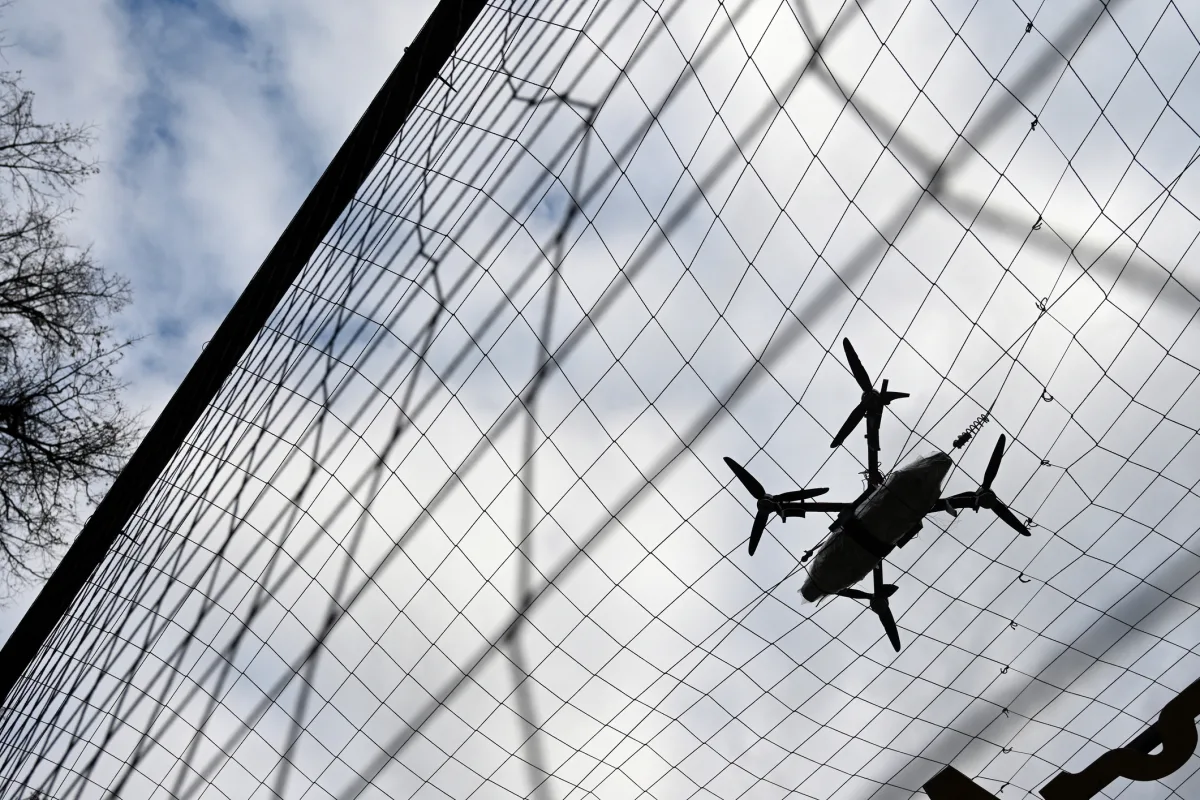
Photo: Dreamstime.