Rethinking Africa
Fifty-four countries, one label
Rethinking Africa starts with recognition that the continent is anything but homogenous
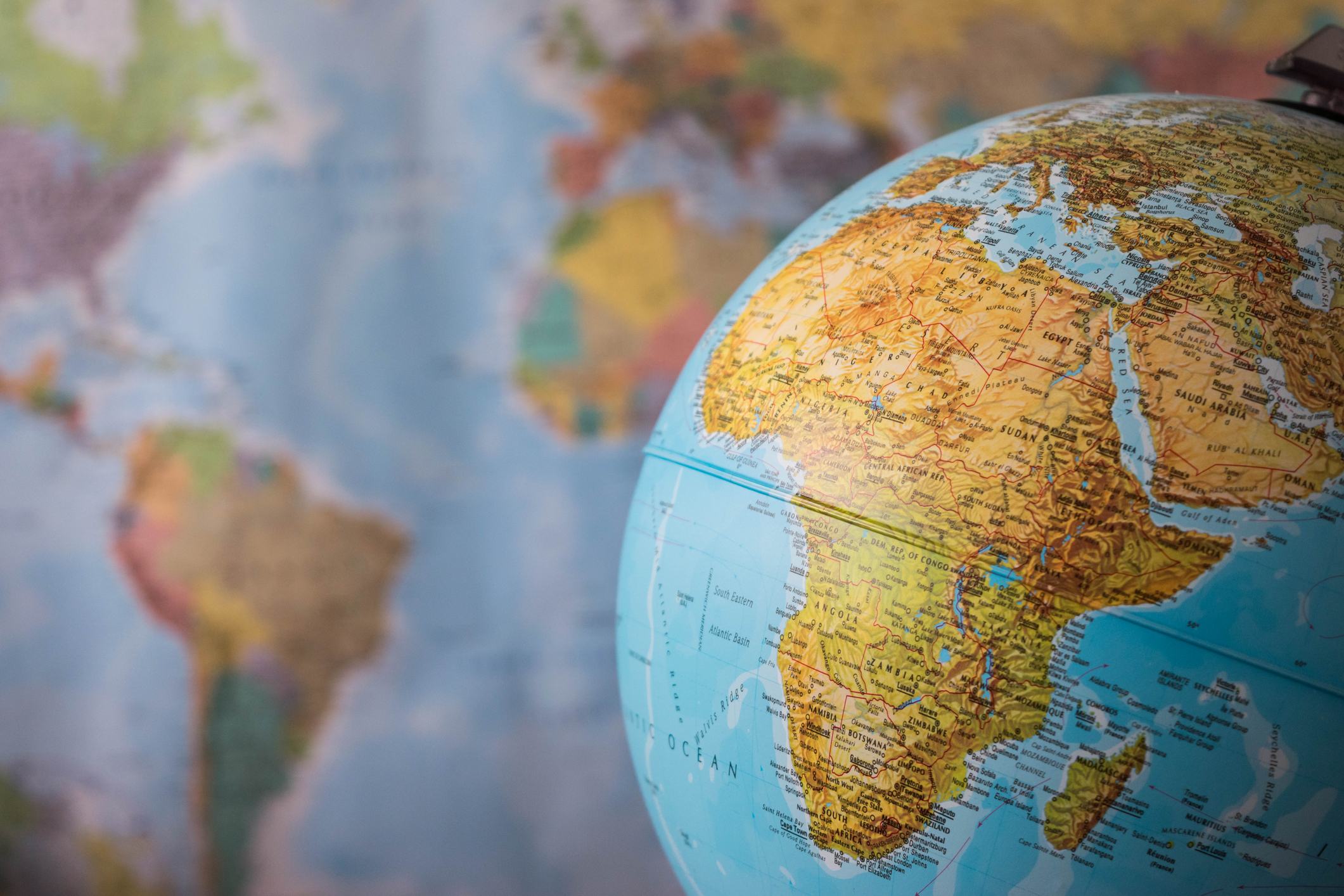
A decade ago at the ITB travel fair in Berlin, this correspondent, then working in the travel sector, well remembers Digu Naobeb, at the time the head of the Namibia Tourism Board, carrying a map of Africa around with him. The map was not (obviously) for his own benefit, but for the benefit of the many tour operators who had spent the previous few months cancelling trips to Namibia because of an outbreak of the Ebola virus in Guinea, Liberia, and Sierra Leone (none of which, as a decent tour operator should have known, shares a border—or anything else for that matter—with Namibia). Taleb Rifai, then head of the UN World Tourism Organisation, noted that Kenya and South Africa were further from the outbreak than North America was, and called the generalisation “very unfair”. Rovos Rail, a luxury train that runs between Pretoria and Cape Town in South Africa, had reportedly been losing around 100,000 US dollars' worth of bookings a week the previous autumn, some of these losses (as its general manager pointed out, with admirable restraint) coming from cancellations by travellers in Texas, where there had been, ironically, actual cases of Ebola in 2014.
That Naobeb’s map might still be useful today says a great deal about how much of the world still views Africa. According to the World Bank, GDP per capita in Seychelles was around 19,450 US dollars last year, while in Burundi it was more than 80 times lower, at just 234 US dollars (Seychelles has just around 120,000 people and Burundi about 13 million, which rather adds to the point). When the International Monetary Fund (IMF) raised its growth forecast for sub-Saharan Africa to 4.5 per cent this month it added, to its credit, that the figure masks substantial divergence. South Africa is expected to grow by about one per cent this year, Ghana by 5.7 per cent, Ethiopia and Rwanda faster still. People reading this analysis in the Baltics (who have spent the best part of three decades being filed under ‘Eastern Europe’, alongside countries such as Belarus and Russia) will recognise the problem and the despair felt by many countries on the African continent.
Investors, to their credit, do discriminate, but not (arguably) as much as they probably should. Africa: The Big Deal, which tracks start-up funding, found that 82 per cent of the money raised by African start-ups in 2025 went to just four countries (Kenya, Egypt, South Africa, and Nigeria), which between them hold about 30 per cent of the continent’s people. Central Africa got 0.1 per cent. Even inside that big four fortunes were mixed, with Kenyan start-ups raising close to one billion US dollars, while Nigeria’s share slumped to a record low. To start-up investors, Naobeb’s map might be said to have four countries on it, with Africa’s other 50 nations relegated, broadly speaking, to just ‘Africa’.
It’s no surprise then that companies which set out to conquer the whole of Africa usually find out the hard way. Jumia, an e-commerce firm listed in New York and long billed as Africa’s answer to Amazon, has been learning this for years. Since Francis Dufay became chief executive it has left Cameroon, Tanzania, Tunisia, and South Africa (the last two because, as he put it in October 2024, their contribution had “not aligned with expectations”; corporate-speak, more or less, for not making enough money). In February it left Algeria too, after 14 years and a delivery network reaching 44 provinces, which turned out to produce just about two per cent of its sales. Dufay has, in effect, been redrawing his own map one country at a time, and has said there will be no new ones until the company breaks even.
Only 28 per cent of journeys between African countries can be made without arranging a visa in advance.
Nor is this a lesson reserved merely for outsiders looking in. Safaricom, a telecommunications firm and Kenya's most profitable company (and, with Vodafone, the inventor of M-Pesa, a hugely successful payment service), launched in Ethiopia in 2022. The country was next door, had more than twice Kenya’s population and offered only a state-owned monopoly for competition, which initially appeared to be an amazing opportunity. It also turned out to have its own politics, its own internet blackouts and a currency that lost more than half its value after it was floated in 2024. Peter Ndegwa, Safaricom’s boss, still insists that Ethiopia is full of promise, and given its forecast growth he may well be right, but the Ethiopian business lost 21.2 billion shillings (around 163 million US dollars) in the year to March (an improvement, it should be said) and break-even has been pencilled in for 2027.
Then there are the African governments that themselves talk about Africa as if it were one place but do little to ensure that it becomes one. The Africa Visa Openness Index, compiled by the African Development Bank and the African Union (AU) Commission, found in December of last year that only 28 per cent of journeys between African countries can be made without arranging a visa in advance. Rwanda and the Gambia let almost everyone in; much of the Maghreb does not. In June, Wamkele Mene, who runs the secretariat of the African Continental Free Trade Area (AfCFTA), told a conference in Lagos that intra-African trade was on course to hit 250 billion US dollars this year, and in the same speech asked governments to let business travellers in without visas. The potential for growth, his speech suggested between the lines, is enormous.
Which brings us to money, and to the oddest twist of all. African leaders have long complained of an ‘Africa premium’, in practice the extra they need to pay to borrow because lenders tend to lump them in with the continent’s defaulters, whatever the state of their own books. Bola Tinubu, Nigeria’s president, made the case for Africa’s own credit agency in the Financial Times earlier this year, and Hanan Morsy of the UN Economic Commission for Africa reckons the Africa premium costs the continent about 75 billion US dollars a year. The proposed fix, the Africa Credit Rating Agency (AfCRA), finally opened in Mauritius on October 7, although Mahmoud Ali Youssouf, who chairs the AU Commission, warned at the launch that it would not cut borrowing costs much any time soon.
A continental agency to fix a problem caused, at least in part, by thinking of Africa as one place is an interesting choice, to say the least (and to be overly polite). It may one day reap rewards, but until it does, that map will still very much be needed.
Craig Turp-Balazs is head of insight and analysis at Reinvantage.