Existing Value
Nobody asked
The cult of innovation produces technological marvels, but not necessarily customers
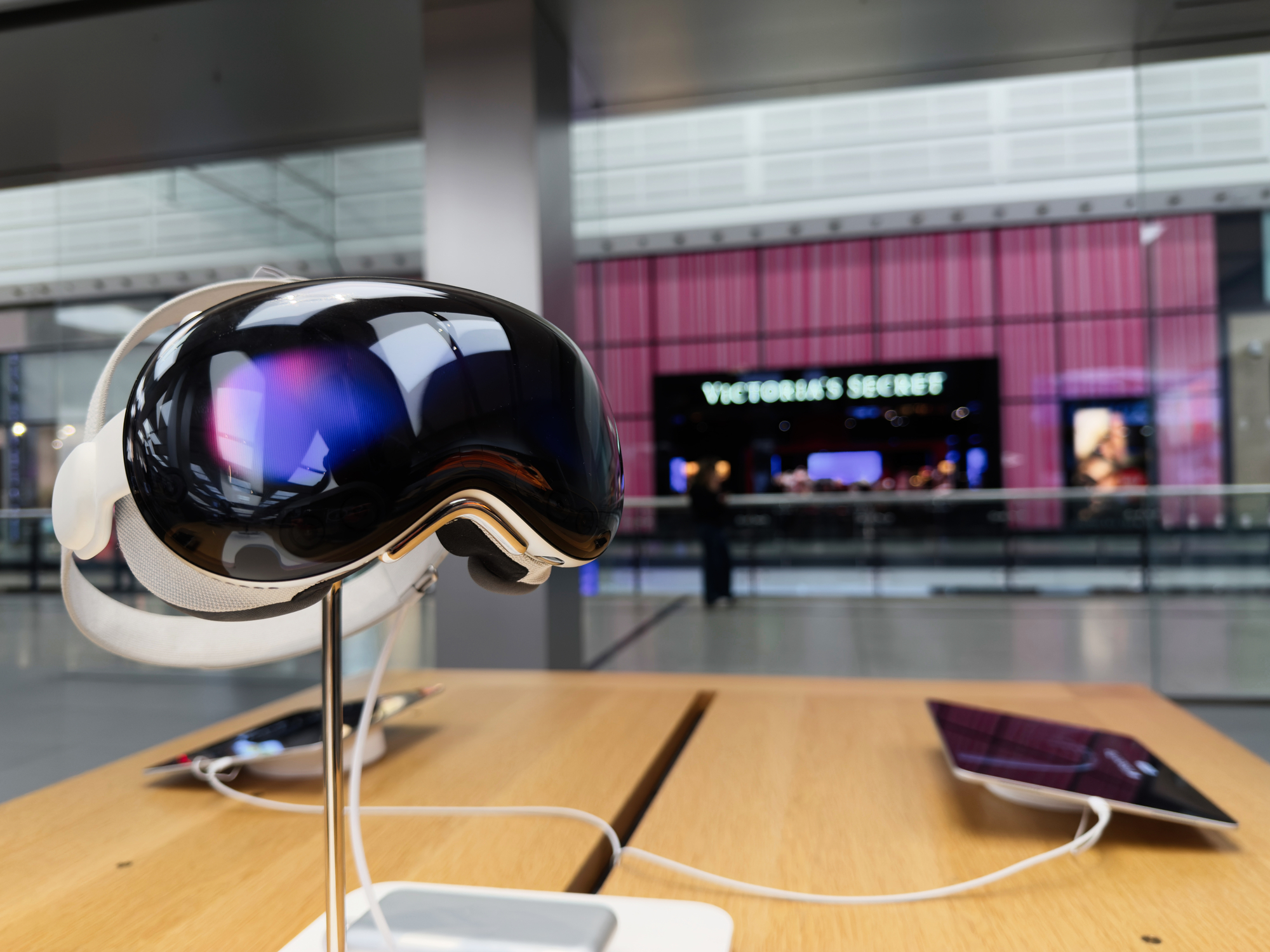
Remember the Apple Vision Pro? You don’t need to be in possession of a particularly good memory to recall its unveiling (which, after all, was just three years ago, in 2023) but you’d likewise be hard pressed to remember all that much about it, except that it was an Apple product costing 3,499 US dollars and must therefore have been, by association, wonderful. To be fair, it’s probably too early to be using the past tense when discussing the Vision Pro, for it’s still very much available on Apple’s website, but it does rather appear that Apple has given up on it, after a refresh (a faster chip and, crucially, a comfier headband) failed to revive any interest. A rare flop for a company that usually gets innovation right.
Unless you follow the latest tech products with searing focus it’s far less likely that you would have heard of another recent flop, Humane. Created by two former Apple designers, Humane's AI Pin (a screenless badge worn on the lapel that was supposed to make the smartphone obsolete and which, with its little laser beaming text onto the palm of your hand, certainly looked like the future, in the promotional videos at least) raised roughly 240 million US dollars to build its gadget. It went on sale in spring 2024 for 699 US dollars but less than a year later its software, patents, and staff had been bought by HP for just 116 million US dollars (less than half of what investors had put in) before the gadgets were switched off for good ten days later. Humane was hardly an outlier, either: when CB Insights, a research firm, trawled through 101 start-up post-mortems, “no market need” turned out to be the reason founders cited most often, by 42 per cent of them, meaning that it happens far more often than start-ups run out of money.
As Apple’s experience with the Vision Pro demonstrates, none of this can simply be filed under ‘start-up folly’, as the biggest companies are just as likely to get it wrong. Facebook is another negative example, renaming itself as Meta in 2021 (something which looked, to anyone who took the press release at face value, like a company reinventing itself), only for its much-touted metaverse to be, in practice, an expensive new product bolted onto the side of an advertising business that carried on making its money in exactly the same way as before. Reality Labs, the Meta division responsible, lost more than 70 billion US dollars, on revenues through 2025 that were barely higher than they had been in 2021. When Bloomberg reported in December last year that Meta’s boss Mark Zuckerberg planned to cut the metaverse budget by up to 30 per cent, shares jumped by as much as 5.7 per cent (Danni Hewson of AJ Bell, a stockbroker, said it was no surprise that investors were pleased), and in January Meta began laying off around a tenth of the people working in the division.
If there’s a lesson to be learnt here, it is that it is far too easy for a company (even a highly successful one) to lose focus if it is too busy trying to be innovative. At CES in January 2025 Dell, convinced (like most of the industry, to be fair) that the (somewhat nebulous) ‘AI PC’ was the next big thing, scrapped XPS, a brand that had been around since the 1990s and was often dubbed as the laptop of choice for people who actually cared about laptops, in favour of a new range built around Dell, Dell Pro and Dell Pro Max. Sales, according to Heise, a German tech publisher, dropped massively. A year later Jeff Clarke, Dell’s chief operating officer, used his pre-CES briefing to bring XPS back and to apologise (“We didn’t listen to you”), having noticed, apparently, that people had carried on searching for XPS long after Dell had got rid of it. Kevin Terwilliger, Dell’s head of product, went further still, admitting that consumers were “not buying based on AI” and that the technology probably confused them more than it helped. Shoppers elsewhere seem to agree, since a survey of 2,407 American smartphone owners carried out by YouGov for CNET in April and May found that just 12 per cent saw AI features as a strong reason to upgrade.
Part of the reason firms keep chasing the new is that almost everything around modern company culture rewards novelty.
If there’s hope for the Vision Pro (or for the metaverse) then it might be in the prospect that it was simply ahead of its time. Back in the 1960s, Corning, a US glassmaker, came up with an exceptionally tough, chemically strengthened glass, sold as Chemcor and aimed at carmakers as windscreen material, only for Pilkington, a British rival, to come up with a much cheaper method of making windscreens, so that by 1971 the whole thing had been shelved. There it stayed until 2005, when a small team (who had noticed that phone screens were moving from plastic to glass) dug out the old samples under the codename Gorilla Glass and began wondering whether smartphone manufacturers might now pay for them, which is why Wendell Weeks, Corning’s boss, had something to offer when Steve Jobs came looking for a screen for the first iPhone. (Corning, to be fair, insists that today’s Gorilla Glass is a different recipe from Chemcor, though it drew upon the company’s prior expertise with strengthened glass).
Part of the reason firms keep chasing the new is that almost everything around modern company culture rewards novelty (usually dubbed ‘innovation’ as if that label is enough to make it successful), and almost nothing rewards a second look at the back catalogue (especially the flops). Boston Consulting Group found in 2024 that 83 per cent of companies counted innovation among their top three priorities (while only three per cent, by its reckoning, were actually ready to turn that priority into results), and this year Fast Company, a magazine, handed its “most innovative” label to no fewer than 720 firms; nobody, so far as we know, has ever won an award for reviving something. Maybe it’s about time they did.
The byline Reinvantage Insight is used to denote articles to which several members of the Reinvantage insight and analysis team may have contributed.