Simulated Reinvention
Going through the motions
What Brezhnev's Soviet Union can teach the modern boardroom about faking a transformation
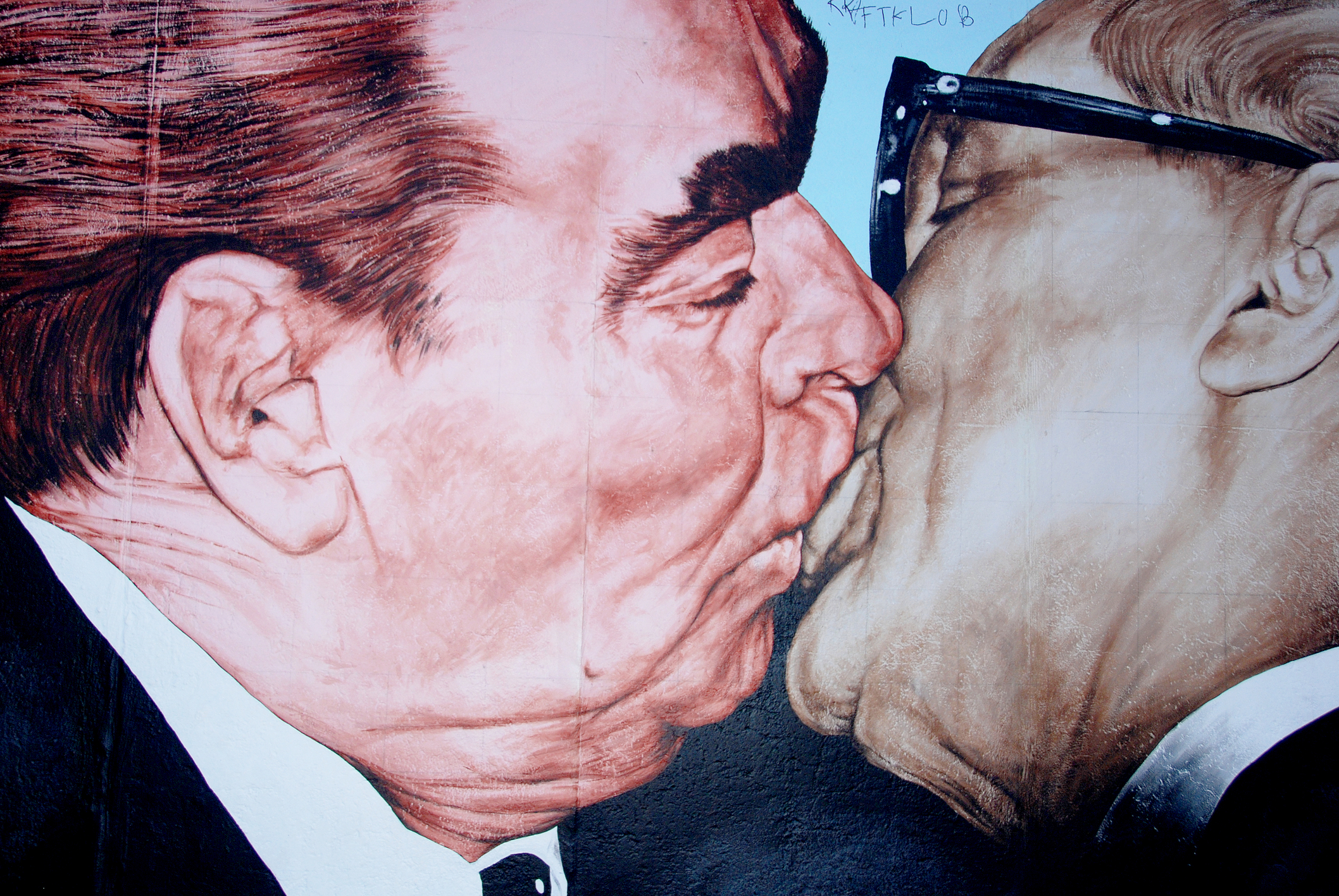
Think of reinvention and it’s doubtful that the name of Leonid Brezhnev, the former leader of the Soviet Union, will spring immediately to mind. The Brezhnev era was defined by economic stagnation and an almost total lack of innovation, the very opposite, it could be argued, of reinvention. At the time of Brezhnev’s death in 1982, the Soviet economy was already beyond repair and the modest reforms of first Yuri Andropov and, subsequently, Mikhail Gorbachev, were both too little and too late. That there might be a lesson from the Brezhnev era for reinvention practitioners could, therefore, at first appear strange. However, a deeper understanding of how Brezhnev ran the Soviet Union provides a worthwhile look at how the language of reinvention can be used and abused by those in senior positions to ensure that no reinvention ever actually takes place.
These days, Russian historians of the Soviet Union like to refer to имитация реформ, which literally translates as ‘the imitation of reforms’. Another phrase used to describe the same phenomenon, mainly by Western historians and economists, is ‘simulated change’. The premise was simple: instead of implementing actual change or making necessary adjustments (big or small), the Soviet state merely simulated such things by passing grand decrees, unveiling bold but toothless initiatives, adopting a new constitution, and creating purely decorative committees, all without actually changing how power was exercised or how the Soviet economy actually functioned. It’s a premise that will be strikingly familiar to anyone in mid-level management positions stuck at a firm that likes to give the outward impression of being vibrant, dynamic, and able to pivot at a moment’s notice, but which in practice stays firmly entrenched on a path to irrelevance. The simulated change trap did not die with Brezhnev or with the Soviet Union; it’s alive and well at companies across the world.
In their own way, the mechanics of Brezhnev’s simulated change were little short of ingenious. In 1977, Brezhnev gave the Soviet Union a new constitution (its third), proclaiming (without a hint of irony) a society of ‘developed socialism’ and enshrining on paper at least a generous set of rights that the state had no intention whatsoever of honouring. Committees multiplied, resolutions were passed daily, and the five-year plans rolled on with their targets boldly announced and almost invariably not just fulfilled but surpassed. When reality declined to cooperate (as it always, eventually, does), the figures were simply fudged to make them fit the narrative. Приписки (literally, fiddling), the term used for the padding of output stats with production that had never actually taken place, became so routine that few (if any) believed the numbers, least of all the planners who came up with them in the first place. The one serious attempt at actually reforming the Soviet economy, the Kosygin reforms of 1965, was allowed to wither rather than be seen to fail. Beneath all the new initiatives, the bombast, the announcements, and the perception of change, the Soviet machine did not shift one bit.
The men and women who sit in modern boardrooms would be appalled to be compared with the Soviet politburo but it’s a comparison that all too often holds up remarkably well.
The beauty of simulated change (and its continued attraction for CEOs who value stability above all else) was that in practice it asked very little of anybody. Genuine reform in a command economy would have meant taking on the people who actually ran it, and those people had no wish (or, indeed, tolerance) for any kind of confrontation. Far better to keep everyone in post (Brezhnev's infamous ‘stability of cadres’ ensured that ministers grew comfortably old in their posts) and let the appearance of change stand in for change itself. There were no consequences to fear because there were, in the end, no real consequences. The Hungarian economist János Kornai gave the condition its lasting name, the soft budget constraint, under which a loss-making enterprise was never permitted to collapse, merely refinanced (state-owned enterprises, even in market economies, suffer from the condition to this day). Remove the possibility of irrelevance and bankruptcy and you also remove any real reason to change, or, in the modern parlance, reinvent. Just keep things ticking over indefinitely, or at least until the money runs out, which is exactly what the Soviets did and which is exactly why the country eventually collapsed.
The men and women who sit in modern boardrooms would be appalled to be compared with the Soviet politburo but it’s a comparison that all too often holds up remarkably well. There are plenty of CEOs who set out on bold, transformational missions that fully resemble Brezhnev (albeit without the bushy eyebrows). New roadmaps are launched, meeting rooms are rebranded as ‘reinvention hubs’, a chief AI officer might get appointed, and an offsite might get dubbed a ‘reinvention sprint’. None of this resembles anything remotely like real reinvention, for it’s just a flurry of activity that is highly visible and yet entirely without import. Genuine reinvention means killing a profitable product before it becomes obsolete, and (often) informing a department that its part of the business has no future. Adapt or die? Most still prefer delay, so is it therefore any wonder that around 70 per cent of corporate transformations fail to meet their objectives (a figure McKinsey has been quoting, with Soviet levels of predictability and consistency, for the better part of three decades).
That we never learn is partly because the simulated reinvention trap is so alluring, because simulation works, for a bit. It reassures the board, and might (temporarily) convince staff and customers that change is actually happening (or is at least on the way). The energy that genuine reinvention would demand gets wasted on its imitation, and by the time the gap between what actually creates value and what a firm is actually still trying to sell grows too wide to explain away, the moment to reinvent (in a real, not simulated sense) has gone. Brezhnev's Soviet Union kept up appearances for the best part of two decades before it finally gave way under the weight of its own inaction. Private companies rarely get that long.
Craig Turp-Balazs is head of insight and analysis at Reinvantage.