Ethiopian Airlines
Flying high
Ethiopia's most sought-after export is no longer coffee but airline bosses
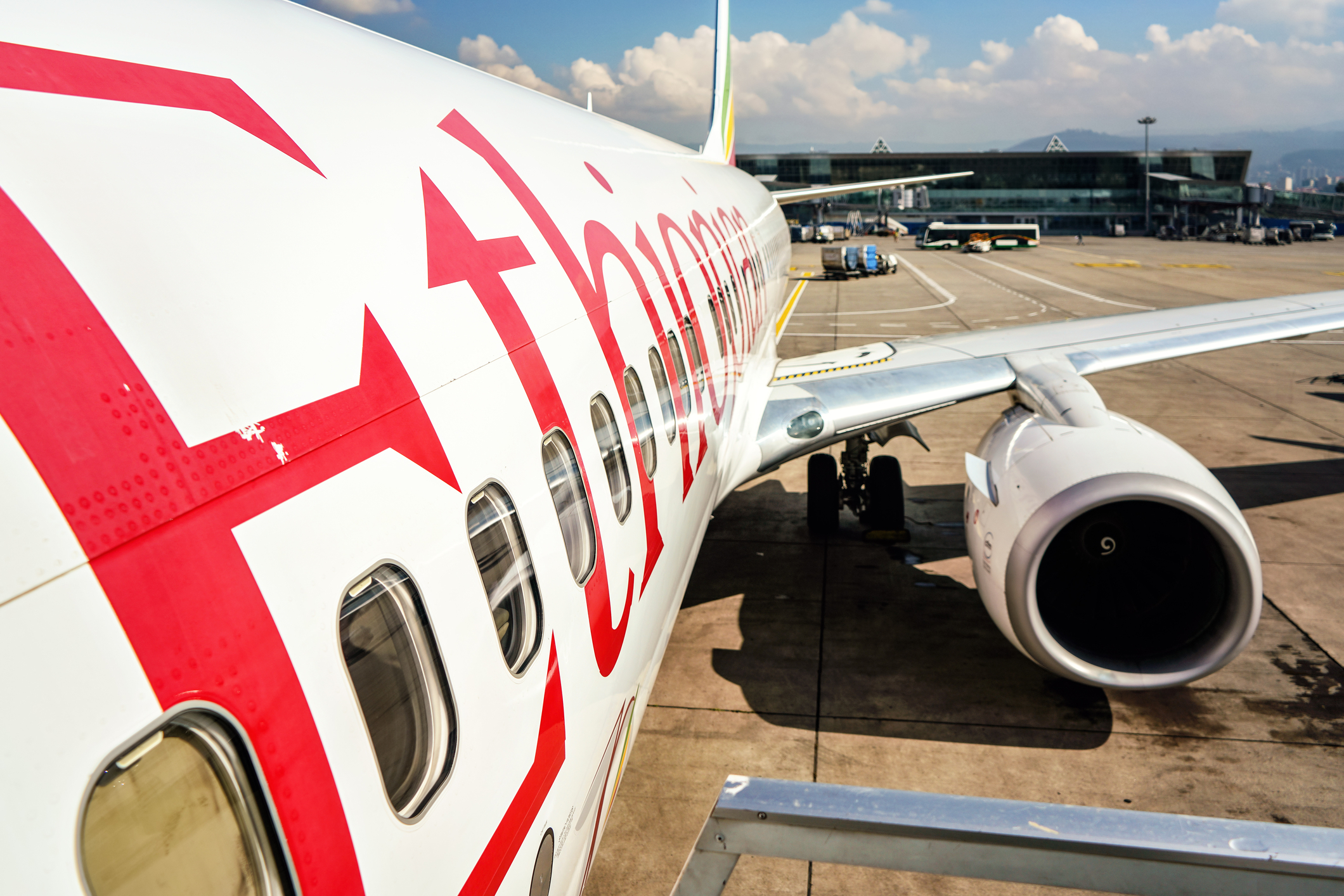
Appointing an Ethiopian as the CEO of a major international airline might be expected to raise a few eyebrows. Two Ethiopians (one well into his eighties) being made CEO of major airlines in the same year looks like a pattern, and warrants a deeper look at why a country best known for coffee is suddenly exporting airline CEOs.
The story begins in February, when Yoweri Museveni, Uganda's president, wrote to his transport minister ordering that Girma Wake (aged 82 and by any reasonable definition long retired) take over Uganda Airlines in order to fix its many problems. Then, in August, Natarajan Chandrasekaran, chairman of both the Tata conglomerate and Air India, named Tewolde Gebremariam, another Ethiopian, as the carrier's next chief executive, praising him for building "one of the world's most efficient and profitable airline groups". Besides being Ethiopian, Wake and Gebremariam also have in common the fact that they both used to run Ethiopian Airlines, Africa’s largest, most profitable, and best run airline (despite being a state-owned enterprise). While gold and coffee account for around three-quarters of Ethiopia’s exports, former bosses of its flag carrier are clearly in just as great a demand abroad. There are few, if any, state-owned airlines that can say the same.
It was not always thus. Ethiopian was founded in December 1945 at the behest of Haile Selassie. The government put up the money and TWA, an American airline, supplied the senior staff (the general manager, and many of the pilots and mechanics). The first Ethiopian-born general manager took charge only in 1971. TWA itself of course has long been defunct, swallowed by American Airlines back in 2001, which makes Ethiopian, 80 last year, a rare example of a pupil outliving their teacher. It has survived the emperor's overthrow and later a Marxist junta mainly because, according to a study by the University of London’s School of Oriental and African Studies (SOAS) the very different successive regimes (however brutal in other respects) let its managers get on with the job of running it with the minimum of state input. (Other countries taking notes might want to start here).
Mostly, anyway. In 1993 Girma, then a senior marketing man, fell out with Ethiopia’s then new government and decamped to Gulf Air, later working at DHL. A decade later the airline was struggling after Ethiopia’s war with Eritrea and in November 2003 Seyoum Mesfin, the foreign minister who also chaired the airline, asked Girma to come home. He took over in February 2004 with a dozen jets and, with help from Ernst & Young, a consultancy, drew up what was called Vision 2010. The plan aimed to lift turnover from 400 million US dollars to one billion US dollars within five years. By 2010 the airline had surpassed the vision and revenue had reached 1.3 billion US dollars.
Girma's plan, and the later Vision 2025 that Tewolde inherited in 2011, put Ethiopia’s money into the less headline-friendly bits of the airline: an aviation academy, a maintenance business that also fixes other carriers' aircraft, and, importantly, treated cargo as a genuine part of the business rather than an afterthought limited to whatever happened to fit in the hold. Ethiopian also bought new aircraft relatively early (it was the first African airline to fly the Boeing 787), because, as Tewolde put it, the new technology demanded a longer planning horizon. And Ethiopian kept its bosses in their jobs: it has had just three chief executives since 2004.
Other African airlines have not fared so well, but then few anywhere the world have done as well as Ethiopian over the past two decades.
Addis Ababa’s location has also, it should be pointed out, helped a great deal. It can (with a little license) be described as the point where Africa, the Gulf, and the rest of Asia meet, and Ethiopian spotted the potential of such a location early. In 1973 it became the first African carrier (and only the fourth airline anywhere) to fly to China, at a time when Mao was still very much alive. When Chinese money later poured into African roads and railways, Ethiopian was already sitting in the middle, and Tewolde could boast of the biggest market share between the two.
The prime location does, however, come with something of a catch. Addis Ababa’s Bole airport sits at 2,334 metres, high enough that Airbus brought the A380 there to test its engines in thin air. Aircraft leaving Addis Ababa must carry less fuel or fewer passengers. That is why Kenya Airways can fly nonstop to New York on a longer route while Ethiopian's Transatlantic flights have often had to stop to refuel. Hence, in part, Bishoftu, a 12.5 billion US dollars mega-airport on a site 400 metres lower, where Abiy Ahmed, the prime minister, laid the first stone in January.
Other African airlines have not fared so well, but then few anywhere in the world have done as well as Ethiopian over the past two decades. Between 2007 and 2022 South Africa's government handed its own flag carrier SAA 50.7 billion rand (around 2.7 billion euros). Kenya Airways ended 2025 with negative equity of 132 billion shillings (just under one billion euros) and is still hunting for an investor. When Covid-19 grounded the world's fleets in 2020, Ethiopian instead stripped the seats out of 25 passenger jets to make way for more cargo. "We have even been loading cargo on passenger seats," Tewolde explained at the time. It got through the pandemic without a bailout, layoffs, or even pay cuts, and estimates put its profit for the year to July 2020 at around 260 million US dollars, at a time when other airlines were facing an existential crisis.
The lesson from Ethiopia for other governments that still harbour dreams of owning successful national airlines is, in large part, to resist the temptation to meddle. Ethiopia's ministers appoint the airline’s board and take the (usually healthy) dividends, but they rarely tell the airline where to fly, what or do, or how to price tickets. Development plans for the airline look a decade (or longer) in advance rather than following a four or five year electoral cycle. None of this is exactly a secret, which makes it all the odder that so few have copied it. Uganda and Air India, to be fair, have taken the shortcut of hiring the men who wrote the plans and then delivered.
Revenue last year at Ethiopian topped nine billion US dollars for the first time, more than five per cent of the country’s GDP. Indeed, the only thing that looks like preventing Ethiopian from enjoying even more success is if other airlines come and poach its management.
The byline Reinvantage Insight is used to denote articles to which several members of the Reinvantage insight and analysis team may have contributed.