
Our work
Question what seems settled. Find a better way forward. Put it to work.
A familiar explanation can point you towards the wrong next step.An idea used elsewhere can open up a possibility you hadn’t considered.
These stories show what changed when we questioned the starting point — and what we went on to do.
Clear Line
Clear Line — Changing a message that was selling the business short
What the company wanted
Clear Line had been presenting itself as a low-cost outsourcing provider. Its CEO said this made price negotiations harder and failed to reflect the quality of its work.
What we did
Through Reinvantage’s Beyond Borders programme, we worked with the leadership team on its positioning, target customers, and how decisions were put into practice.
The work went beyond the pitch.
Clear Line recognised a gap between being willing to make decisions and being able to carry them through.
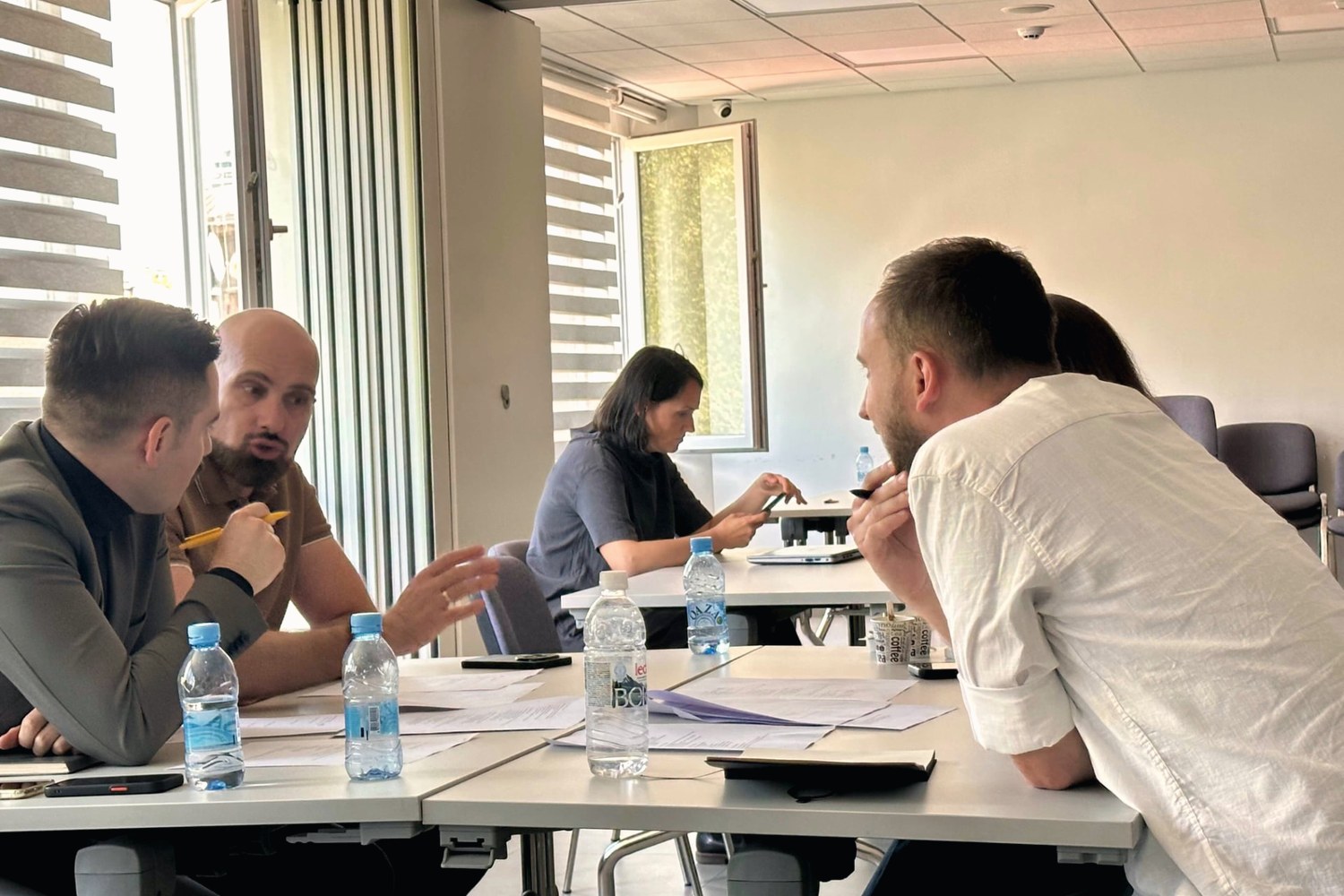
Reinvantage’s Beyond Borders programme
What changed
The revised pitch explains the German-speaking customer service, sales support, and back-office work Clear Line can take on. It shows buyers how the team prepares for their processes, handles responsibilities, and proposes testing the service through a pilot.
The CEO also reported clearer responsibilities and decisions being made after earlier delays. The team was working to improve how decisions were taken and implemented across the business.
In his view, continuing with the old positioning could have cost the company revenue or clients.
“The most valuable impact was that it really pushed our boundaries and company strategy, especially in positioning our company and adapting our target group. The critical thinking of the Reinvantage team was unbeatable.”
Gatsby Africa
Gatsby Africa — A stronger message needed a sector ready to stand behind it
What Gatsby wanted
Gatsby Africa wanted Kenya’s global business services sector to compete for international work. A central question was how to explain why buyers should choose Kenya.
What we did
Looking across the ecosystem revealed why a new message would not be enough.
Kenya already had experienced operators, talent, technology, and institutional support.
But market knowledge was scattered.Organisations pursued different priorities.
There was no agreed arrangement for bringing that knowledge together, making shared choices, and following them through.
The sector also tended to begin its pitch with what it could supply, then look for buyers. Training, investment, and promotion were not consistently organised around the work buyers actually needed.
That created a risk of spending more on promotion and programmes while leaving deeper obstacles untouched.
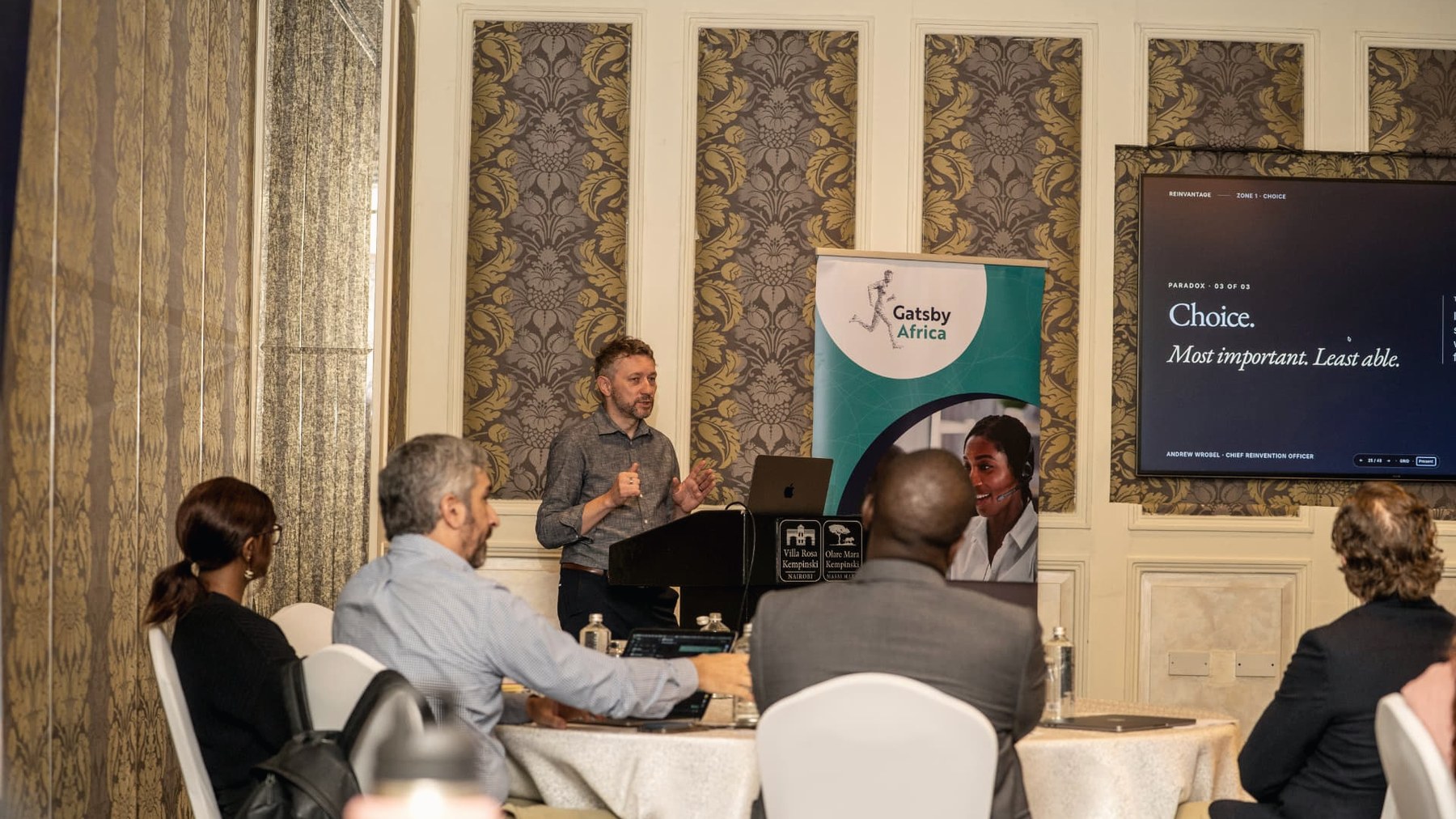
Gatsby Africa · Nairobi
A diagnostic, interviews, roundtables, and a two-day intensive provided the evidence for an assessment and roadmap covering three priorities:
Agree how organisations would share market knowledge, make joint decisions, and take responsibility.
Test clear positioning options with buyers using evidence of what firms could deliver.
Connect skills, investment, and practical support to buyer needs, including barriers to entering and operating in Kenya.
We also identified a promising direction around services combining AI with human judgement, alongside alternatives to test before adopting a national position.
What changed
Gatsby and participating organisations gained a practical basis for deciding what to back, what to test, and where responsibility needed to sit.
A new message was part of the work; getting the sector ready to act together mattered too.
The intensive’s impact report estimated US$30.8m* in potential organisational value.
*This figure reflects participant estimates of potential value, among the 18 responding organisations, rather than measured revenue.
“The roundtables were a highlight. Hearing directly from peers across the ecosystem surfaced candid insights that formal sessions rarely deliver.”
Visa
Visa — Connecting women entrepreneurs across 17 markets
What Visa wanted
Visa was supporting women entrepreneurs through She’s Next activities in individual countries across Eastern Europe and Central Asia. It wanted to connect those efforts across the region and strengthen its role in supporting women’s entrepreneurship.
Women would be able to connect with peers, mentors, experts and knowledge beyond their own markets.
What we did
Visa had ideas for bringing women together, doing research, and sharing useful content. We brought those ideas and its goals into one concept: a regional She’s Next platform.
We then built and ran the platform across 17 markets for four years. It combined a community, research, practical knowledge, and opportunities to develop business ideas together.
Visa had one regional platform connecting activities that had previously happened country by country.
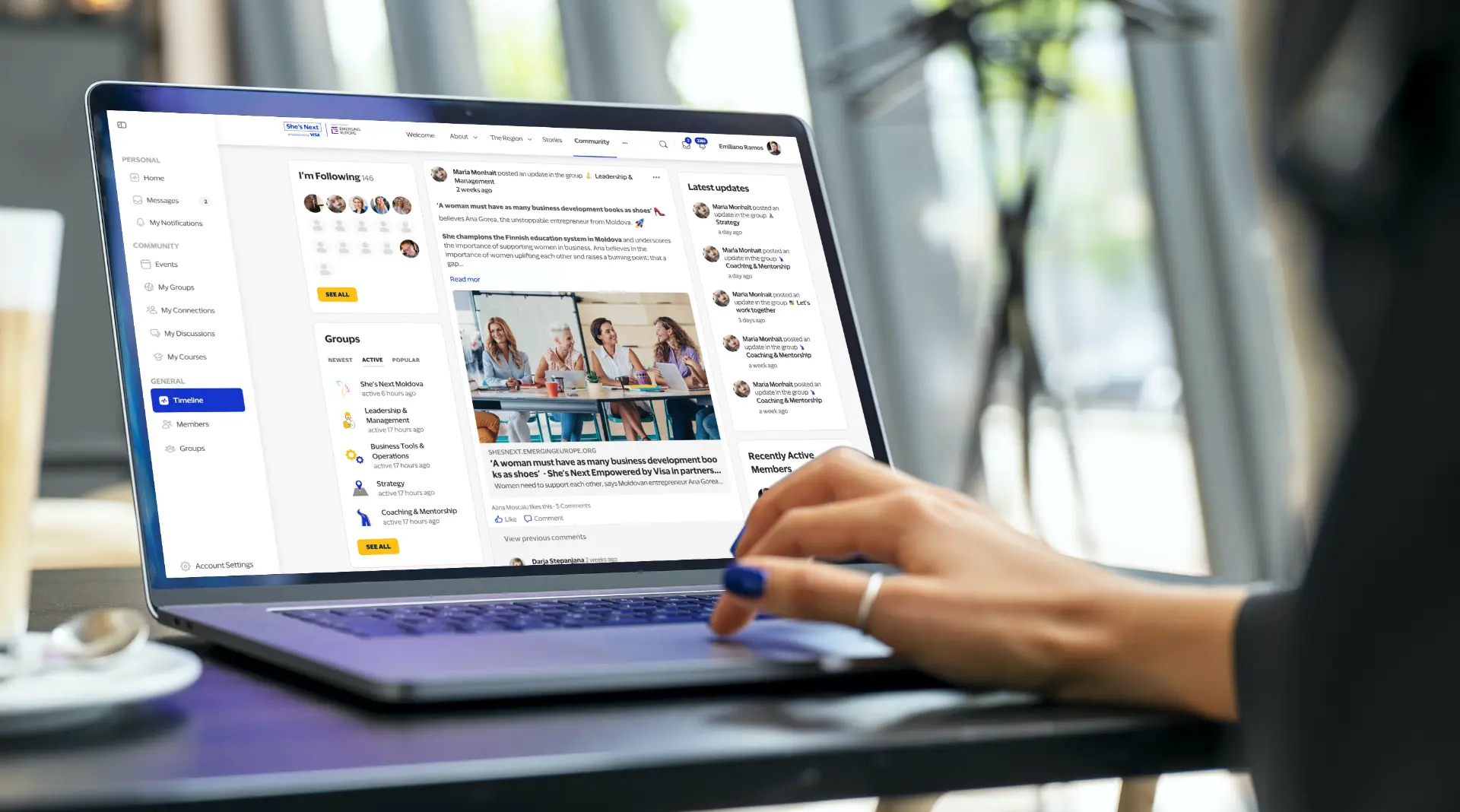
She’s Next Empowered by Visa
What changed
In 2025 we organised the She’s Next Hackathon, held on the platform, which attracted over 1,700 registrations and almost 100 project submissions.
Of the hackathon participants who gave feedback:
88% said it improved their entrepreneurial skills and knowledge.
94% reported greater confidence in pursuing their ideas.
95% said they would apply what they learned to their businesses or future projects.
“Through the webinars and framework, we moved from a B2C ‘storytelling’ model to a robust B2B platform with a clear focus on logistics, verification, and secure payments — the things businesses actually need.”
“Reinvantage’s findings have not only allowed Visa to map the challenges female entrepreneurs face, but also understand the needs that our organisation and our partners can meet.”
What are you working towards?
Tell us about the choice, ambition, or result you want to work on.
Talk to us